Women's Swim Shorts Guide
Swim shorts are a stand-alone swimsuit bottom in short form — quick-drying, drawstring-fitted, and built for swimming and active water sports.
Shop Women's Swim Shorts Now
Shop Women's Swim Shorts on Amazon Shop Women's Swim Shorts on eBayThe Amazon and eBay links on this page are affiliate links. If you make a purchase through them, Apparel Search may earn a commission.
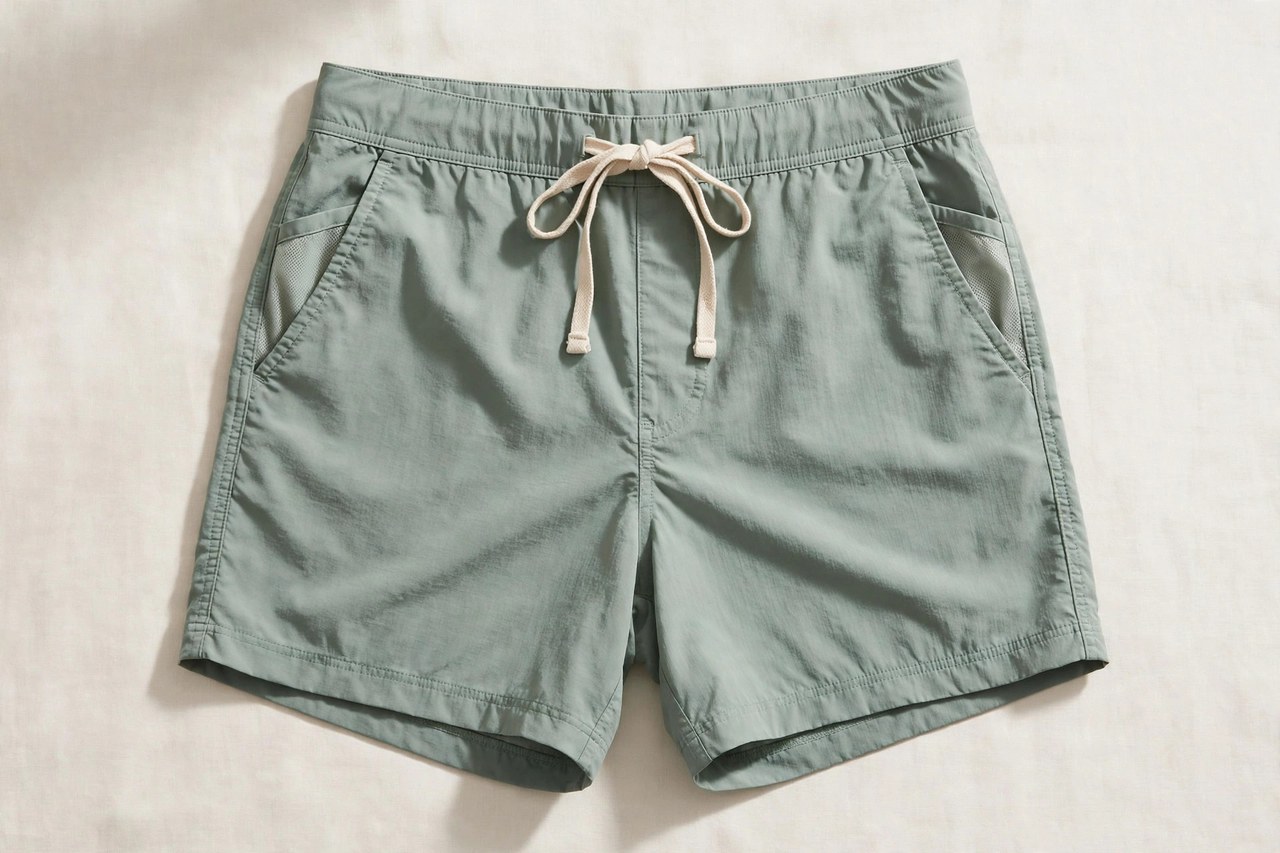
Women's swim shorts are short trousers made specifically for swimming and other water activities — the lower portion of a swimsuit, worn as a stand-alone swimsuit bottom. They resemble board shorts more than a brief-style bottom, but serve the same purpose in the water, and are chosen for their coverage, pockets and active fit.
This guide covers the garment as a product: its construction, lengths and waist systems, the quick-drying fabrics it is made from, and how to size a bottom that must stay secure in surf and on a waterslide. It is one member of the swimwear family — the umbrella category and the general swimsuit guide have their own pages — and it is the most athletic member, designed around movement first and drying time a close second.
Board Shorts and the Swim Short Family
Board shorts are a type of swim short: traditionally the longest and loosest branch of the family, developed for surfing, with a fixed waistband, a lace-up or hook-and-loop fly and a length at or below the knee in their original form. Women's board shorts are usually cut shorter and shaped differently, but they keep the surf construction — no elastic at the leg, a secure front closure, and fabric chosen to slide over a board rather than stick to it.
Around that core sit shorter swim shorts and swim boy-short bottoms in a range of inseams, from brief-length short cuts to mid-thigh lengths. Some are sold as separates to pair with any swim top; some come as the bottom half of a set. The details remain a useful vocabulary for the range: low-rise and mid-rise cuts, relaxed fits, braided self-ties at the waist and elastic waistbands with drawstrings. Choose length by activity: shorter cuts dry fastest and suit lap swimming, while longer cuts suit boarding, beach games and sun coverage on the legs.
Fabrics: Quick-Dry Is the Specification
Swim shorts are made to get wet and then stop being wet. The material family is blends of nylon, polyester, spandex and similar light, stretchy synthetics, with fast-drying performance as the point. Polyester dries quickly and resists chlorine fading best; nylon feels softer and dries nearly as fast; a small percentage of elastane — sold under names including Lycra and spandex — gives the four-way stretch that lets a short bend, sit and paddle without binding. Cotton appears only in cover-up shorts not meant for swimming, because wet cotton stays wet, heavy and cold.
Construction follows the same quick-dry logic. Better swim shorts use flat seams that do not hold water or chafe, mesh or brief liners in some styles, and drainage eyelets on pockets so a pocket does not balloon with water when you stand up. A gusseted crotch improves stride and sitting comfort. For frequent swimmers, chlorine-resistant polyester is the long-life choice.
Waist Systems, Fit and Sizing
The waist is the working part of a swim short, and its two common systems are elastic waistbands and drawstrings, often combined. An elastic waist with an internal drawstring is the most forgiving fit and the easiest on and off; a board-short fixed waist with lace-up closure is the most secure in surf but must be sized precisely, because there is no elastic to apologize for a wrong size. Tie-front and braided self-tie finishes belong to the fashion end of the range and should still tie down firmly enough for a dive.
Size by hip measurement first, waist second, and test the fit the way the water will: bend, sit, take a high step, and simulate a kicking motion. A swim short that is correct standing can pull down at the back on a pool ladder; a drawstring should solve that. Inseams should clear the knee or end well above it, since a hem that catches the knee becomes an irritant within one session. If the shorts include a liner, check that its elastic is comfortable.
Care: Rinse, Dry, Repeat
Swim shorts last longest on a rinse-first routine: rinse in clean, cool water after every use to remove chlorine, salt and sand, then dry in shade, since ultraviolet light degrades elastane and fades nylon and polyester alike. Sand deserves a specific pass — shake shorts out when dry and check pockets and waistband channels, where grit hides and abrades fabric from inside. Wash occasionally with mild detergent on a gentle cycle; skip fabric softener, which coats quick-dry finishes and slows the drying you bought the shorts for.
Store swim shorts clean and fully dry, folded rather than balled in a swim bag, where damp elastane ages quickly and mildew finds it. Retire a pair when the waist elastic or drawstring channel fails, the liner tears, or the seat fabric has thinned and turned shiny from slides and pool edges — those are wear points no care routine can reverse. Kept on the rinse-and-shade routine, a well-made pair in chlorine-resistant polyester will serve several seasons of swimming, paddling and beach days, which is the whole point of buying a purpose-built bottom instead of swimming in ordinary shorts.
Related Women's Guides
Photos

More to Explore on Apparel Search
Looking for Women's Clothing Stores?
This guide helps you choose women's swim shorts. To browse where to buy, visit our women's clothing store directory, where you can find retailers that carry them.