Women's Tennis Dresses Guide
A tennis dress is a one-piece athletic dress with a fitted bodice and a short, flared or pleated skirt, usually with built-in briefs or worn over separate undershorts.
Shop Women's Tennis Dresses Now
Shop Women's Tennis Dresses on Amazon Shop Women's Tennis Dresses on eBayThe Amazon and eBay links on this page are affiliate links. If you make a purchase through them, Apparel Search may earn a commission.
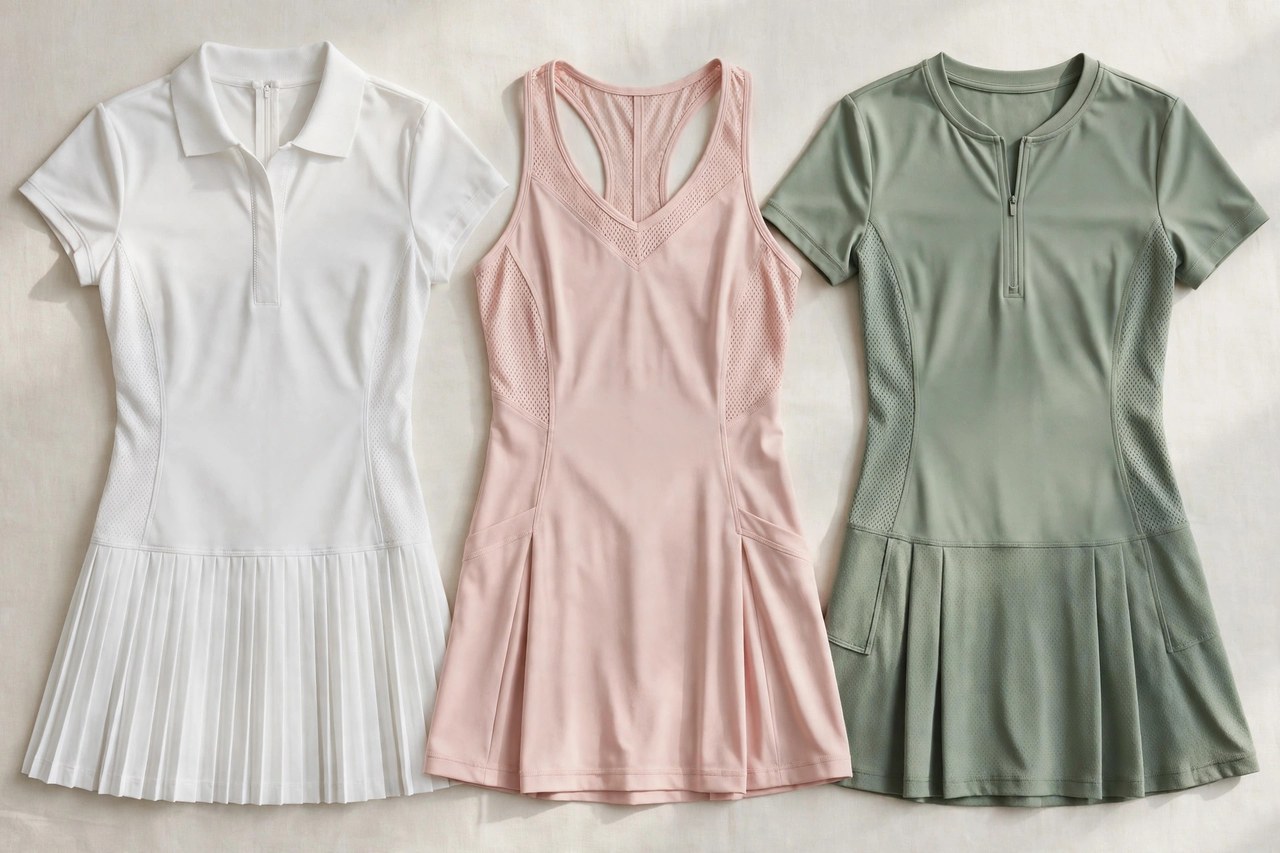
A tennis dress is a one-piece athletic dress with a fitted bodice and a short, flared or pleated skirt, usually with built-in briefs or worn over separate undershorts. It is sportswear first: this guide covers the stretch fabrics, undershort construction, pocket provision for a spare ball, and the fit checks — serve, sprint and bend — that a tennis dress has to pass on court.
This guide covers tennis dresses in the order a careful buyer needs it: what the product is made from, how it is constructed, how it should fit, how to choose it for real use, and how to care for it so it lasts. The focus is on measurable details, named materials and checks you can perform in a shop or on a parcel's arrival, rather than general fashion language.
Fabrics and Construction
Tennis clothing and footwear in the tennis dresses family are built from performance materials: polyester and nylon knits with elastane for stretch, engineered to move sweat to the fabric surface and dry between games, with mesh placed where heat builds. Cotton, comfortable as it feels for the first game, absorbs sweat, gains weight and chafes, which is why serious tennis kit is synthetic almost without exception.
Construction is movement engineering. Seams are flatlocked or placed away from friction zones, cuts allow the overhead serve and the deep lunge without the garment riding or binding, and footwear carries the category's heaviest engineering — lateral stability, toe-drag reinforcement and surface-specific outsoles. The undershort is part of the product, not an accessory: check its leg grip, gusset and whether it carries a ball pocket before judging the dress itself. UPF ratings, where given, are a measurable specification worth comparing between otherwise similar garments.
Fit and Sizing
Fit on court is tested by the sport's own movements: serve at full stretch, sprint and stop, bend to a low volley. Fit tennis dresses by performing those movements in the shop or at home within the returns window, because a garment that fits standing still has passed none of them. Clothing should be close enough not to catch or flap, with ease where the body folds; footwear should lock the heel and midfoot while leaving the toes room to spread on hard stops.
Sizing varies between tennis brands as much as between fashion labels, and the chart measurement that matters differs by product — chest and waist for tops, hip and inseam for bottoms, foot length in millimetres for shoes. Feet swell during a match, so court shoes fitted in the morning should still have a thumb's width in the evening, and socks of the thickness you'll play in are part of the fitting, not an afterthought.
Choosing for Your Game
Choose tennis dresses by surface, climate and how often you play. Hard courts destroy soles and demand cushioning, clay wants a full herringbone grip, and hot conditions reward the lightest, most ventilated constructions in pale colours. A weekly player should buy durability at the known wear points; an occasional player can honestly trade some of that life for comfort and price, as long as the safety specifications — stability in shoes, freedom of movement in clothing — are not the ones traded away.
Buy the set as a system where the pieces interact. In practice, rank these checks in the order your own use demands — frequency of wear first, then weather, washing facilities and budget — because that order differs by wardrobe, and it is the real reason two careful buyers can correctly choose differently from the same rail. Shoes, socks and insoles work as one unit; dresses, skorts and their undershorts are one product; and a top's hem length only makes sense against the bottoms it will be tucked into or worn over. Checking these interfaces before buying prevents the commonest court-kit disappointment: two good products that do not work together.
Care and Washing
Wash tennis kit promptly and gently: sweat and sunscreen degrade elastane and performance finishes, so rinse or wash after play in cool water with a mild detergent, without fabric softener, which coats moisture-managing yarns and stops them working. Turn garments inside out, wash with similar synthetics, and dry in air and shade — tumble heat and sun both shorten the life of stretch fabrics and shoe adhesives alike.
Shoes need air more than washing: remove insoles, loosen laces and dry them naturally between sessions, and retire court shoes when the outsole pattern smooths at the toe or the midsole stops rebounding, because worn tennis shoes are an injury risk however sound the uppers look. Store kit dry and out of the boot of a hot car, rotate two pairs of shoes if you play often, and re-check laces, grips and elastic waistbands each season — the small consumables are what actually end a tennis product's life.
Related Women's Guides
Photos

Looking for Women's Clothing Stores?
This guide helps you choose women's tennis dresses. To browse where to buy, visit our women's clothing store directory, where you can find retailers that carry them.