Women's Terry Robes Guide
A terry robe is a bathrobe made from terry cloth — cotton woven with uncut loops on one or both faces — in shawl-collar, kimono or hooded wrap styles with a tie belt.
Shop Women's Terry Robes Now
Shop Women's Terry Robes on Amazon Shop Women's Terry Robes on eBayThe Amazon and eBay links on this page are affiliate links. If you make a purchase through them, Apparel Search may earn a commission.
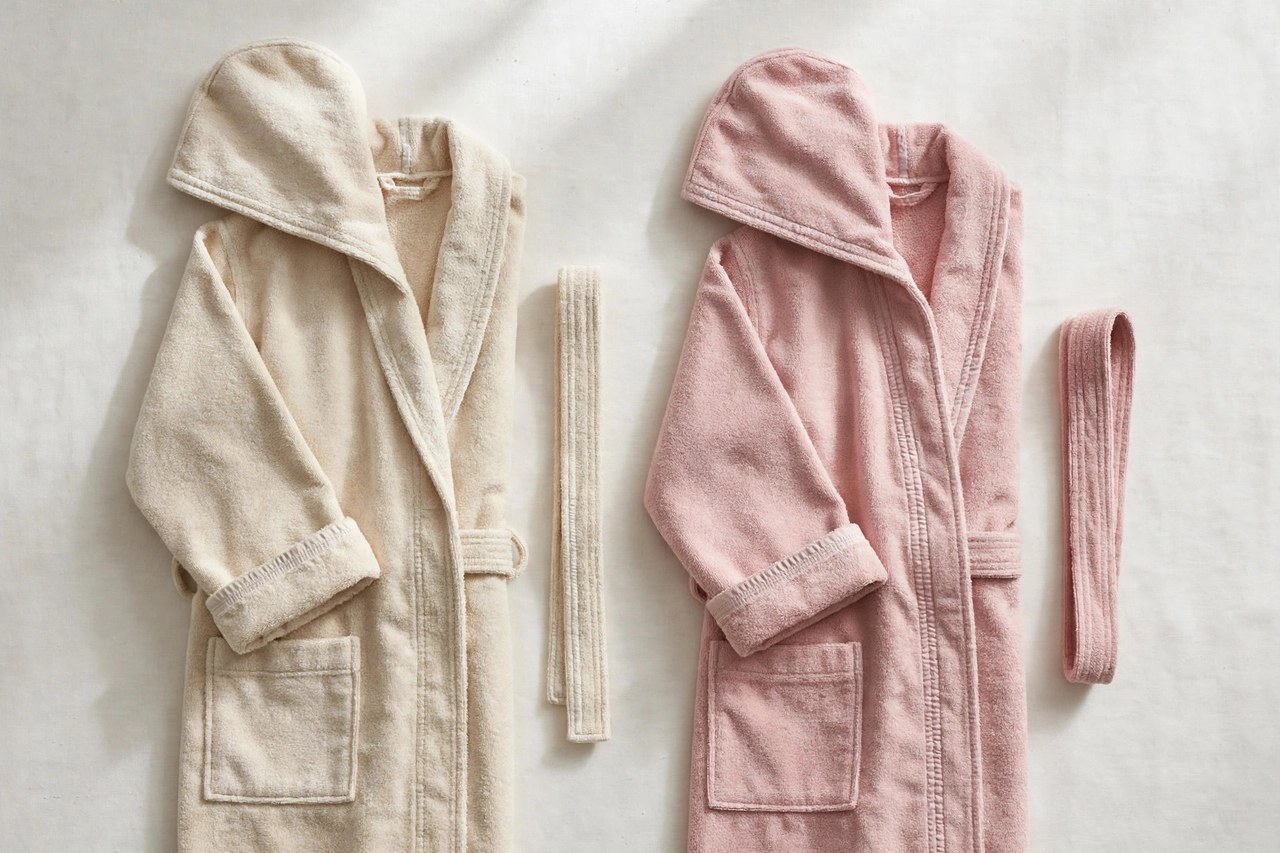
A terry robe is a bathrobe made from terry cloth — cotton woven with uncut loops on one or both faces — in shawl-collar, kimono or hooded wrap styles with a tie belt. Terry is the working robe fabric because the loops absorb water, and this guide covers loop density and fabric weight, the shawl versus kimono collar choice, length and pocket construction, and washing a robe so the loops stay absorbent.
This guide covers terry robes in the order a careful buyer needs it: what the product is made from, how it is constructed, how it should fit, how to choose it for real use, and how to care for it so it lasts. The focus is on measurable details, named materials and checks you can perform in a shop or on a parcel's arrival, rather than general fashion language.
Fabrics and Construction
Robes in the terry robes family are specified by their cloth. Terrycloth — cotton woven with loops — is the absorbent bath standard; velour is its sheared, softer-faced relation; waffle weaves are light and quick-drying; fleece and flannel serve warmth rather than the bath. Fabric weight, quoted in grams per square metre for better robes, predicts both absorbency and heft: a light robe packs and dries easily, a heavy one absorbs more and feels like the spa garment it imitates.
Construction is simple but checkable. Collars — shawl, kimono or hood — should be generously cut and securely attached; belts should have loops that hold it at the waist when the robe is hung; pockets should be patched or in-seam and bar-tacked at the mouths; seams throughout should be finished flat, since a robe is worn against bare skin. Fabric softener is the enemy of a terry robe: it coats the loops and steadily destroys the absorbency the robe was bought for. Loop or pile density, judged by parting the surface and looking for the ground weave, is the quality tell: visible backing means a thin robe whatever its weight claims.
Fit and Sizing
A robe fits by wrap and length rather than by close measurement. Fit terry robes with enough overlap at the front that the robe stays closed sitting and bending, sleeves that end at the wrist without trailing into water or work, and a belt that ties at the natural waist. Robe sizing is often unisex or grouped, so the maker's length measurements — shoulder to hem, sleeve from centre back — are the reliable figures to compare against your own.
Length is a practical choice: knee length dries and moves easily, calf and ankle lengths are warmer and more enveloping but trail on stairs and bathroom floors. Consider the household reality — a long heavy robe in a small hot bathroom, or a short light one in a cold house, will annoy daily. Between sizes, the larger is usually right in a robe: its whole purpose is ease, and a wrap front forgives surplus far better than shortage.
Choosing and Wearing
Choose terry robes by its main job. A bath robe is bought for absorbency and washability, and terry cotton is its honest fabric; a lounging robe is bought for warmth and softness, where fleece, flannel or velour serve better; a travel robe earns its place by weight and drying speed, where waffle and microfibre win. Colour is practical in a washed-weekly garment: white shows every mark but bleaches clean, dark colours hide marks and fade at the folds, mid-tones compromise.
Treat a robe as the textile equivalent of bedding — a long-life household purchase. In practice, rank these checks in the order your own use demands — frequency of wear first, then weather, washing facilities and budget — because that order differs by wardrobe, and it is the real reason two careful buyers can correctly choose differently from the same rail. The specification that predicts satisfaction is fabric weight matched to job, then loop or pile quality, then construction of collar, belt and pockets. A robe bought on those numbers is still giving service in a decade; one bought on colour alone is usually replaced within two winters.
Care and Washing
Wash terry robes before first use to remove finishing and loose fibres, and wash cotton robes warm with similar colours, avoiding fabric softener, which coats absorbent fibres and steadily ruins the absorbency and softness it promises to protect. Vinegar in an occasional rinse clears detergent build-up instead. Tumble dry cotton terry for loft or line dry to save energy; shake loops and pile out before drying either way.
Store robes clean and fully dry on a hook or hanger with air around them — a damp robe in a closed wardrobe mildews — and rotate two robes if one is in daily use, since cotton textiles last longer rested. Pull snagged loops even and clip them level rather than pulling them out, attend to belt loops and pocket tacks early, and expect a good cotton robe to soften for years before it thins: thinning at collar and cuffs, when it finally comes, is its honest retirement notice.
Related Women's Guides
The Terry Family
Robe fabrics are still sold under these names. Terry cloth proper carries its high loop pile on one or both sides of the fabric. French terry has no loops on one side, is medium to lightweight and more elastic than standard terry, and is popular for casual wear and sports clothes as well as robes. Knit terry resembles French terry, with loops on one side, but is knitted — interlocking loops of yarn bound together — giving it a soft texture and stretchy quality with terry's absorbency. Micro terry fleece has tightly woven loops on both sides and is made primarily from polyester with no natural fibres, making it extremely soft and highly absorbent.
Looking for Women's Clothing Stores?
This guide helps you choose women's terry robes. To browse where to buy, visit our women's clothing store directory, where you can find retailers that carry them.