Garment Costing Guide · Pricing Models
CMT Costing Explained: CM, CMT and FOB
Three little letters that decide who buys the fabric, who carries the risk, and what a quoted price really includes.
Ask three factories to price the same shirt and you may get three numbers that cannot be compared at all — because each was quoted on a different basis. The basis is the pricing model, and in the apparel industry it is spelled in three-letter shorthand: CM, CMT, or FOB. As the Garment Costing Guide hub explains, a garment's price is a stack of cost blocks; the pricing model simply decides which of those blocks the factory's quote contains, and which ones the buyer is supplying — and paying for — separately.
Getting the model wrong is expensive in both directions. Compare an FOB quote against a CMT quote without adjusting, and the CMT factory looks miraculously cheap until you remember you still have to buy the fabric. Sign a CMT agreement believing the factory supplies the fabric, and production stops while everyone argues over a missing input. The letters are small; the difference between them is most of the garment's cost.
The Three Models, Defined
CM — Cut and Make
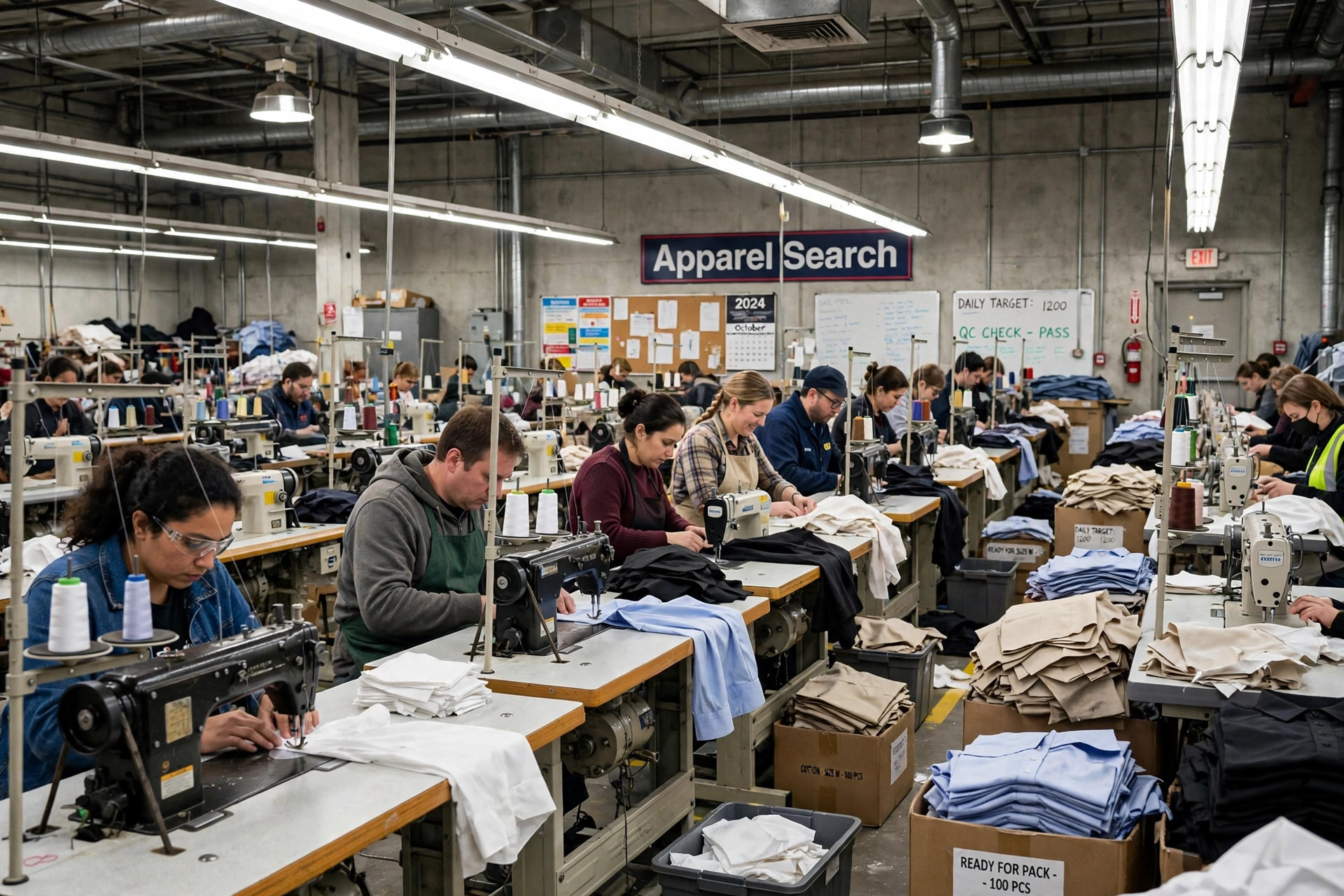
The factory provides only the conversion: cutting the fabric and making (sewing) the garment, plus the factory overhead and margin on that work. The buyer supplies everything material — fabric and all trims — and delivers them to the factory. The CM price is therefore essentially a labor-and-overhead price, built from the garment's SMV and the factory's cost per minute, as detailed in our SMV and labor cost guide.
CMT — Cut, Make and Trim
The factory cuts, makes, and also supplies the trims: sewing thread, labels, hangtags, buttons, zippers and the other accessories the garment needs. The buyer supplies only the fabric, which is by far the largest material cost. CMT is the most common arrangement between established brands and offshore factories, because it splits the work sensibly: the buyer controls the expensive, quality-critical input (the fabric), and the factory handles the many small purchases it can source locally at better prices than the buyer can.
FOB — Free On Board (Full Package)
The factory supplies everything: fabric, trims, cutting, making, finishing, packing, and delivery of the finished, boxed garments onto the vessel at the port of export — the full stack you can see itemized in our cost sheet guide. The buyer approves materials, samples and the final price, but buys nothing separately. This is full-package sourcing, and it is how most smaller brands and first-time importers buy, because it converts the entire supply problem into a single price.
Why Buyers Choose Each Model
Control pushes buyers toward CM and CMT. A brand that has negotiated its own fabric price with a mill, or that cannot risk a factory substituting a cheaper cloth, keeps fabric in its own hands. Fabric quality and shade consistency are the most visible qualities of the finished garment; surrendering them requires trust. Simplicity pushes toward FOB: no fabric purchase orders, no shipping fabric across the world, no trims arriving late from three suppliers, and one invoice at the end. Cash flow cuts both ways — under CMT the buyer pays for fabric months before the garments ship, while under FOB the factory finances the materials (and, reasonably, prices that financing into its margin).
Risk follows the same split. Under CMT, if the buyer's fabric arrives late, short, or off-shade, the production slot and the problem belong to the buyer. Under FOB, late or faulty fabric is the factory's problem to solve — though a wise buyer still inspects materials before cutting, because a solved problem and an on-time shipment are not always the same thing.
A note on terminology: the many pages on this site named cmt_ — cmt_blouses.htm, cmt_dresses.htm and so on — are directories of CMT factories organized by garment type, not costing pages. If you are sourcing rather than studying, start from the CMT factory directory hub and choose your garment category.
Comparing Quotes Across Models
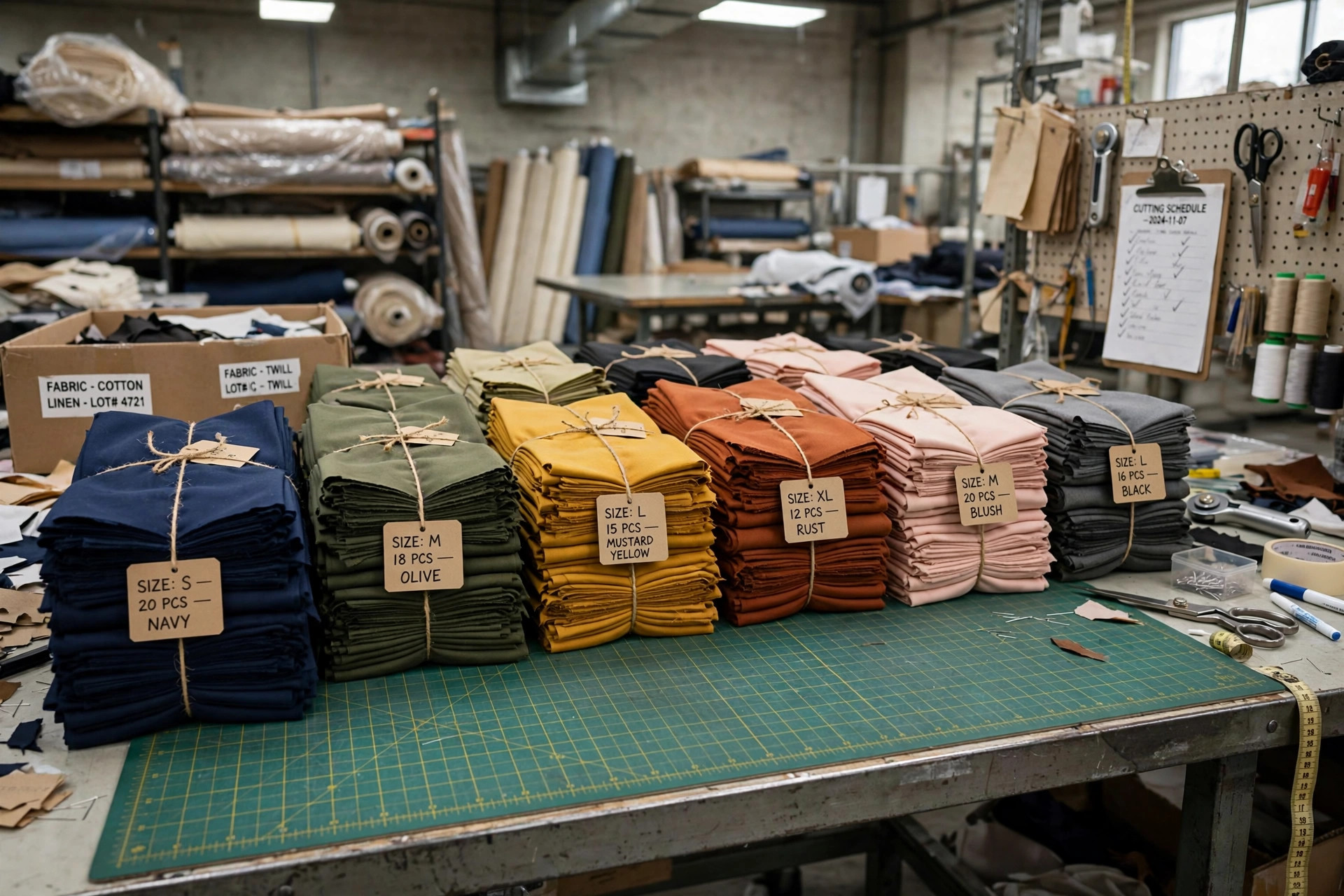
To compare a CMT quote with an FOB quote honestly, rebuild both to the same basis. Take the CMT price and add: your fabric cost per garment (consumption × your mill price — see the fabric consumption guide), the freight and any duty to move that fabric to the factory, and financing cost if you pay for fabric long before shipment. Set that total against the FOB price. The gap that remains is the factory's materials-handling margin under FOB — sometimes worth paying, sometimes not, but now it is a number you can see and negotiate, rather than a misunderstanding waiting for production week.
One more caution: confirm in writing which side supplies easily forgotten items — cartons, poly bags, and any special packing — because "trim" is interpreted generously by whoever benefits from the ambiguity. Good agreements list the bill of materials and mark each line B (buyer) or F (factory). It takes ten minutes and prevents the most common CMT dispute in the industry.
Keep Exploring the Costing Series
Common Questions
What does CMT stand for in garment manufacturing?
CMT stands for cut, make and trim. Under a CMT arrangement the buyer supplies the fabric, and the factory cuts it, makes (sews) the garment, and supplies the trims — thread, labels and other accessories — for a single quoted price.
Who supplies the fabric under CMT?
The buyer. Fabric is the most expensive input in a garment, so under CM and CMT the buyer keeps control of it — buying it directly from the mill and shipping it to the factory. Under FOB or full-package sourcing, the factory buys the fabric as part of its price.
Is CMT cheaper than FOB?
The CMT quote looks lower because it excludes the fabric, not because the work is cheaper. To compare fairly, add your fabric cost (including freight and any duty on the fabric) to the CMT quote and set it against the FOB price for the same garment.
What is full-package sourcing?
Full package means the factory takes responsibility for everything: sourcing fabric and trims, cutting, making, finishing, packing and often product development support. The buyer approves materials and samples but does not purchase or ship any inputs.
Back to the Garment Costing Guide
This page is one part of the Apparel Search Garment Costing & Production Economics Guide — return to the hub for the full costing workflow and every guide in the series.