Garment Costing Guide · Fabric Consumption
Fabric Consumption & Costing
One number — how much fabric each garment uses — decides the biggest line on the cost sheet. Here is how that number is honestly derived.
Ask a factory how it arrived at its fabric price and the answer that matters is not the mill's quotation — it is the consumption. Within the Garment Costing Guide, this is the page about the single most consequential figure in garment costing: the quantity of fabric one garment consumes. Multiply it by the fabric price and you have the fabric line, which on most garments is half the total cost or more. A five percent error in consumption is therefore not a rounding issue. On a 100,000-piece order it is a truckload of fabric, bought or not bought.
Consumption sounds like a measurement, and at its best it is one. But it is derived differently for woven and knitted fabrics, it changes with the size mix of the order, and it depends on how honestly the cutting loss has been counted. This guide works through each method in turn.
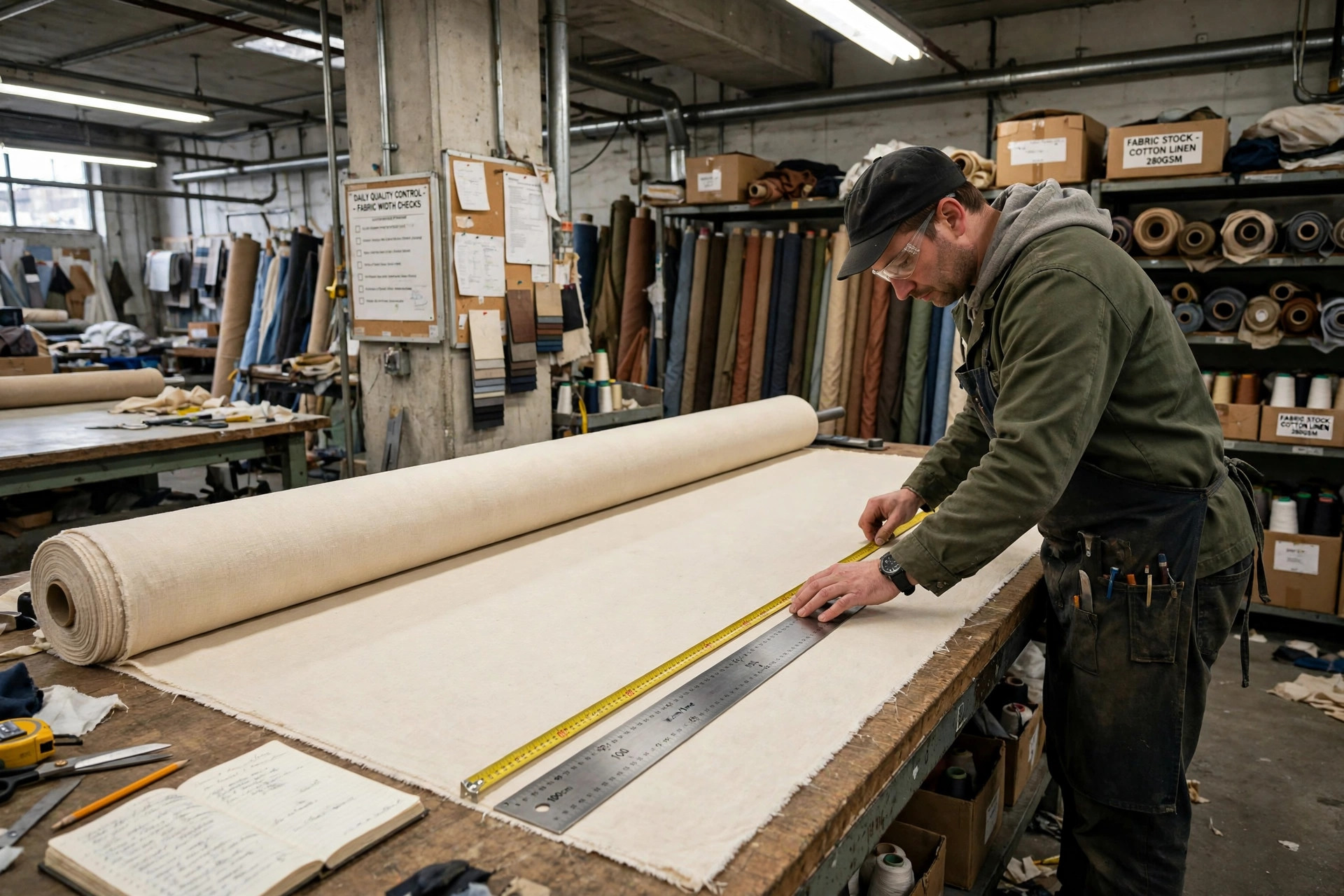
Woven Fabrics: Consumption Comes From the Marker
For wovens, consumption is a length. Pattern pieces for the order's size ratio are arranged in a marker — the full cutting layout — and the consumption per garment is simply:
If a marker 9.0 meters long carries the pieces for five shirts, consumption is 1.80 meters per shirt — the figure used in the worked example in our cost sheet guide. Everything about the marker matters to that division: the fabric's usable width (wider fabric usually yields better), the size mix laid in the marker, and the efficiency with which the pieces nest, which is the whole subject of our marker efficiency guide. This is also why a costing made before the marker exists is an estimate: the merchandiser assumes a yield, and the re-costing after the real marker is made is where estimates meet fact.
Knit Fabrics: Consumption by Weight, From GSM
Knitted fabric is bought and sold by weight as often as by length, and knit garments are costed in kilograms. The calculation runs through the fabric's weight per unit area, its GSM (grams per square meter):
Work it once and it stays with you. A basic tee's pattern pieces total about 0.85 m². In a 180 GSM cotton jersey, the fabric in the garment weighs 0.85 × 180 = 153 grams. Add a cutting wastage allowance of about 8 percent — knits waste a little more than wovens in cutting and in the unusable roll ends — and the costed consumption is roughly 165 grams per garment, or 0.165 kg. At a jersey price of, say, $7.50 per kilogram, the fabric line is about $1.24 per tee. Change the GSM to 220 for a heavier winter tee and the same garment consumes 187 grams before wastage: the fabric choice alone has moved the cost, before a single seam is sewn.
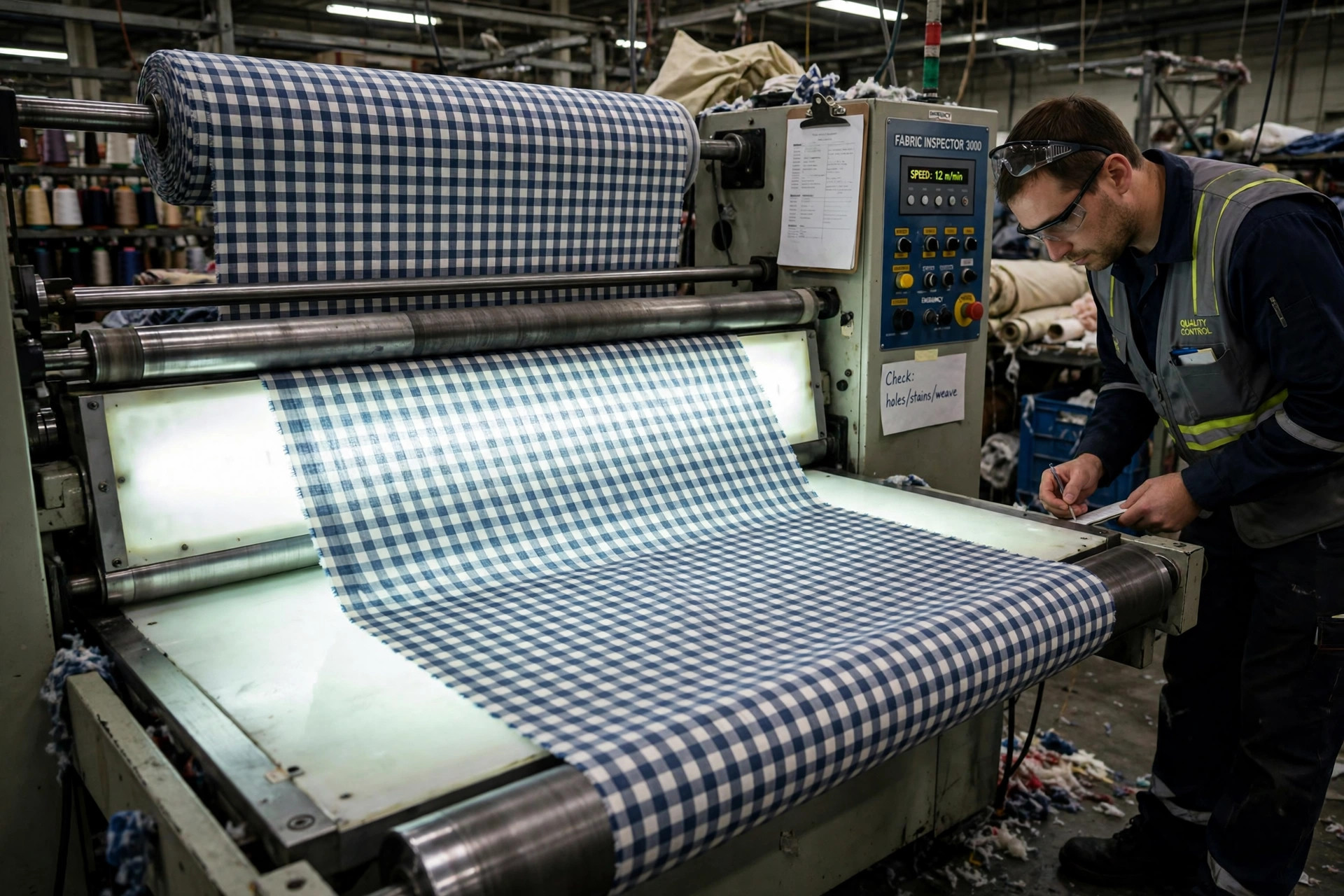
The GSM method also exposes a quiet trap: GSM is a specification with a tolerance, and fabric delivered at the bottom of its tolerance weighs less per garment — good for the fabric bill, risky for a buyer who specified the heavier hand-feel. Serious buyers therefore verify delivered GSM and width on the inspection table, which is one reason fabric inspection belongs in the costing conversation at all.
Size Ratio, Grading and the Average Garment
No order is one size. A production marker mixes sizes in the order's ratio — perhaps 1:2:2:1 across S:M:L:XL — and consumption is the weighted average across that mix. This is where costing meets pattern grading: the grade rules that step each pattern piece up or down between sizes determine how much more fabric an XL consumes than an S. A costing built on the sample size alone understates a plus-heavy order and overstates a petite one, which is why costing teams and pattern teams work from the same graded data — the relationship is explored from the pattern side in our Sizing, Fit & Pattern Grading Guide. When a buyer changes the size ratio after the price is agreed, the honest factory re-costs; the average garment has genuinely changed.
From Consumption to the Fabric Bill
Consumption per garment × order quantity gives the total fabric to buy, with the wastage allowance and a small provision for replacement of defective cut parts added on top. Buyers receiving a fabric requirement that looks generous should ask which consumption and which allowance produced it — both should be statable in one sentence each. And when you want to test figures of your own, the fabric consumption calculator on Apparel Search runs the arithmetic interactively, while the fabric consumption optimizer explores how different yields change the requirement.
The buyer's shortcut: fabric cost per garment = consumption × fabric price. If a quote's fabric line cannot be decomposed into those two numbers, it cannot be negotiated — insist on both before discussing either.
Keep Exploring the Costing Series
Common Questions
What is fabric consumption in garment costing?
Fabric consumption is the amount of fabric required to produce one garment, expressed in meters or yards for wovens and usually in grams or kilograms for knits. It is multiplied by the fabric price to give the fabric cost per garment — the largest line on most cost sheets.
How is knit fabric consumption calculated?
For knits, consumption is calculated by weight: the total pattern area in square meters multiplied by the fabric's GSM (grams per square meter) gives the garment's fabric weight, to which a wastage allowance is added. A tee with 0.85 square meters of pattern area in 180 GSM jersey uses about 153 grams, or roughly 165 grams with wastage.
Why does consumption change with the size ratio?
Larger sizes have larger pattern pieces, so an order weighted toward XL consumes more fabric per garment than one weighted toward S. Costings use a ratio-weighted average consumption across the sizes ordered, which is why the same style costs more in fabric on a plus-heavy order.
What wastage percentage is normal on fabric consumption?
Cutting and end-loss allowances of 2 to 5 percent are typical on the consumption figure, with higher allowances for small orders, difficult fabrics and styles with many small parts. The allowance should always be shown separately on the cost sheet.
Back to the Garment Costing Guide
This page is one part of the Apparel Search Garment Costing & Production Economics Guide — return to the hub for the full costing workflow and every guide in the series.