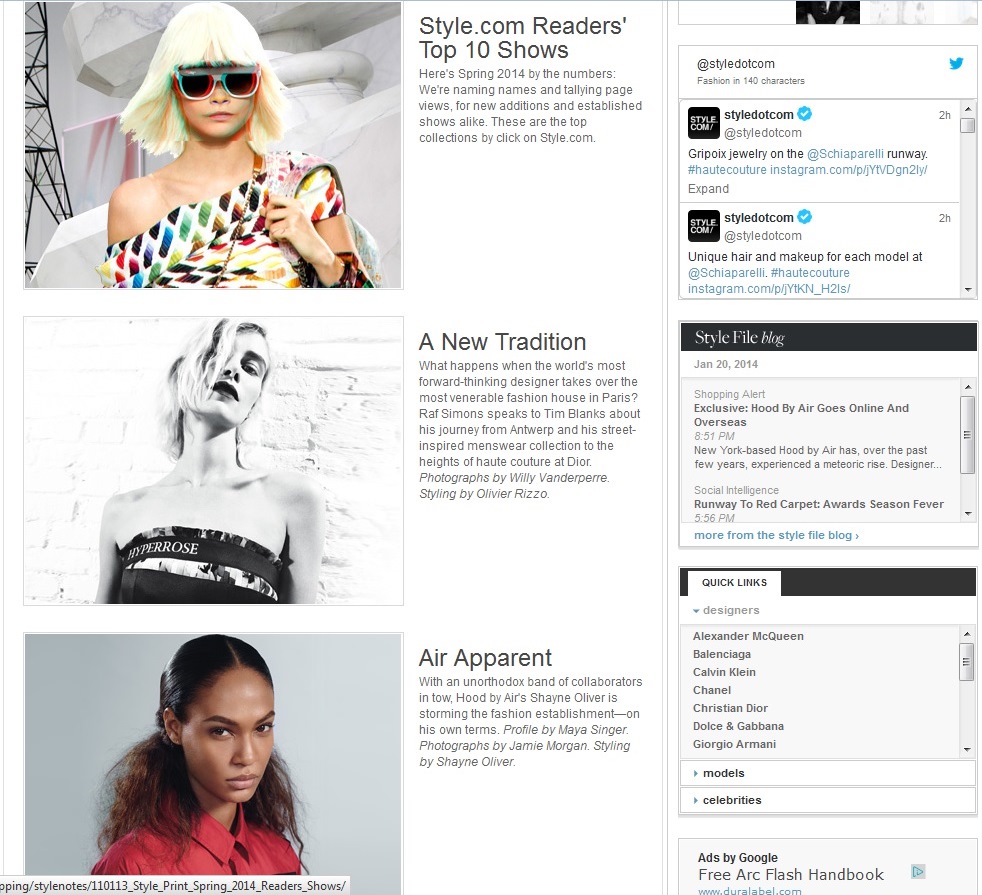
Style.com Fashion News for 2014
The runway authority among the 2014 reading picks — reviews, images, videos and insider blogs
Every group of fashion bookmarks in 2014 needed one address for the collections themselves, and in the best reading material for 2014 that address was Style.com. Its promise was breadth with authority: covering the world of fashion, designers, models, celebrities, beauty and shopping in one place, anchored by comprehensive runway coverage that designers, retailers and devoted followers all read.
Apparel Search's judgment at the time was short and confident — readers would find Style.com very enjoyable. This page explains what sat behind that judgment: a site organized around the fashion calendar, where each season's shows were reviewed, photographed and archived, and where news about the people who make fashion arrived alongside the clothes. Kept today as a historical 2014 page, it describes the runway-reporting model at its height.

Comprehensive Runway Reviews, Images and Videos
The heart of Style.com was the runway. Collection by collection, the site published reviews with images and videos, so a reader could follow a designer's season garment by garment rather than through a handful of newspaper photographs. For anyone who could not sit in the front row — which is to say, for almost everyone — this was how the collections were actually seen in 2014, and the reviews gave the seeing a critical voice: what worked, what changed, and what a house was trying to say.
That archive habit mattered as much as the news habit. Because shows were covered comprehensively and kept accessible, a reader could compare a designer's new collection with earlier seasons, trace a silhouette across years, or settle a question about who showed what, when. Buyers, students and stylists used runway archives the way other industries use reference libraries, and Style.com's was the one the fashion world treated as standard.
The rhythm of the fashion calendar gave the site its shape. Twice a year the womenswear collections moved through the fashion capitals in sequence, with menswear and resort and pre-fall collections filling the months between, and each round meant hundreds of shows to review and photograph against a deadline measured in hours. A site that could keep that pace — publishing a considered review and a complete set of look photographs while the next show was already seating — earned its authority anew every season, which is precisely what comprehensive meant in practice in 2014.
Designers, Models, Celebrities, Beauty and Shopping
Around the runway core sat the rest of the fashion world. Designer coverage followed the creative directors and houses behind the collections; model coverage followed the faces of each season; celebrity coverage connected the runway to the red carpet, where collection pieces reappeared on famous wearers. Beauty reporting covered the hair and makeup created backstage, which often set the next season's beauty trends as surely as the clothes set the clothing trends.
Shopping coverage closed the loop between watching fashion and wearing it. Insider blogs added voice and gossip to the reporting — the asides, arrivals and opinions that made the industry feel like a community rather than a catalog. Taken together, the mix explains the site's position in 2014: it was possible to read only Style.com during fashion week and still feel fully informed, which is exactly what a best-of list is meant to identify.
Style.com Among the 2014 Reading Picks
The other featured reads in the 2014 guide divide the remaining territory. Refinery29 translated trends into everyday dressing for a young audience, Wonderwall specialized in celebrity news and photographs, and the Huffington Post supplied general-news breadth. Style.com's territory was the source material itself — the collections, reviewed and recorded. A reader who started there could then watch the same season ripple outward through the other three.
Fashion publishing has reorganized itself since 2014, and runway coverage now lives across many platforms, but the standard this page records is the one those platforms inherited: every look photographed, every major show reviewed, and the whole season searchable. That is why a one-line recommendation was enough at the time — the site's role was understood by everyone who followed fashion.
Common Questions
What was Style.com known for in 2014?
Comprehensive runway coverage — reviews, images and videos of the collections — together with reporting on designers, models, celebrities, beauty and shopping, and insider blogs from within the industry.
Who read Style.com?
Anyone following the collections seriously: fashion consumers who wanted to see every look, plus buyers, stylists, students and industry readers who used its season-by-season runway archive as a reference.
How did Style.com differ from the other 2014 reading picks?
It reported from the source — the shows themselves. Refinery29 translated trends for everyday readers, Wonderwall covered celebrity style and photos, and the Huffington Post offered general-news scale; Style.com was the runway record the others drew on.
Photos