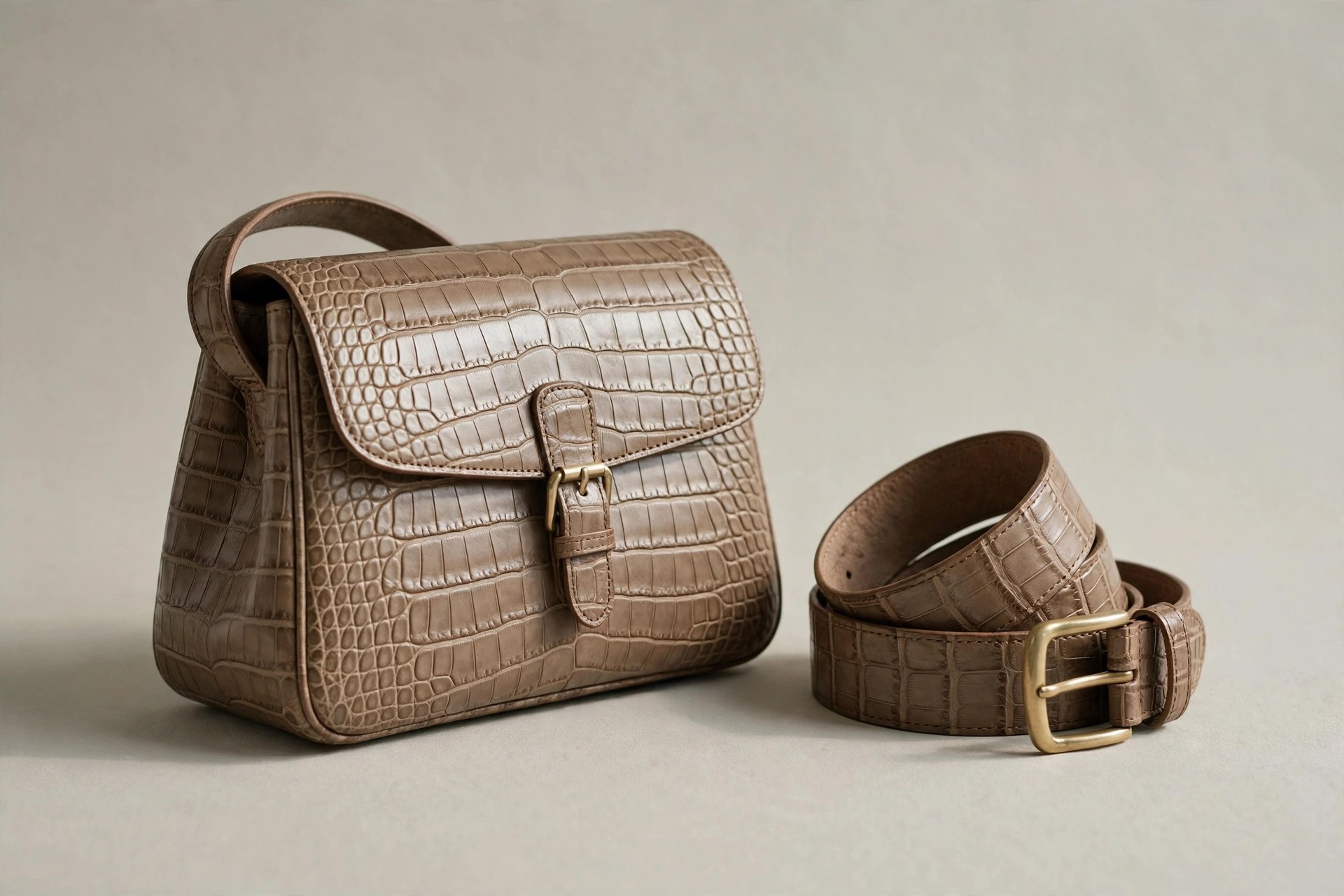
Crocodile print — usually called croc-embossed or mock croc — is a texture pressed into leather or faux leather to imitate the large, rectangular scales of crocodile and alligator skin. More than any other animal print, it is about texture rather than pattern: the effect often comes in a single solid color, and the interest lies in the contrast between the raised, polished scale tiles and the deeper lines between them. It is the classic finish for structured handbags, belts and boots, and the most formal-looking of the animal prints.
Mock Croc: What It Actually Is
Most crocodile print is not crocodile. The standard material is cow leather embossed under heat and pressure with a croc pattern — often called mock croc — or a synthetic faux leather treated the same way. Genuine crocodile and alligator skins do exist in the luxury market, where they are expensive, regulated and sold as exotic leather in their own right.
The pattern itself is distinctive once you look closely. Crocodile scales are broad, squarish tiles across the belly of the animal, becoming smaller and rounder toward the flanks, so a convincing embossing varies its tile size across the piece rather than repeating identical squares.
The Classic Carriers: Bags, Belts and Boots
Croc embossing belongs on structured accessories, because firm shapes hold the texture flat enough to catch the light. The structured handbag is the signature piece — a croc-embossed tote, top-handle bag or clutch instantly reads polished and deliberate, and it has been a wardrobe staple for generations for exactly that reason.
Boots and shoes complete the trio, from croc-embossed ankle boots to loafers and courts where the texture quietly replaces a plain finish. Clothing in croc-embossed material exists — skirts and jackets in faux leather, mostly — but it is stiffer and bolder than the accessories and harder to wear well. Watch straps, wallets and document cases round out the family.
Styling and Judging Quality
Style croc by texture, not by print rules. Because a classic croc piece is one solid color, it does not clash with other patterns the way spotted prints do — a black croc bag works with florals, stripes and checks alike.
Quality in embossing is easy to check. The tiles should vary in size as real scales do, the grooves between them should be deep and clean rather than shallow or blurred, and the pattern should not repeat in an obvious mechanical grid. Press a thumb into the surface: good embossing on real leather feels firm with defined edges, while cheap versions feel spongy, plasticky or suspiciously uniform.
Common Questions
- Is crocodile print made from real crocodiles?
- Usually not. Most croc-print goods are mock croc: ordinary cow leather, or synthetic faux leather, embossed with heat and pressure to imitate crocodile skin's rectangular scales. Genuine crocodile and alligator leather exists at the luxury end of the market, where it is expensive, regulated and marketed openly as exotic skin. Everyday bags, belts and boots described as crocodile print, croc-embossed or mock croc are imitations — which makes them cheaper, more consistent and much easier to care for.
- How can you tell good croc embossing from bad?
- Look at the tiles first: real crocodile scales vary in size across the skin, so convincing embossing varies too, while cheap versions repeat identical squares in an obvious grid. The grooves between tiles should be deep and sharply defined, and the surface should feel firm rather than spongy or plasticky when pressed. Then check the stress points — folds, corners and edges — because poor faux croc cracks and peels there first. A polished finish with clear contrast between tile and groove is another good sign.
- Does crocodile print clash with other patterns?
- Rarely, because classic croc is a texture in a single solid color rather than a visible pattern. A black or brown croc-embossed bag, belt or pair of boots works alongside florals, stripes, checks and other prints without competing, which is one reason croc accessories are considered so versatile. The exceptions are very high-gloss finishes and unusually large tiles, which do draw the eye; if you are wearing a bold patterned outfit, choose a smaller-scale, lower-shine croc piece to keep the balance.
- How do you care for croc-embossed leather?
- Treat it as you would smooth leather, with a little extra care around the grooves. Dust it regularly with a soft cloth so dirt does not settle into the lines between tiles, and clean it with a slightly damp cloth, drying it straight away. A plain leather conditioner used sparingly keeps real leather supple, but avoid heavy waxes that fill the grooves and dull the contrast. Keep embossed pieces away from prolonged heat and sunlight, and store bags stuffed so the structure — and the texture — keeps its shape.
Animal Print Guides
Four pattern families, four very different moods. These guides cover snake, dalmatian and crocodile prints in detail, plus an overview that shows how to tell all the major animal prints apart and wear each one well.