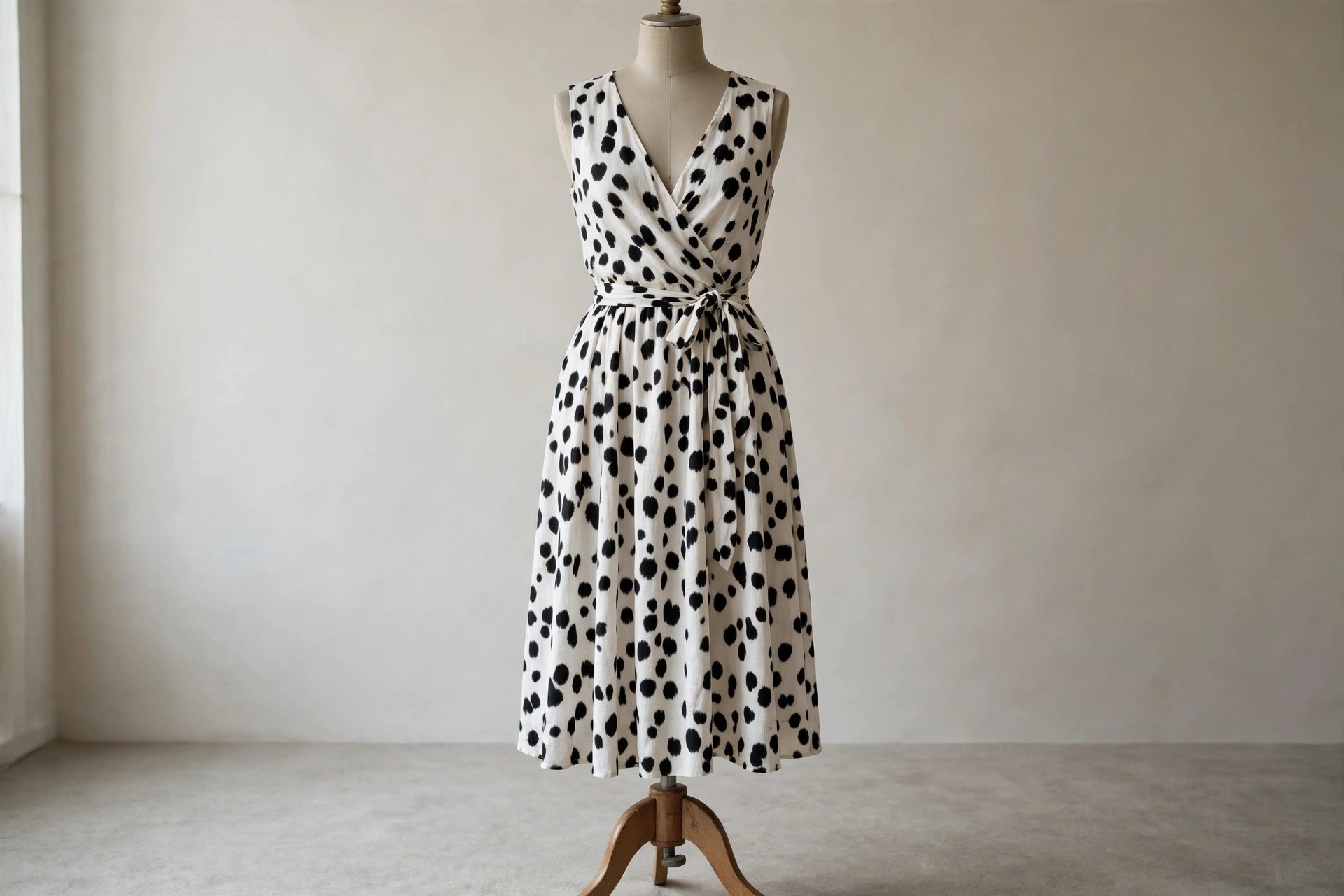
Dalmatian print is a pattern of irregular black spots scattered across a white or cream ground, named after the Dalmatian dog's distinctive coat. Unlike orderly polka dots, the spots vary in size, shape and spacing, which gives the print its lively, hand-drawn energy. It is the most playful of the common animal prints — graphic, high-contrast and instantly recognizable — and it turns up on dresses, skirts, knitwear, coats and accessories whenever fashion is in a mood for black and white with personality.
Spots, Not Polka Dots
The difference between dalmatian print and polka dots is regularity. Polka dots are uniform circles arranged in an even, repeating grid — a tidy, geometric pattern. Dalmatian spots are organic: each one a different size and slightly different shape, placed at uneven intervals, denser in one area and sparser in another, exactly as they fall on the dog's coat.
Scale is the main design variable. Small, sparse spots read almost like a texture from a distance and are the easiest version to wear, behaving like a softened black-and-white pattern. Large, bold spots make a deliberate statement and demand simpler styling around them.
Styling Dalmatian Print
The print is already a complete black-and-white outfit idea, so the easiest styling is monochrome: pair a dalmatian dress or skirt with black or white elsewhere — black shoes and bag with a spotted dress, a white shirt with a spotted skirt — and the result looks sharp rather than busy. Because the palette is neutral, one bright accent works beautifully against it.
Tailoring is the tool that keeps dalmatian chic. The print's playfulness can tip toward costume or children's clothing in very soft, shapeless garments, but on a structured blazer, a crisp shirt dress, a pencil skirt or a well-cut coat it looks deliberate and grown-up. Fit matters for the same reason: clean lines and a proper fit read as fashion, while baggy dalmatian pieces read as novelty.
Casual Wear and Occasions
Casual dalmatian is easy and fun: a spotted knit with jeans, a spot-print skirt with a plain T-shirt and sneakers, or spotted trainers and bags with plain outfits. The black-and-white palette keeps even relaxed pieces looking coordinated.
For smarter occasions, the rules are dosage and cut. A tailored dalmatian dress or a spotted blouse with plain black trousers can work for an office with a creative dress code or for evening events, particularly with the single bright accent kept small.
Common Questions
- What is the difference between dalmatian print and polka dots?
- Regularity. Polka dots are identical circles placed in an even, repeating pattern, so the effect is tidy and geometric. Dalmatian spots are deliberately irregular — every spot differs in size and shape, and the spacing between them varies across the garment, imitating the coat of a Dalmatian dog. That organic irregularity makes dalmatian an animal print with a lively, hand-drawn feel, while polka dots read as a classic graphic pattern. The two style differently: polka dots feel retro and neat, dalmatian feels playful and modern.
- What colors go with dalmatian print?
- The print is black on white, so it pairs with the whole monochrome family — black, white, grey and silver — without any effort. Its best trick, though, is taking one bright accent: red is the traditional partner, and cobalt blue, emerald green, hot pink or yellow all work the same way. Keep the accent to a single item, such as shoes, a bag or a belt, so the outfit stays graphic and clean. Mixing dalmatian with other prints is risky; plain partners flatter it most.
- Can dalmatian print look smart rather than playful?
- Yes, and the cut of the garment is what does it. On tailored, well-fitting pieces — a structured blazer, a shirt dress, a pencil skirt, a neat coat — dalmatian reads as a deliberate graphic print and can suit offices with creative dress codes and evening events. Smaller, sparser spots also read smarter than large bold ones. What pushes the print toward novelty is soft, shapeless styling. Choose clean lines, keep the rest of the outfit plain, and the print looks chic instead of cute.
- Where should the spots fall on a dalmatian print dress?
- Ideally, not in one unfortunate place. Because the spots are irregular, their placement changes how a garment looks on the body: a single large spot centered on the bust, stomach or hip draws the eye straight to it. Better-made pieces cut the pattern thoughtfully so spots are distributed evenly. When trying a dalmatian garment on, check the front in a mirror for any spot that dominates an area you would rather not emphasize — and remember the back view matters too, since the repeat falls differently there.
Animal Print Guides
Four pattern families, four very different moods. These guides cover snake, dalmatian and crocodile prints in detail, plus an overview that shows how to tell all the major animal prints apart and wear each one well.