01 — Definitions
Three Services Hide Behind One Word
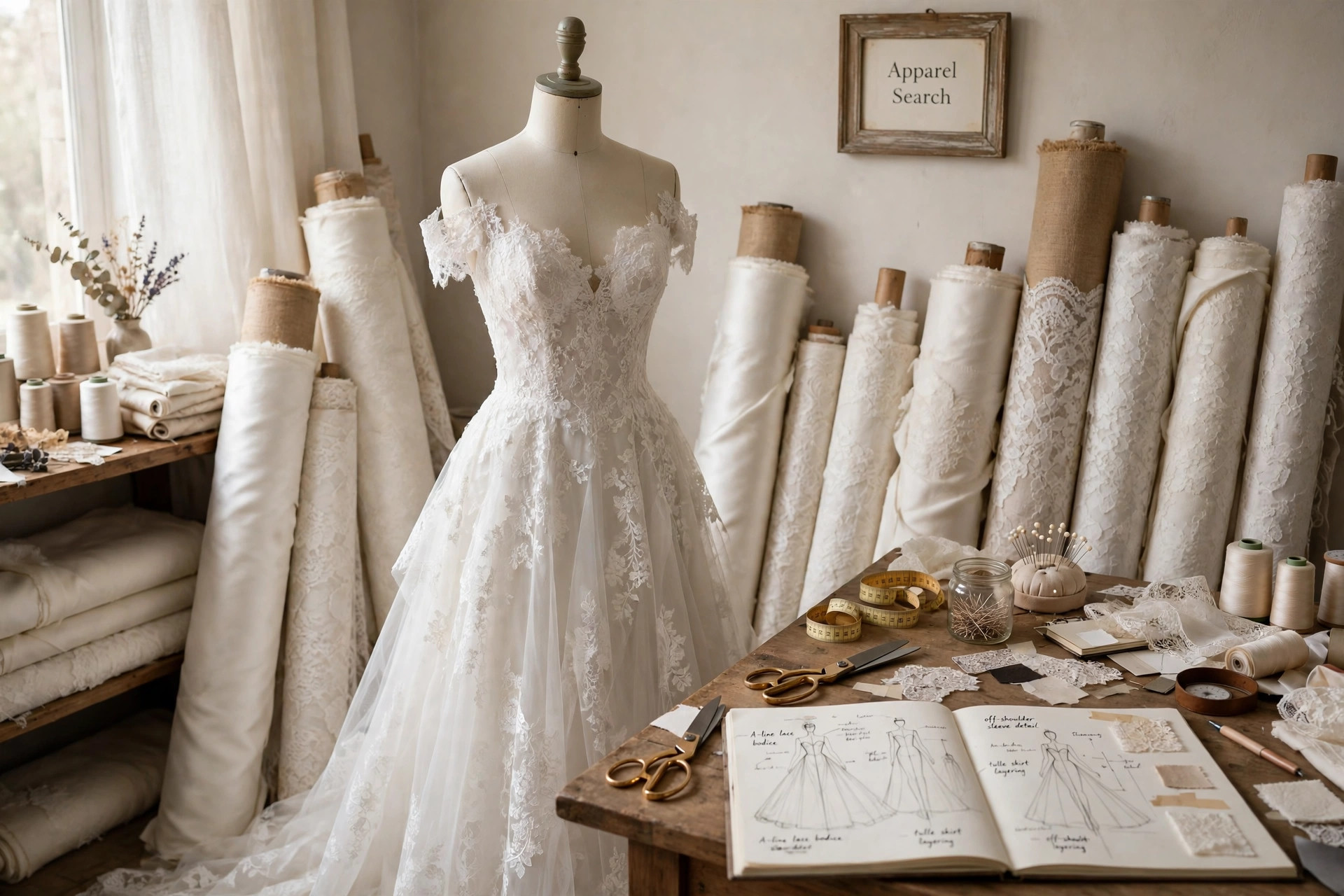
“Custom bridal tailor” covers three different arrangements, and booking the wrong one is the most common way brides and tailors disappoint each other. A bespoke bridal tailor (often working as a dressmaker or bridal atelier) makes a gown from nothing: a design is developed with the bride, a pattern is drafted for her body, a trial version is sewn in inexpensive cloth, and only then is the real fabric cut. This is the full custom route — maximum freedom, longest timeline, highest cost. Made-to-measure starts from an existing design or pattern — sometimes a salon’s own collection — and adapts it to the bride’s measurements and chosen details. It delivers most of the fit benefit at a shorter timeline and lower price.
The third service is the one most brides actually need: a bridal alterations specialist, who takes a bought gown — from a salon, a sample sale or a family member — and fits it: hems over the right shoes, bodice and waist taken in, straps, sleeves and bustles added. The general craft behind that work is covered in the clothing alterations guide; bridal is its most demanding branch, because the fabrics are layered, beaded and unforgiving, and there is no second wedding day to get it right on. Many excellent tailors do alterations but not bespoke; many bespoke ateliers do not alter other people’s gowns. The first question of any search is therefore not “who is best?” but “which of the three do I need?”
02 — The Search
Finding and Vetting a Tailor Locally
Because the work happens in person, across several fittings, the search is deliberately local — a tailor within comfortable travel distance, since the final fittings cluster in the last weeks. The productive places to look, in rough order of reliability: bridal salons, which keep referral lists of the alterations specialists and dressmakers they trust (and stake their own reputation on the names); independent tailors and dressmakers with bridal work in their portfolio, found through local search and reviews; theater, ballet and dance costume shops, whose makers build structured, embellished garments for a living; and fabric stores, whose staff know every serious needle in the area. The tailor directory lists tailoring services the site has catalogued, as a starting point for names.
Vetting is where the protection happens. Ask to see finished bridal work — photographs at minimum, a garment in the studio if possible — and look specifically at work like yours: lace, beading, boned bodices and long hems are separate skills. Read reviews for the pattern that matters: gowns finished on time, honest warnings when a request was not achievable, fittings handled calmly. Ask directly about capacity — a one-person atelier in peak season has a hard ceiling, and a tailor who says “I cannot take that date” is giving you valuable honesty. Red flags are consistent across cities: no portfolio, a quote given without seeing or handling the gown (or the design), full payment demanded up front, and vagueness about how many fittings are included. Bring the reference material the salon route would have provided — the bridal gowns guide and the bridal fashion guide map the silhouettes and terms you will be discussing.
03 — The Calendar
Timeline and Fittings, Step by Step
| When (bespoke gown) | What happens |
|---|---|
| 9–12 months out | Consultation and design: silhouette, fabrics, budget agreed; tailor booked with a deposit |
| 6–8 months out | Pattern drafted; muslin (toile) fitting — the design proven in trial cloth, proportions corrected |
| 4–6 months out | Real fabric cut; first fitting in the gown itself, structure and length set |
| 2–3 months out | Second and third fittings: fit refined with the actual shoes and undergarments; details (sleeves, neckline, train, bustle) finalized |
| 2–4 weeks out | Final fitting and collection; the gown is pressed and stored flat or hung by its loops |
For alterations of a bought gown, compress the same logic: book the tailor when the gown is bought, expect the first fitting two to three months out, and hold the final fitting close to the day — bodies and hems both settle late. At every fitting, wear the exact shoes and undergarments the day requires; a hem pinned over different shoes is a wrong hem, however skilled the tailor. The broader shopping calendar these dates sit inside is laid out in the bridal dress guide’s timeline, and the two schedules should be read together when the gown is being bought rather than made.
04 — The Money
What Drives the Cost — and the Questions to Ask
Bespoke cost divides into fabric, work and structure. Fabric is the visible driver: silk, lace and beading can exceed the labor in the final price, and a tailor who suggests achieving a look in a less costly cloth is solving a budget problem, not cutting a corner. Work is the hours: hand-finished lace appliqué, boning, layered skirts and covered buttons are all time, priced as time. Structure is the hidden third: the internal corsetry and support that let a strapless or fitted gown carry itself. For alterations, the same drivers appear in miniature — lace and beaded hems cost more than plain ones, taking in a boned bodice costs more than a hem, and rush timelines cost most of all. Any quote should name what it includes: how many fittings, pressing, a bustle, and what happens if weight changes between booking and the day.
The questions are the contract: a good tailor welcomes every one of them, because the answers are how the work stays honest.
- Which of the three services do you offer — bespoke, made-to-measure, alterations — and how much of your work is bridal?
- May I see finished gowns, ideally in fabrics like mine?
- How many fittings are included, and what is the full timeline against my date?
- What does the quote include — muslin, pressing, bustle, storage — and what triggers extra charges?
- What deposit do you take, and what is the payment schedule?
- What happens if my size changes, or the timeline slips?
- Who actually sews the gown — you, or a team I should meet?
05 — Good to Know
Common Questions
How much does a custom bridal tailor cost compared with alterations?
They are different purchases. Alterations on a bought gown commonly run to a few hundred dollars depending on the work — hems, taking in, adding a bustle — with lace, beading and boned bodices at the top of the range. A bespoke gown is a commission: fabric plus many hours of skilled labor across months, typically starting where a mid-priced salon gown costs and rising with fabric and complexity. Made-to-measure sits between. Get itemized quotes; the drivers — fabric, handwork, structure, fittings — should each be visible.
How far ahead should I book a bridal tailor?
For a from-scratch gown, first consultation nine to twelve months before the wedding is comfortable, and the making itself wants six to nine months. For alterations, book the tailor when the gown is bought and expect fittings to begin two to three months out. In peak season, good local tailors fill their calendars months ahead — the booking, not the sewing, is the part that cannot be rushed later.
Can a tailor copy a designer gown I have seen?
A tailor can design a gown inspired by one you love — the same silhouette family, similar neckline, comparable fabric — and fit it to you. An exact copy is a different matter: it reproduces another designer’s protected design, and reputable tailors decline it, quite apart from the practical truth that photographs hide the internal structure that makes the original work. Bring pictures as a starting point for the conversation; expect the result to be your gown, not a replica.
What should I bring to the first consultation?
Your wedding date and venue (both shape the design), photographs of gowns and details you like, a realistic budget range, and any fabric or family elements — a mother’s veil, lace from a family dress — you hope to include. Wear or bring the shoes and undergarments you expect to use if any fitting will happen. And bring your questions; the consultation is a vetting interview in both directions, and a good tailor will ask as many as you do.
More to Explore
Search Apparel Search