Percale
Fabric Definitions — fabric and textile definitions from Apparel Search
Search Apparel Search
At a Glance
Definition: Percale is a closely woven plain-weave fabric often used for bed linens, firm and smooth with no gloss, with a thread count of about 200 or higher.
Pronunciation: per-KAHL
Category: Fabric Definitions
Word Origin
The word may originate from the Persian pargālah, 'rag', although the Oxford English Dictionary (December 2005) has traced it only as far as 18th-century French. The cloth was originally imported from India in the seventeenth and eighteenth centuries, then manufactured in France.
Percale is a closely woven plain-weave fabric often used for bed linens. The term describes the weave of the fabric, not its content, so percale can be a 50/50 blend of cotton and polyester, 100% cotton, or a blend of other fabrics in any ratio. A percale weave has a thread count of about 200 or higher and is noticeably tighter than the standard weave used for bed-sheets.
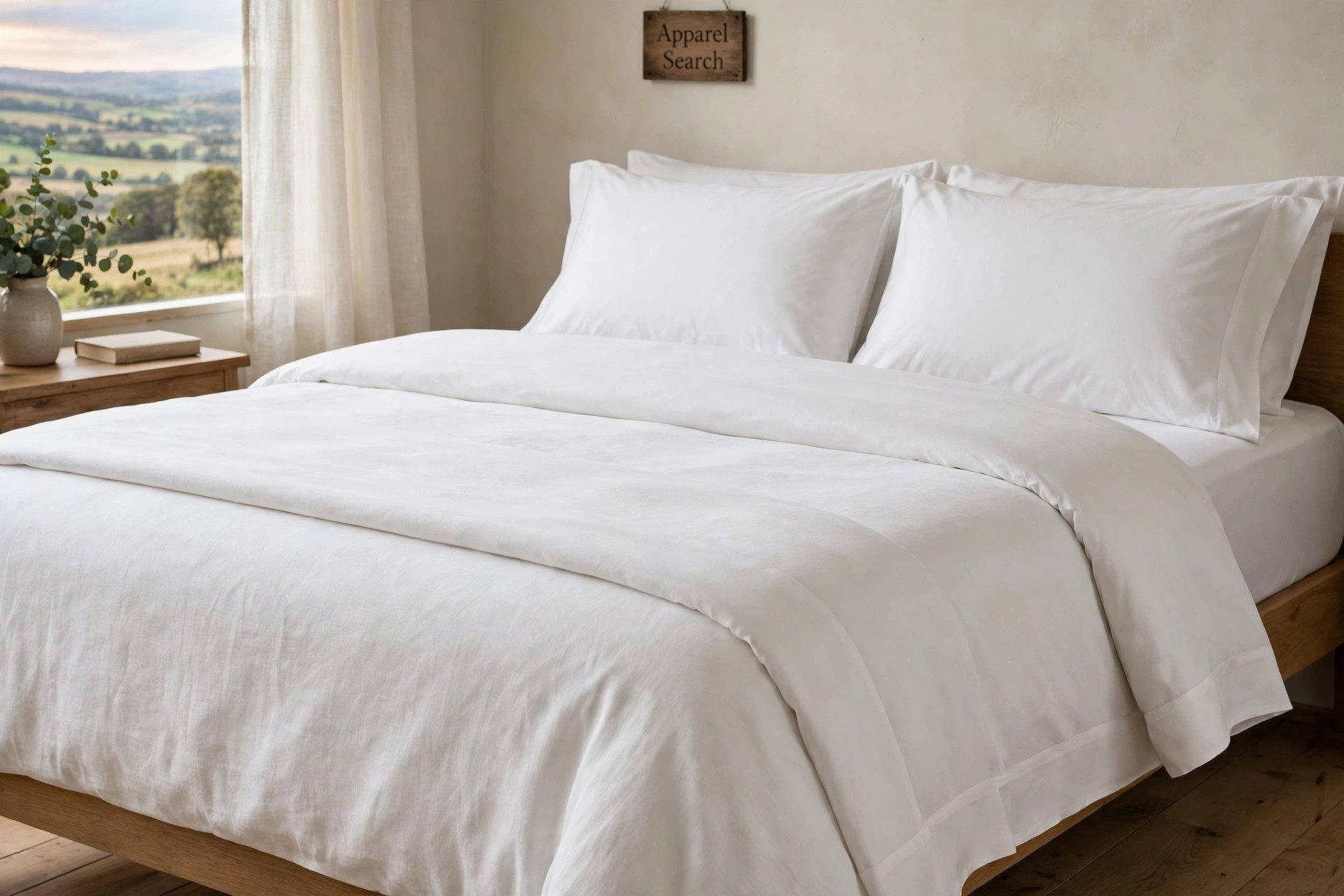
A Sheeting Weave Defined by Tightness
Percale is best understood as a standard for plain weave rather than a separate weave. The interlacing is the basic one-over, one-under of plain weave, but the threads are packed far more closely than in ordinary sheeting: a thread count of about 200 or higher, warp and weft pressed together until the cloth is firm, smooth and opaque, with a matte face and no gloss. That tightness is the whole character of the fabric. It makes percale crisp rather than silky — a percale sheet feels cool, smooth and slightly papery against the skin, and rustles faintly where a sateen sheet drapes silently. It makes the cloth durable, because densely packed yarns share abrasion across many threads. And it makes percale an excellent printing ground: the smooth, even, tightly closed surface takes printed patterns cleanly.
The finish of the fabric is independent of its weave, so percale is made in both solid colours and printed patterns, and a given percale can be either printed or unprinted without changing what makes it percale. It has medium weight, is firm and smooth with no gloss, washes very well, and is made from both carded and combed yarns — carded yarns giving a slightly softer, more matte cloth, combed yarns a smoother one.
Fibre Is a Separate Choice
Because percale names a weave, fibre content is a separate decision about feel, care and price. A percale can be 100% cotton, a 50/50 blend of cotton and polyester, or a blend of other fabrics in any ratio; two sheets both correctly labelled percale can have completely different fibre contents, and what they share is the tight plain-weave construction. Cotton-polyester blends trade some of cotton's breathability for wrinkle resistance and easy washing.
Percale sits in the family of fine, closely woven plain cloths alongside batiste, cambric, lawn and muslin — cloths that divide the same plain-weave ground by fineness, weight and finish, with percale specified by its tight sheeting count.
From India and France to the Linen Closet
Percale was originally imported from India in the seventeenth and eighteenth centuries, when fine Indian plain-weave cottons set the standard European mills worked to match, and it was then manufactured in France. In modern use the term has settled almost entirely on bed linen: percale sheets and pillowcases are the crisp, cool option in the sheeting department, favoured by sleepers who find sateen's sheen and cling too warm, and by hotels for a fresh, smooth, hard-wearing sheet that launders well at high temperatures. Percale also appears in garments — shirts, dresses and linings — wherever a firm, smooth, closely woven plain cloth is wanted. Choosing percale is choosing a weave specification: check that the cloth is a genuine tight plain weave at the stated count, and treat fibre content as its own decision.
Common Questions
Is percale a type of cotton?
No. Percale names a weave, not a content: it is a closely woven plain weave, and the cloth can be 100% cotton, a 50/50 cotton-polyester blend, or another blend in any ratio. Two sheets both correctly labelled percale can have completely different fibre contents — what they share is the tight plain-weave construction.
What thread count makes a fabric percale?
A percale weave has a thread count of about 200 or higher and is noticeably tighter than the standard type of weave used for bed-sheets. The cloth is made from both carded and combed yarns, has medium weight, and is firm and smooth with no gloss.
Can percale be printed?
Yes. The finish of the fabric is independent of its weave, so percale is made in both solid colours and printed patterns, and a given percale can be either printed or unprinted without changing what makes it percale.