Carhartt
Fashion Definitions — fashion brand profiles from Apparel Search
Search Apparel Search
At a Glance
Definition: Carhartt is a U.S.-based clothing company founded in 1889, synonymous in the United States with hard-wearing, rugged, durable work clothes such as shirts, jeans and dungarees.
Category: Fashion Definitions
Carhartt is a U.S.-based clothing company founded in 1889. In the United States the name is synonymous with hard-wearing, rugged, durable work clothes; in Europe, the same company is read quite differently, as a streetwear-based brand. That double identity — workwear at home, streetwear abroad — rests on a single core promise of durability, and it makes Carhartt one of the clearest examples in Brand Name Fashions of how distribution and culture, not product alone, decide what a brand means. Visit the company’s web site at Carhartt.com.
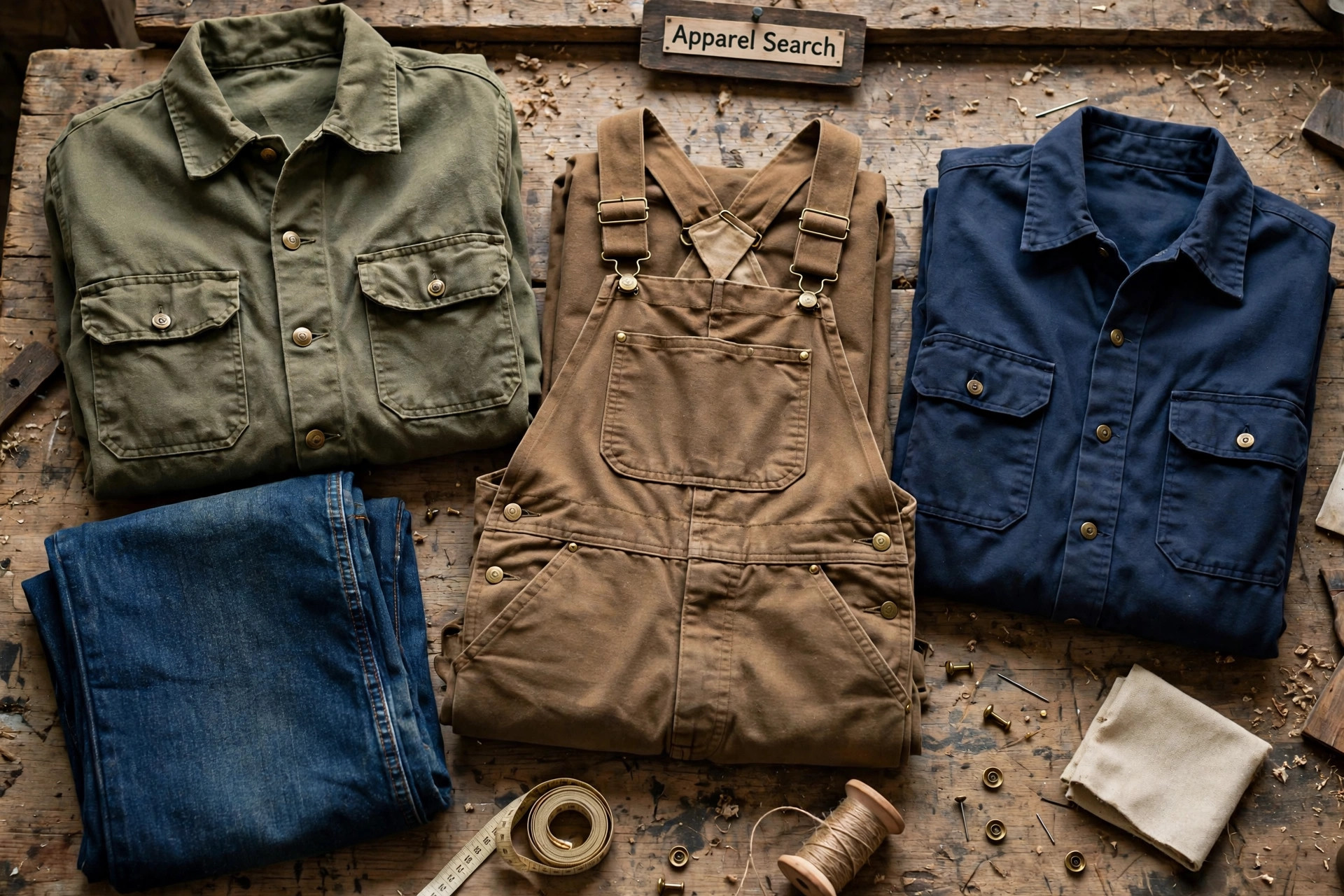
Work Clothes Built to Be Worn Hard
Durability is the whole proposition. Work clothes such as shirts, jeans and dungarees are judged by how long the fabric holds, whether the construction tolerates strain and weather, and whether the garment remains usable after months of daily use rather than a single season. A company founded in 1889 that remains synonymous with that standard has kept its identity tied to function.
The American division provides apparel for traditional American events such as rodeos and NASCAR races — settings where the audience wears work-derived clothing as everyday dress and values the same toughness the garments were made for, so the clothing is seen on the people whose work and leisure demand it.
The European Reading: Streetwear
In Europe Carhartt is more of a streetwear-based brand, in line with Stussy and Dickies. Streetwear takes durable, plain, work-derived garments and values them for silhouette, authenticity and cultural association rather than for a specific trade: a heavy shirt or a pair of dungarees carries the credibility of real work clothing into a fashion context, and that credibility is the product.
The European arm of the company supports, among other things, artists, musicians and skateboarders, placing the clothing inside creative and skate cultures where hard-wearing garments serve a practical purpose of their own — skateboarding destroys clothing quickly, so durability stays functional even in a fashion setting. The practical test is the same in both markets: fabric weight, reinforcement at stress points, stitching that tolerates repeated pulling, and cuts that leave room to move and layer. A garment that only looks rugged fails both audiences; a genuinely durable one satisfies the worker who needs it and the streetwear buyer who chose it for exactly that proven toughness.
Reading the Label in the Store
For a buyer, the practical test remains the garment itself, whichever market it is bought in. Shirts should hold their shape after washing; jeans and dungarees should resist thinning at the knee and seat; closures should tolerate daily use. Those checks explain why authenticity matters in the European streetwear reading as well: reputation built on wear over time — the company has had well over a century since 1889 for that standard to become its name — is harder to copy than a logo or a silhouette alone.
Common Questions
When was Carhartt founded, and what is it known for in the United States?
Carhartt is a U.S.-based clothing company founded in 1889. In the United States it is synonymous with hard-wearing, rugged, durable work clothes, such as shirts, jeans and dungarees.
How is Carhartt positioned in Europe?
As a streetwear-based brand, in line with Stussy and Dickies. The European arm supports artists, musicians and skateboarders, while the American division provides apparel for events such as rodeos and NASCAR races.
What kinds of clothing does Carhartt make?
Hard-wearing work clothes, with shirts, jeans and dungarees named as examples. The same core categories serve both markets — read as work apparel in the United States and as streetwear in Europe.