Levi Strauss
Fashion Definitions — fashion history, brands and industry terms from Apparel Search
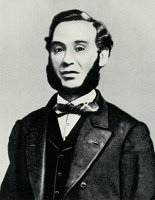
Levi Strauss, February 26, 1829 to September 26, 1902, was a Bavarian-born American clothing manufacturer and the man behind the popular jeans brand. Born Loeb Strauss in Buttenheim, he moved to New York in 1847 and to San Francisco in 1853, where he opened the dry goods wholesale business Levi Strauss and Co. and developed durable pants for gold prospectors and miners.
|
|
Levi Strauss (February 26, 1829'september 26, 1902) was a Jewish German, Bavarian-born American clothing manufacturer.
Levi Strauss was born as Loeb Strauss in Buttenheim in Franconia, German Confederation. In 1847, Strauss, his mother and two sisters moved to New York, New York to join his brothers, Jonas and Louis Loeb, in their dry goods business.
By 1850 he adopted the name "Levi Strauss" and in 1853, Strauss moved to San Francisco, California, and opened a dry goods wholesale business, Levi Strauss & Co., selling to small stores in California. Strauss observed that work clothes worn by gold prospectors and miners were not able to endure their torturous ordeal of working inside mine shafts, digging in the dirt and grime. Strauss developed the concept of and sold durable canvas pants. Initially, they were not very comfortable to wear but were very durable. Later, Strauss discovered denim ("canvas dyed blue to better conceal stains") and produced "even more popular and comfortable apparel. Once the workwear of cowboys, miners, and ranchers, blue jeans are today worn by people of all walks of life, at work and play".
On May 20, 1873 Strauss and Jacob Davis received a United States patent for using copper rivets to strengthen the pockets of denim work pants. Levi Strauss & Co. began manufacturing the first blue jeans in San Francisco.
|
The above article is licensed under the GNU Free Documentation License. From Wikipedia, the free encyclopedia https://en.wikipedia.org/wiki/levi_strauss 1/21/06 |
Designer Definition (from U.S Department of Labor)
|
|
|
From Buttenheim to a San Francisco Wholesale BusinessLevi Strauss was born as Loeb Strauss in Buttenheim in Franconia, in the German Confederation, on February 26, 1829. In 1847 Strauss, his mother and two sisters moved to New York to join his brothers, Jonas and Louis Loeb, in their dry goods business. Dry goods — textiles and related merchandise sold wholesale to retailers — is the trade in which he began, and it matters because his later company grew out of supplying goods rather than out of tailoring for individual customers. By 1850 he had adopted the name Levi Strauss, the name under which the business and the jeans brand would become known. In 1853 Strauss moved to San Francisco, California, and opened a dry goods wholesale business, Levi Strauss and Co., selling to small stores in California. The move placed the wholesale business in a state being transformed by gold mining, close to the customers whose working lives would shape his most famous product. Selling to small stores rather than directly to miners kept him in the wholesale role he already knew, while putting his goods into the hands of the mining communities through local retailers. Work Clothes That Could Endure the MinesThe turning point was observational. Strauss observed that work clothes worn by gold prospectors and miners were not able to endure their torturous ordeal of working inside mine shafts, digging in the dirt and grime. The problem was durability under specific conditions — confined shafts, abrasive dirt, constant physical labour — not appearance. His response was to develop the concept of and sell durable canvas pants. Initially they were not very comfortable to wear but were very durable, a trade-off stated plainly: strength came first, comfort second, because a garment that tore in the mine was useless however comfortable it might have been. Later Strauss discovered denim, described as canvas dyed blue to better conceal stains, and produced even more popular and comfortable apparel. Two improvements arrive together in that step. Denim addressed the comfort shortcoming of the first canvas pants, and the blue dyeing addressed a practical consequence of mining work — visible staining — by concealing it. The result outgrew its original setting entirely: once the workwear of cowboys, miners and ranchers, blue jeans are today worn by people of all walks of life, at work and play. A garment designed for one demanding occupation became general clothing, which is the scale of change compressed into calling Strauss the man behind the popular jeans brand. The 1873 Rivet Patent and the First Blue JeansOn May 20, 1873 Strauss and Jacob Davis received a United States patent for using copper rivets to strengthen the pockets of denim work pants. The patent is precise about where work pants fail and how to fix it: pockets are stress points, pulled and loaded during labour, and a copper rivet reinforces the join at exactly that point. Patenting the method turned a workshop improvement into a protected invention held jointly by Strauss and Davis, with Strauss's company as the manufacturer. Levi Strauss and Co. began manufacturing the first blue jeans in San Francisco following that patent, so the sequence runs from wholesale dry goods, through observation of miners' needs and experiments in canvas and denim, to a patented construction detail and factory production in the same city where he had opened his wholesale business twenty years earlier. Strauss died on September 26, 1902, having lived from 1829 through the whole arc from immigrant dry goods merchant to manufacturer. Read as a single story, the definition explains popularity through problem-solving rather than promotion: durable cloth chosen for punishing work, blue dye chosen to hide stains, and rivets chosen to stop pockets tearing. Each choice answers a named difficulty of prospectors, miners, cowboys and ranchers, and the later adoption of blue jeans by people of all walks of life, at work and play, follows from clothes that were first made to survive the hardest wear their wearers could give them. Common QuestionsWho was Levi Strauss?Levi Strauss, born Loeb Strauss in Buttenheim in Franconia on February 26, 1829, was a Jewish German, Bavarian-born American clothing manufacturer. He died on September 26, 1902. Why did Levi Strauss develop durable canvas and denim pants?Strauss observed that work clothes worn by gold prospectors and miners were not able to endure working inside mine shafts, digging in dirt and grime. He developed durable canvas pants and later used denim, canvas dyed blue to better conceal stains. What patent did Levi Strauss receive and when?On May 20, 1873 Strauss and Jacob Davis received a United States patent for using copper rivets to strengthen the pockets of denim work pants. Levi Strauss and Co. then began manufacturing the first blue jeans in San Francisco. More to Explore
More from Apparel Search: Fashion Definitions | Clothing Industry Glossary | Fashion Terms | Apparel Search Home
|