Mohair Fiber
Fiber Definitions — the silk-like hair fiber of the Angora goat from Apparel Search
Search Apparel Search
At a Glance
Definition: Mohair is a silk-like fabric made from the hair of the Angora goat; durable, light and warm, it is one of the specialty animal hair fibers.
Category: Fiber Definitions
Word Origin
The word mohair was adopted into English before 1570 from the Arabic mukhayyar, a type of haircloth, literally “choice”, from khayyana, “he chose” — the word itself records the fiber's standing as a chosen, selected haircloth.
Mohair is a silk-like fabric made from the hair of the Angora goat. It is durable, light and warm, and it is one of the specialty animal hair fibers. This page is the mohair section of the Apparel Search fiber guide: it defines the fiber, explains the combination of lustre, durability and warmth that keeps it in deliberate, specialist use, and points onward to the wider textile section and the fiber directory for other textile fiber choices.
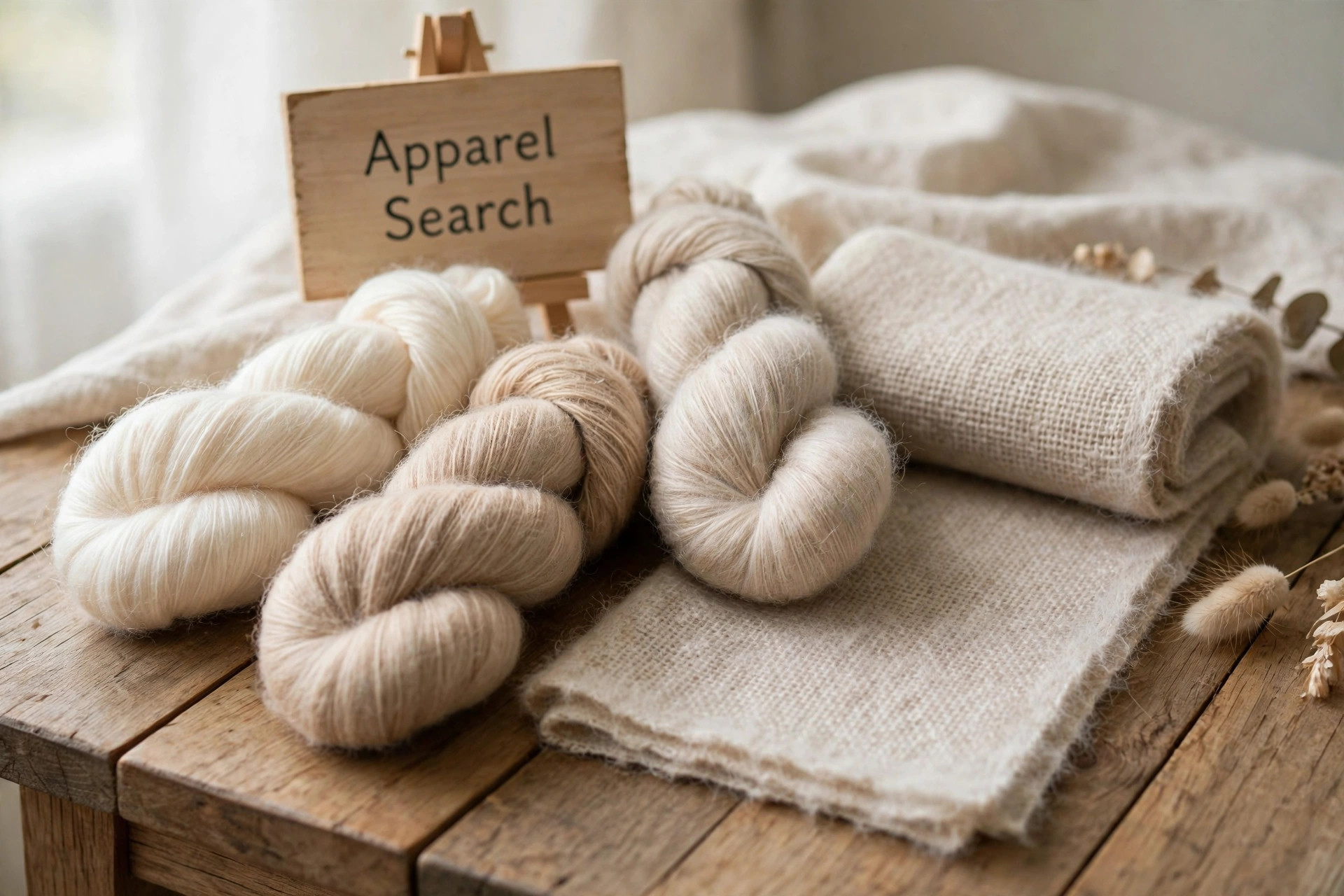
A Hair Fiber With a Silk-Like Hand
Most animal fibers ask the buyer to choose between warmth and lustre: wool insulates but is matte, while silk shines but is a filament with its own care demands. Mohair's place in the fiber world is that it offers a measure of both in one hair. It is durable, so a mohair fabric survives wear that a delicate lustrous fabric would not; it is light, so its warmth does not come with weight; and it is warm, so the light fabric still serves in cold weather.
The silk-like description is about surface — the smooth, light-reflecting character of the goat's hair — and it explains why mohair has historically been chosen for fabrics that must look rich and work hard at the same time, from suiting and dress fabrics to upholstery and blankets. The Angora goat, not the Angora rabbit, is the source, and keeping that distinction straight is the first step in buying or selling the fiber honestly, since angora's softness and halo and mohair's lustre and durability are different products at different prices.
A Specialty Fiber, Chosen Deliberately
Mohair is a specialty fiber, produced in far smaller quantities than wool, traded by specialists, and bought by makers who choose it deliberately for the properties named in its definition. Nobody uses mohair by accident or as a cheap filler: its durability, lightness, warmth and lustre are a considered specification. More information on the fiber is available from MohairUSA, the industry resource named in the original guide, and companies that supply mohair textile products list in the Apparel Search mohair directory pages.
The section is written for readers who work in the apparel industry as well as for anyone with an interest in mohair textiles, and it gathers the educational information and resource links relevant to mohair fibers and mohair textiles in one place. Its resources connect outward in the same pattern as the other specialty fibers: to the textile section for fabric information, to the fiber directory main page for other textile fiber choices, and to the trade press — the textile news section and, more specifically, the textile fiber news area. The word's own history fits that market: a haircloth whose name means choice has described mohair's position accurately for more than four and a half centuries.
Not to Be Confused With
Mohair comes from the Angora goat; angora fiber comes from the Angora rabbit. The two share a name root in the Angora region but come from different animals and handle differently — mohair is lustrous and durable, angora is soft with a halo. For the rabbit fiber, see Angora Rabbit Hair.
Common Questions
What animal does mohair come from?
Mohair comes from the hair of the Angora goat. It is not angora wool, which comes from the Angora rabbit; the two fibers share a name root in the Angora region but come from different animals and have different handling. Mohair is a silk-like fabric that is durable, light and warm.
Where does the word mohair come from?
The word was adopted into English before 1570 from the Arabic mukhayyar, a type of haircloth, literally meaning choice, from khayyana, meaning he chose. The word itself therefore records the fiber's standing as a chosen, selected haircloth.
What are mohair's main qualities as a textile?
Mohair is durable, light and warm, with a silk-like character. That combination — the lustre associated with silk together with the durability and warmth of an animal hair — is what has kept mohair in use as a distinct fiber rather than a substitute for either wool or silk.