Homburg
Hat & Headwear Definitions — the stiff felt dress hat with one crease and no pinches, from Apparel Search
Search Apparel Search
At a Glance
Definition: The homburg is a stiff felt hat with a crease along the length of the crown and no pinches, and a brim with the edge sharply turned up all the way around.
Category: Hat & Headwear Definitions
The homburg is a stiff felt hat defined by restraint: a single crease along the length of the crown, no pinches, and a brim whose edge is sharply turned up all the way around. Homburgs are typically made from wool or fur felt and have a grosgrain hatband, with an optional feather. The style was popularised by Edward VII after visiting Germany and bringing back a hat of this style, and, like the fedora, it was once quite popular — and is still available in almost any colour, though the most common colours are black, grey and brown. This page sets out the shape check by check, the materials and trim, and the royal visit that made the style.
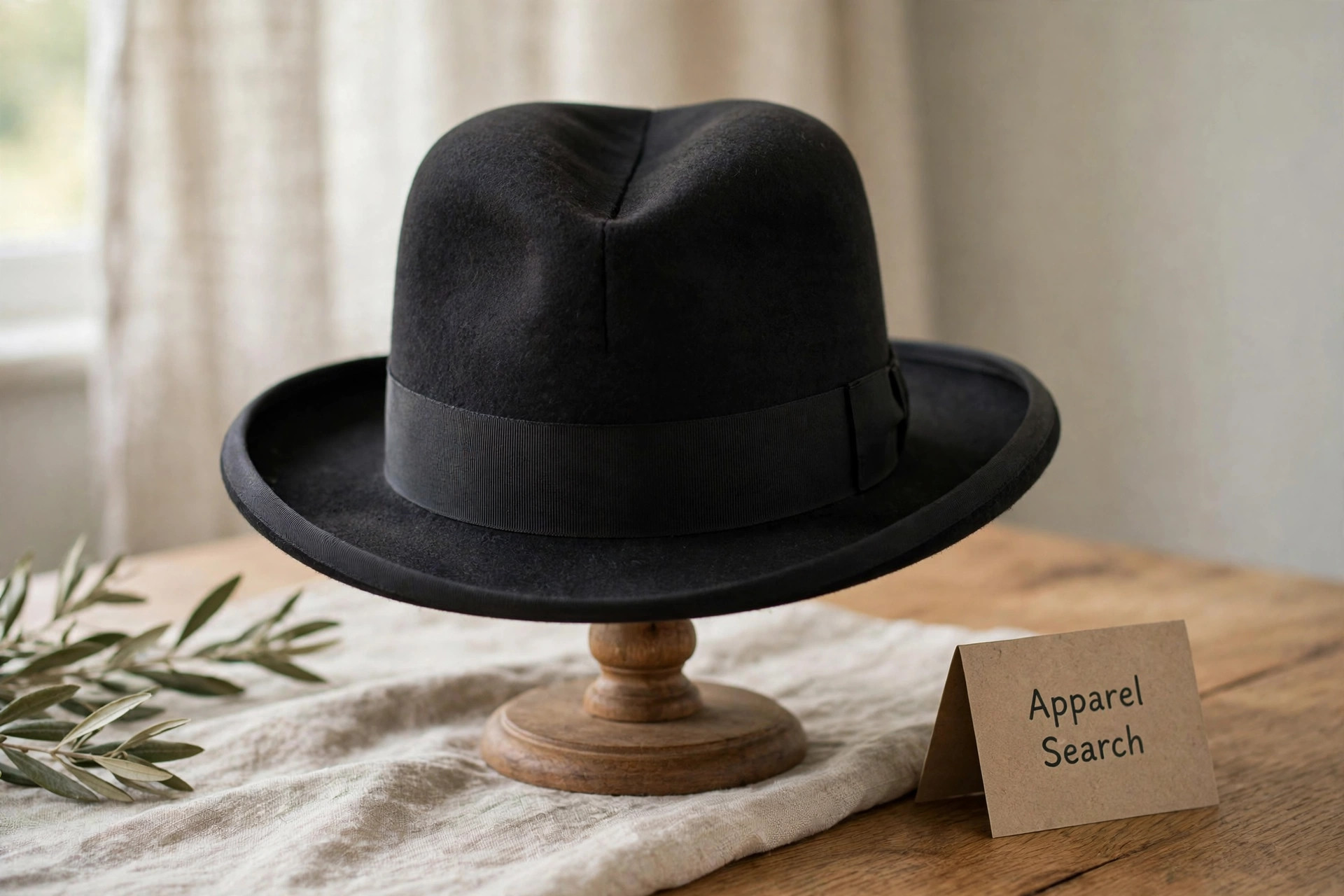
Stiff Felt, One Crease and No Pinches
A homburg is identified by a precise combination of features, and each feature separates it from its near relatives. It is a stiff felt hat, so the material holds a set shape rather than draping softly. Along the crown runs a single crease along its length, the one lengthwise dent that gives the top its character. Just as defining is what the crown lacks: there are no pinches. A fedora is normally shaped with pinches at the front of the crown, so a felt hat with a lengthwise crease but smooth, unpinched sides is following the homburg pattern instead. Below the crown, the brim has its edge sharply turned up all the way around, giving the hat a neat, formal outline from every angle. Stiffness, a single crease, an absence of pinches and an all-round upturned brim edge together form the checklist by which a true homburg can be told from other dress hats at a glance.
Materials and trim complete the standard form. Homburgs are typically made from wool or fur felt, the two felts of classic hatmaking, and around the base of the crown sits a grosgrain hatband, the hat's main finishing detail. An optional feather may be added, so two homburgs of the same colour and shape can still differ in that one small personal touch. Colour is conventional in range even though the hat is still available in almost any colour: the most common colours are black, grey and brown, the sober palette of a dress hat suited to formal and business wear.
Edward VII and the Hat Brought Back From Germany
The homburg's rise is tied to a single influential wearer. It was popularised by Edward VII after visiting Germany and bringing back a hat of this style. Royal example carried great weight in men's dress of the period: a hat brought home and worn by a king was seen, copied and stocked, and a German style became established in wider fashion through that adoption. Without that endorsement, the stiff, creased, unpinched hat might have remained a regional German choice; with it, the homburg joined the standard repertoire of men's dress hats.
Its later history is shared with its closest comparison. Like the fedora, the homburg was once quite popular, a standard sight in the era when a felt hat completed a man's formal outfit. Also like the fedora, it did not disappear when everyday hat wearing declined: the homburg is still available, in almost any colour for a buyer who wants the choice, though black, grey and brown remain the most common. That survival in production matters for anyone seeking the style today, because the defining features can still be checked on a new hat rather than hunted only in vintage examples: stiff wool or fur felt, one crease along the crown, no pinches, a brim edge sharply turned up all around, and a grosgrain hatband, with a feather only if the wearer wants one.
Not to Be Confused With
A homburg is not a fedora, though both are felt hats with a crease along the length of the crown. The fedora is soft felt, pinched in at the front on both sides; the homburg is stiff felt with no pinches at all, and its brim edge is sharply turned up all the way around. The crease is shared — the pinch is the difference to check.
Common Questions
How is a homburg shaped?
A homburg is a stiff felt hat with a single crease along the length of the crown and no pinches. Its brim has the edge sharply turned up all the way around the hat.
What are homburgs made from?
Homburgs are typically made from wool or fur felt. They have a grosgrain hatband, and a feather is an optional addition.
Who popularised the homburg?
The homburg was popularised by Edward VII after he visited Germany and brought back a hat of this style. Like the fedora, it was once quite popular and is still available, most commonly in black, grey and brown.