Halter Dress
A halter dress design artwork from the Apparel Search Design Studio, shown full size: one finished presentation drawing of an occasion dress whose whole effect rests on its neckline, its fit and its styling.
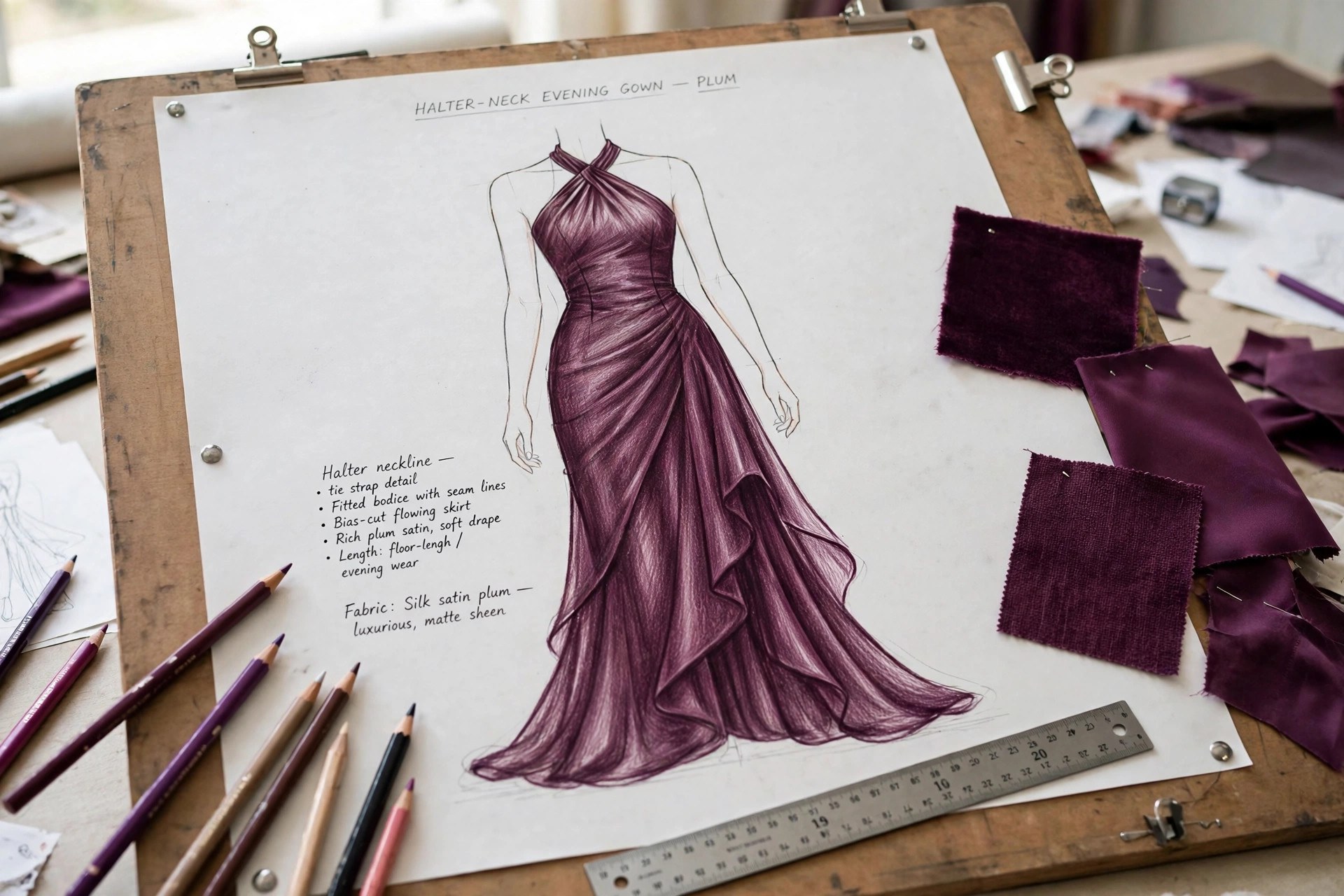
The Halter Dress Artwork
The artwork is shown complete and at full size, as it was drawn to be read.

The Halter Dress as a Design Problem
A halter dress is built around its neckline. The bodice is held by straps or a band that passes behind the neck, leaving the shoulders and usually much of the back bare, which makes the halter one of the most recognizable occasion-dress silhouettes — and one of the least forgiving to design. With no shoulder seams and no sleeves, there is nothing to hide behind: the fit through the bust, the set of the neck band and the fall of the skirt carry the entire garment, and a drawing of one has to resolve all three convincingly before the dress can be believed.
That is what makes the halter dress a good test of presentation artwork. The drawing must show how the neckline sits, how the bodice is supported, and how the skirt moves from the waist, in a single figure a buyer can read at a glance. Fabric behavior matters as much as shape: a halter dress in a fluid fabric drapes and swings, while the same silhouette in a structured fabric stands away from the body, and the artwork has to say which garment is actually being proposed. Styling completes the piece — hair, shoes and jewelry chosen so nothing competes with the bare neckline that is the dress’s whole point.
Color does the same work as line in a piece like this. An occasion dress is usually proposed in a small number of strong colors, and the rendering has to hold each one honestly: how the fabric takes light at the bodice, how the skirt’s folds shade, and how the skin tones of the bare shoulders and back sit against the color of the dress. Get the color wrong and the buyer approves a garment the fabric cannot deliver; get it right and the drawing can stand in for the sample through every meeting until the sample itself exists.
How Presentation Artwork Like This Is Used
A finished drawing of this kind works at several points in a range’s life. It opens the conversation: pinned to a conceptboard or carried into a range meeting, it lets merchandisers judge the dress against the rest of the season before any fabric is cut. It sells the garment: in a catalog, a line sheet or a sales presentation, the artwork presents the dress at its best while the style is still a drawing, so orders and reactions can be gathered ahead of sampling. And it briefs production: handed over with the technical drawings that carry dimensions and construction instructions, it shows the factory the intended look that the technical pages alone cannot convey.
The example belongs to the studio’s women’s work, gathered on the Women’s Design Examples 2 page alongside the nightgown artwork, and it also appears among the studio’s New Design Projects. The Women’s Fashion Design page sets out the services that produce work at this standard — technical drawings and renderings, seasonal conceptboards and product art direction — and routes to service details and pricing for companies planning a range of their own.
Commissioning Work of This Kind
A company that needs a hero garment drawn — the one dress a season will be remembered by — briefs it the way this example is built: the silhouette and neckline settled first, the fabric and its behavior agreed, the styling kept subordinate to the garment. The clearer that brief, the more completely the finished artwork can do the jobs described above, from the first range meeting to the production handoff. Single statement pieces and grouped sets of related styles are both standard studio work; the nightgown examples show the grouped form.
Common Questions
What is a halter dress?
A dress held by straps or a band that passes behind the neck, leaving the shoulders and usually much of the back bare. Fit through the bust, the set of the neck band and the fall of the skirt carry the whole garment.
Why is the artwork shown full size?
A presentation drawing is judged by its finish - neckline, fit and fabric behavior - which a thumbnail flattens. The artwork is shown complete, at the size it was drawn to be read.
Where does this example sit in the studio's work?
It is one of two pieces in Women's Design Examples 2, alongside the nightgown artwork, and it also appears among the studio's Recent Projects. The Women's Fashion Design page lists the services behind it.
More to Explore
The set this example belongs to, and the pages behind it:
Looking for Design Services?
The Apparel Search Design Studio is a full-service fashion industry design resource. This page shows one women’s example; the Women’s Fashion Design page lists the services behind the artwork, and Women’s Design Examples 2 gathers this set.