Nightgowns
Nightgown design artwork from the Apparel Search Design Studio, shown full size: sleepwear styles drawn as finished garments, so their necklines, lengths, fabrics and trims can be read at working size.
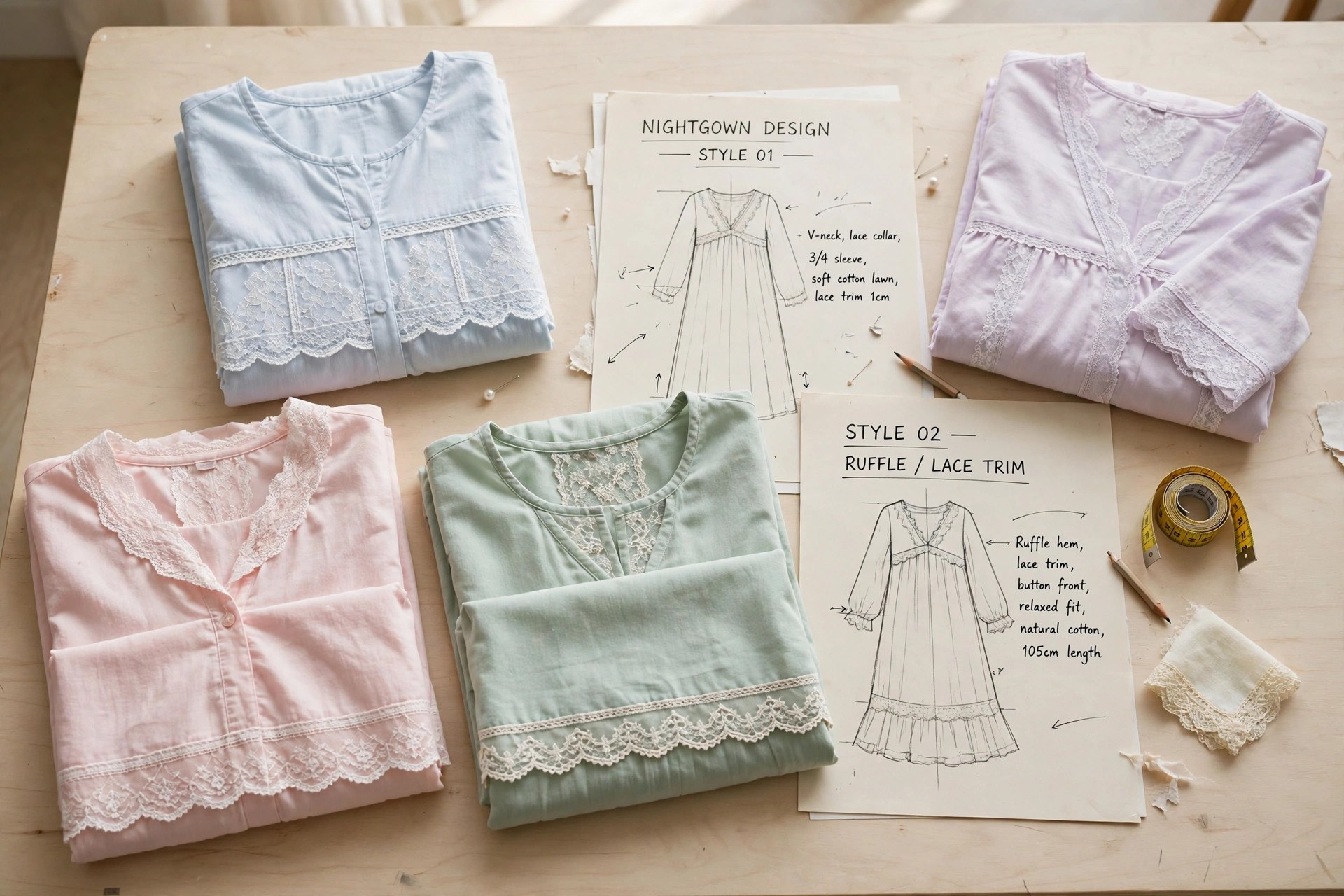
The Nightgown Artwork
The artwork is shown complete and at full size, as it was drawn to be read.

Nightgown Design, Drawn as a Product
A nightgown is a simple garment with a long list of decisions inside it. Length runs from short to full floor length; necklines range from high and modest to scooped and strapped; sleeves can be absent, capped, short or long; and the silhouette can hang straight, fall in an A-line from the yoke, or be shaped with gathers, pleats and empire seaming. None of those decisions is decorative in the abstract — each one changes how the garment fits, how it is worn through the night and how it launders — so a design drawing for sleepwear has to settle them visibly, style by style, the way the grouped artwork on this page does.
Grouping the styles is itself the point of the example. Sleepwear is bought and merchandised as a set of related styles rather than as single pieces, and a presentation that draws the group together lets a buyer compare lengths, necklines and trims across the set at one reading, checking that the styles differ enough to earn their places without drifting into different ranges. The same grouped form is used when the artwork goes forward into a catalog or a range plan, where the set will be presented together again.
Fabrics and Construction in Sleepwear Design
Fabric decides most of what a nightgown is. Cotton and cotton lawn are breathable, wash easily and suit warm weather and everyday wear; flannel adds warmth for winter styles; knitted jersey stretches and moves with the sleeper; silk and satin-finish fabrics drape fluidly and carry the more elegant end of the market. A design drawing cannot state a fabric the way a specification can, but it can and must behave like one — soft where the cloth is soft, crisp where it is crisp — so the proposed garment is judged as the garment it will actually be.
Construction follows the same product logic. Seams are placed and finished to sit comfortably against the skin, closures are kept minimal, and trims such as lace edging, ribbon and pintucks are drawn where they will really be applied, at the neckline, yoke, cuffs and hem. Those details are what the technical drawings behind a presentation piece then dimension and specify, turning the drawn set of styles into garments a factory can cut and sew consistently, in the sizes and colors the range requires.
Fit in sleepwear is ease, deliberately designed rather than left over. A nightgown is cut to move with the sleeper, so the design allows room through the body, armholes that do not bind and necklines that stay comfortable in any sleeping position, across a full size range. The drawing shows that ease as part of the garment’s look — the soft fall from a gathered yoke, the swing of an A-line hem — because in this category comfort is not a hidden specification; it is the product being sold, and it has to be visible on the page.
From Artwork to a Made Range
Work like this sits inside the studio’s wider women’s service. The Women’s Fashion Design page lists the partial service menu behind the artwork — technical drawings and renderings with the dimensions and written instructions needed to produce a prototype, seasonal conceptboards, and product art direction for catalogs and marketing media — and routes to service details and pricing. The nightgown set appears there as part of Women’s Design Examples 2, alongside the halter dress, and among the studio’s New Design Projects; the Women’s Fashion glossary entry covers the terminology used across the women’s pages.
For a sleepwear brand or a retailer building a nightwear range, the commissioning route is the same as for any other category: settle the set of styles, the fabrics and the trim level first, and let the artwork prove the range as a group before sampling begins. Drawn as a group, weak styles show early, duplicates show immediately, and the styles that survive go into production with their look already agreed by everyone who has to sell them.
Common Questions
What design choices does a nightgown involve?
Length, neckline, sleeve, silhouette and trim - and above all fabric. Cotton and lawn breathe and wash easily, flannel adds warmth, jersey stretches, and silk or satin finishes drape fluidly for the more elegant end of the market.
Why are the nightgown styles drawn as a group?
Sleepwear is merchandised as a set of related styles. Drawing the group together lets a buyer compare lengths, necklines and trims at one reading and check that each style earns its place in the range.
How would artwork like this be commissioned?
Through the studio's women's design service: the Women's Fashion Design page lists the service menu - technical drawings and renderings, conceptboards and product art direction - and routes to service details and pricing.
More to Explore
The set this example belongs to, and the pages behind it:
Looking for Design Services?
The Apparel Search Design Studio is a full-service fashion industry design resource. This page shows its nightgown examples; the Women’s Fashion Design page lists the services behind the artwork, and Women’s Design Examples 2 gathers this set.