The Balance Rule
Earrings Sit Closer to the Face Than Any Other Jewelry
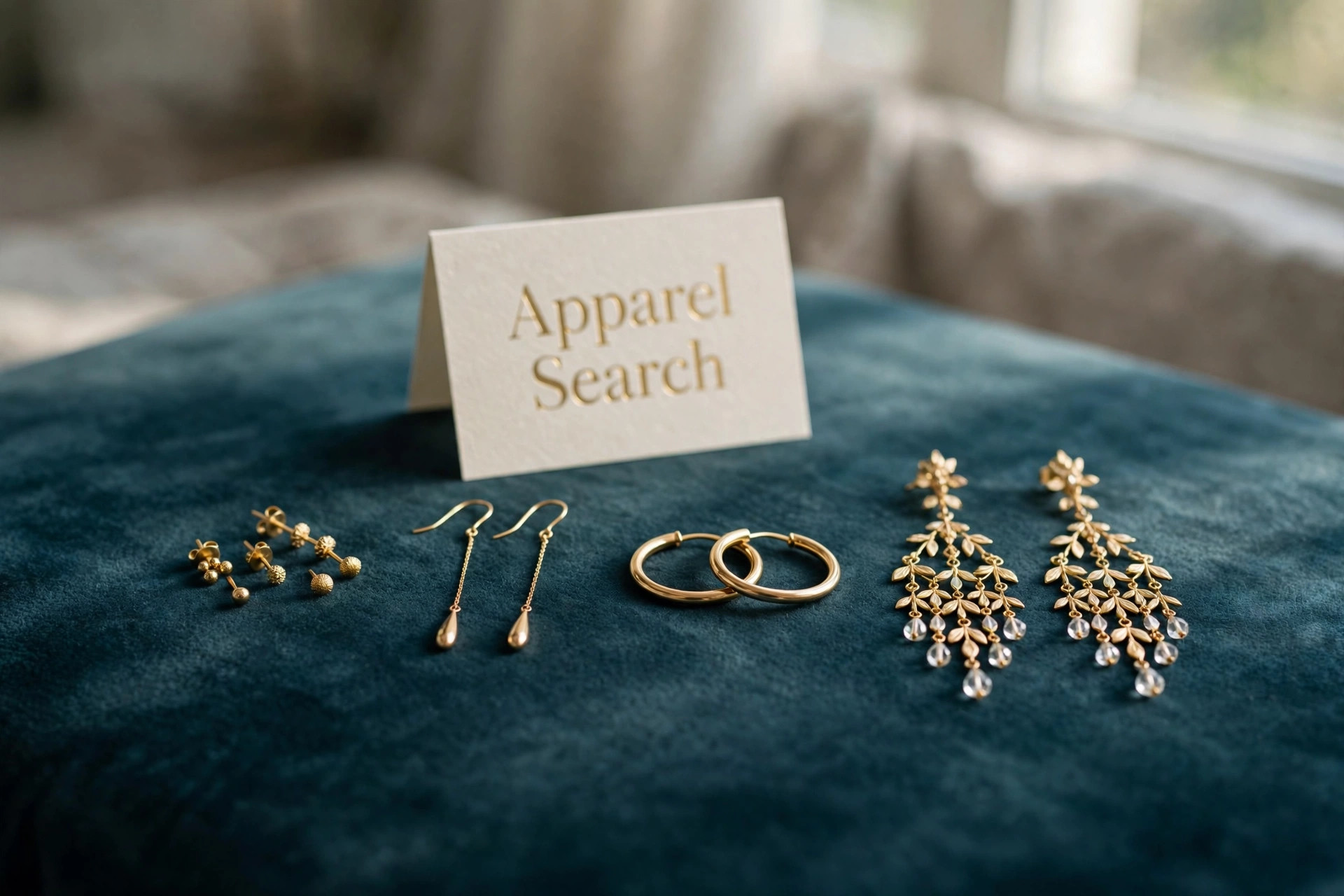
Earrings frame the face itself, so they follow the same balance rule as the frames in our sunglasses for your face shape guide: choose the shape that answers the face rather than repeating it. Curves soften an angular face, angles sharpen a round one, length stretches a short face and width fills out a long one. Get that one decision right and almost any metal, stone or price point works.
Two variables do most of the work: length, which pulls the eye up or down, and width at the widest point, which decides where the eye lands sideways. The panels below take the six common face shapes one at a time; the matching logic for the neckline below the earrings is in the companion necklace for your neckline guide.
Step One
How to Identify Your Face Shape
Pull your hair back, stand in front of a mirror or use a straight-on photo, and compare three widths: forehead, cheekbones and jaw. Then judge the outline those widths make and the face’s length against its width. Oval faces are balanced and a little longer than wide. Round faces have width and length close together, with soft curves and no strong corners. Square faces show a broad forehead and a strong, straight jaw. Heart faces are widest at the forehead and taper to a narrow chin. Long faces (also called oblong) are noticeably longer than wide at every width. Diamond faces are narrow at both forehead and jaw, with the cheekbones as the widest, strongest feature.
Most faces sit between two shapes. That is normal, and the fix is simple: follow the dominant feature. A strong jaw borrows the square advice even on a longer face; very wide cheekbones borrow the diamond advice even on an oval.
Shape by Shape
The Earrings That Balance Each Face
Round Face
Your brief is length and angles. Long drops, linear dangles and angular studs draw the eye downward and make the face read longer and slimmer; a drop that ends below the chin works hardest.
Avoid: round studs, button earrings and perfect-circle hoops, which repeat the face’s own curve and add width at the cheek.
Oval Face
The balanced shape, and the easy brief: nearly everything works, including the studs, hoops and drops other shapes have to ration. Your only real variable is proportion — match the earring’s scale to the face rather than correcting its geometry.
Avoid: only the extremes — drops so long they pass the jaw and stretch the balance, and tiny studs that disappear.
Square Face
Your brief is curves. Round and oval hoops, curved drops and softened teardrop shapes take the edge off a strong jaw and broad forehead, and medium-to-long lengths pull attention away from the jaw’s width.
Avoid: square studs, sharp geometric drops and angular chandeliers that double the face’s straight lines.
Heart Face
Your brief is weight at the bottom. Teardrops, chandeliers and drops that widen as they fall balance a wide forehead and give a narrow chin company; the widest point of the earring should sit at or below the jaw.
Avoid: studs and small top-heavy styles that concentrate everything at the ear and leave the chin narrower by contrast.
Long Face
Your brief is width. Short drops, clustered studs, wide chandeliers and round hoops add sideways emphasis and interrupt the face’s length; keep most of the earring’s bulk between the ear and the jaw.
Avoid: long, thin, straight drops — a single vertical line is the one shape that makes a long face read longer.
Diamond Face
Your brief is softness at the cheeks and a little width at the jaw. Gentle curves, small-to-medium drops and studs with soft shapes flatter strong cheekbones without competing with them; delicate lines keep the attention on the eyes.
Avoid: wide chandelier tops and angular styles that pile more width and angles onto the cheekbone line.
The Three Families
Studs, Drops or Hoops? The Logic
Studs sit on the lobe and add a point of light without changing the face’s outline — which is why they are the safe choice for oval faces and for anyone whose outfit or neckline is doing the talking. Their shape still matters in miniature: an angular stud sharpens, a round one softens. The full range is in the stud earrings guide. Drops are the length tool: they move, they catch light below the jaw, and they are the strongest lever on how long a face reads — see the drop earrings guide for lengths and fittings. Hoops are the width-and-curve tool: a circle or oval hanging at the cheek adds sideways presence and softness, sized from the discreet to the dramatic in the hoop earrings guide.
A practical last check, whatever the shape advice says: try the earring against your usual hairstyle. Hair worn down hides short drops and competes with chandeliers; hair worn up gives every length its full effect. The right earring for your face, worn with the wrong hairstyle for it, still reads as a mismatch.
Questions
Common Questions
How do I work out my face shape for earrings?
Pull your hair back and compare three widths in a mirror or a straight-on photo: forehead, cheekbones and jaw, plus the face’s overall length. The widest line and the outline it makes — curved, straight, tapering or long — name the shape. If you land between two shapes, follow the stronger feature: it is the one an earring needs to balance.
Are hoops or drops better for a round face?
Drops, usually. A round face benefits from length and angles, and a drop earring supplies both, drawing the eye downward and making the face read longer. Hoops repeat the face’s own curve; if you love them, choose angular, oval or elongated hoops rather than perfect circles, and keep the size moderate.
Can I wear long earrings if my face is already long?
Yes, if the length carries width. A long face is lengthened further by a thin, straight drop, but a chandelier or a clustered drop that widens as it falls adds the sideways emphasis a long face needs. Keep the widest part of the earring below the cheekbone and the total length at or above the jaw.
More to Explore
Search Apparel Search