International Fashion Careers Guide
Fashion careers around the world — design capitals, production countries and retail markets compared
Fashion is a global industry, and its careers are distributed around the world according to what each place does best. Design and fashion leadership concentrate in the established fashion capitals; garment manufacturing and sourcing careers concentrate in the production countries of Asia and elsewhere; retail and brand careers exist in every significant consumer market. An international fashion career can mean emigrating to a fashion capital, working for a global brand at home, managing sourcing relationships across borders, or building expertise in one of the production centers the whole industry depends on.
This guide explains how international fashion employment is structured, what kinds of roles are international by nature, and how to research country markets. Its country pages — including the India fashion jobs and United Kingdom fashion jobs guides — treat individual markets in detail, and the state-by-state guide covers the United States for readers comparing domestic and international moves.
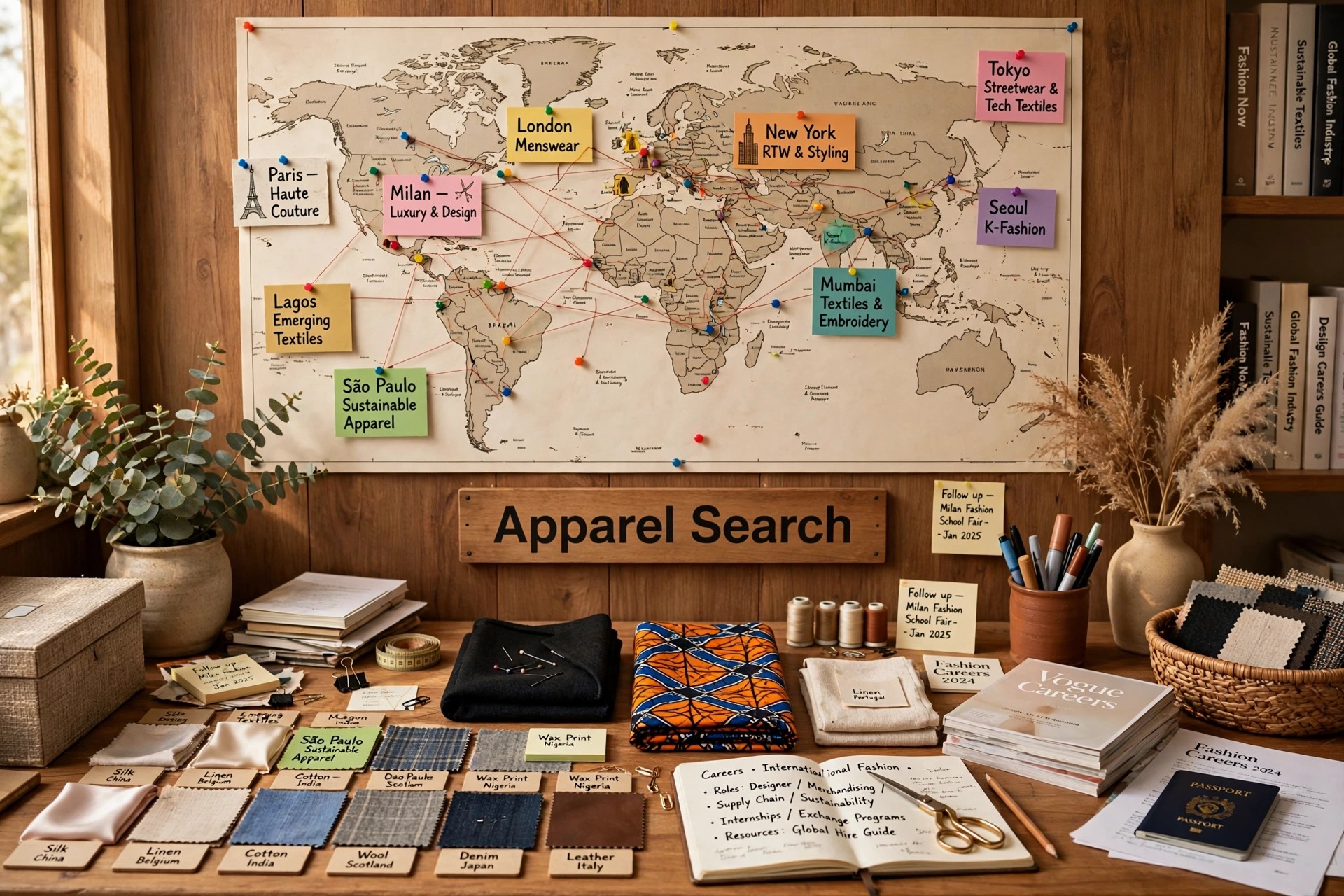
How Fashion Work Is Distributed Worldwide
Three kinds of fashion geography matter for careers. First, the design and brand capitals — the cities where collections are designed, shown and bought — hold the densest concentrations of design, buying, marketing and press careers. Second, the production countries hold manufacturing, export merchandising, sourcing, quality and compliance careers at scale; these are professional markets in their own right, and seniority there is built on production knowledge the capitals cannot supply. Third, every large consumer market supports retail, sales and local brand careers. Global brands stitch the three together, which is why so many fashion jobs — sourcing managers, technical teams, international sales, supply chain roles — are international in content even when based in one city.
Researching a Country Market Before You Move
Research a country the way this section's country guides do: what does the market make, design or sell; which cities hold which functions; what is the local industry structure of brands, factories, retailers and agents; and what language, work authorization and qualification recognition will your move require. Work authorization is the practical gate for most international moves — employers sponsor selectively, usually for scarce skills — so the strongest international applications pair a scarce specialty (production expertise, technical design, senior category knowledge) with evidence the employer cannot easily hire locally. Country pages for India and the United Kingdom in this guide show the format: industry structure first, career families second, cities and search advice third.
Building an International Fashion Career From Home
Not every international career starts with a relocation. Sourcing and liaison work, international sales territories, import buying, compliance and supply chain roles all build cross-border expertise from a home base, and that expertise is exactly what later justifies an overseas posting or hire. Treat language skills, knowledge of a production country's industry, and relationships across the supply chain as career capital: they compound, and the fashion industry's structure means they are valuable in every fashion capital as well.
Fashion Weeks, Trade Fairs and the Calendar That Connects the Markets
The international fashion system runs on a shared calendar, and careers are built around it. Collections are designed months ahead, shown at fashion weeks and trade fairs in the capitals, ordered by buyers from around the world, produced in the manufacturing countries, and delivered into stores on seasonal schedules that every function in every country works to. That calendar is why international experience compounds so well: a merchandiser who has worked an export season in a production country understands delivery reality in a way a purely domestic career cannot teach, and a buyer who has walked the trade fairs reads ranges differently forever after. When you research a country market in this guide, locate it on that calendar — what it designs, what it makes, what it buys, and when — and you will understand its job market faster than any list of vacancies can teach you.
Common Questions
What kinds of fashion jobs are international?
Design and brand roles in the fashion capitals; manufacturing, export merchandising, sourcing, quality and compliance roles in production countries; and cross-border roles anywhere — international sales, import buying, sourcing management and supply chain — plus retail and brand careers in every major market.
Which country guides does this section include?
This guide's country pages include India — garment production, export merchandising and domestic fashion careers — and the United Kingdom — London-centered design, buying, retail and fashion media careers — alongside the state-by-state guide to the United States.
What is the biggest practical hurdle in an international fashion move?
Work authorization. Employers sponsor hires from abroad selectively, usually for scarce skills, so successful international applicants typically offer a specialty — production, technical or senior category expertise — that is hard to hire in the local market.