LA Fashion Jobs
Fashion careers in LA — the design, wholesale and production economy of the West Coast
LA, in the fashion industry's own shorthand, rarely means shopping. It means making: the design rooms, pattern tables, sample sewers, wholesale showrooms and production offices where West Coast clothing is conceived, fitted, costed and sold to stores across the country. Downtown's Fashion District and the California Market Center concentrate that economy in a few dense, walkable blocks, while design and production companies spread across the wider city and its garment neighborhoods. If your ambition is to create and wholesale clothing rather than sell it at retail, LA is the address the trade itself uses.
This page is deliberately about that making-and-wholesaling economy: the district and its market weeks, the design and technical crafts that fill its workrooms, and the denim and production heritage underneath them, rather than the retail geography covered on the companion Los Angeles page. Wider state context sits in the California fashion jobs guide in this series. The LA resources gathered here connect to role descriptions for design, pattern, production, sourcing and wholesale careers, matched to the crafts this economy actually hires.
Find Current Fashion Job Listings in LA
Apparel Search researches careers rather than posting openings, so the live listings sit with the job boards. These searches track current fashion job listings in LA:
The Fashion District and the Wholesale Machine
Downtown's Fashion District is the densest clothing neighborhood in the West: blocks of wholesale showrooms, fabric and trim sellers, sample and production services, contractors and finishers, and the store buyers who walk them season after season. The California Market Center anchors the showroom trade, hosting market weeks and trade events where brands present lines to independent boutiques and regional stores from across the western states. The ecosystem employs showroom and brand sales staff, line and territory representatives, market and showroom support teams, and the agents and service firms that keep wholesale moving on schedule.
Wholesale is a relationship craft with its own unforgiving calendar. Lines are built months ahead, market weeks compress a season's selling into days, and a showroom assistant who learns lines, accounts, order discipline and follow-through becomes employable across the whole district within a few seasons. Temporary and assistant work during market periods remains the classic entry — the district watches closely how newcomers handle buyers, samples and pressure, and hires from what it has seen rather than from interviews alone. For candidates outside retail, this is LA's front door, and it opens on schedule several times a year.
Design Rooms, Patterns and Premium Denim
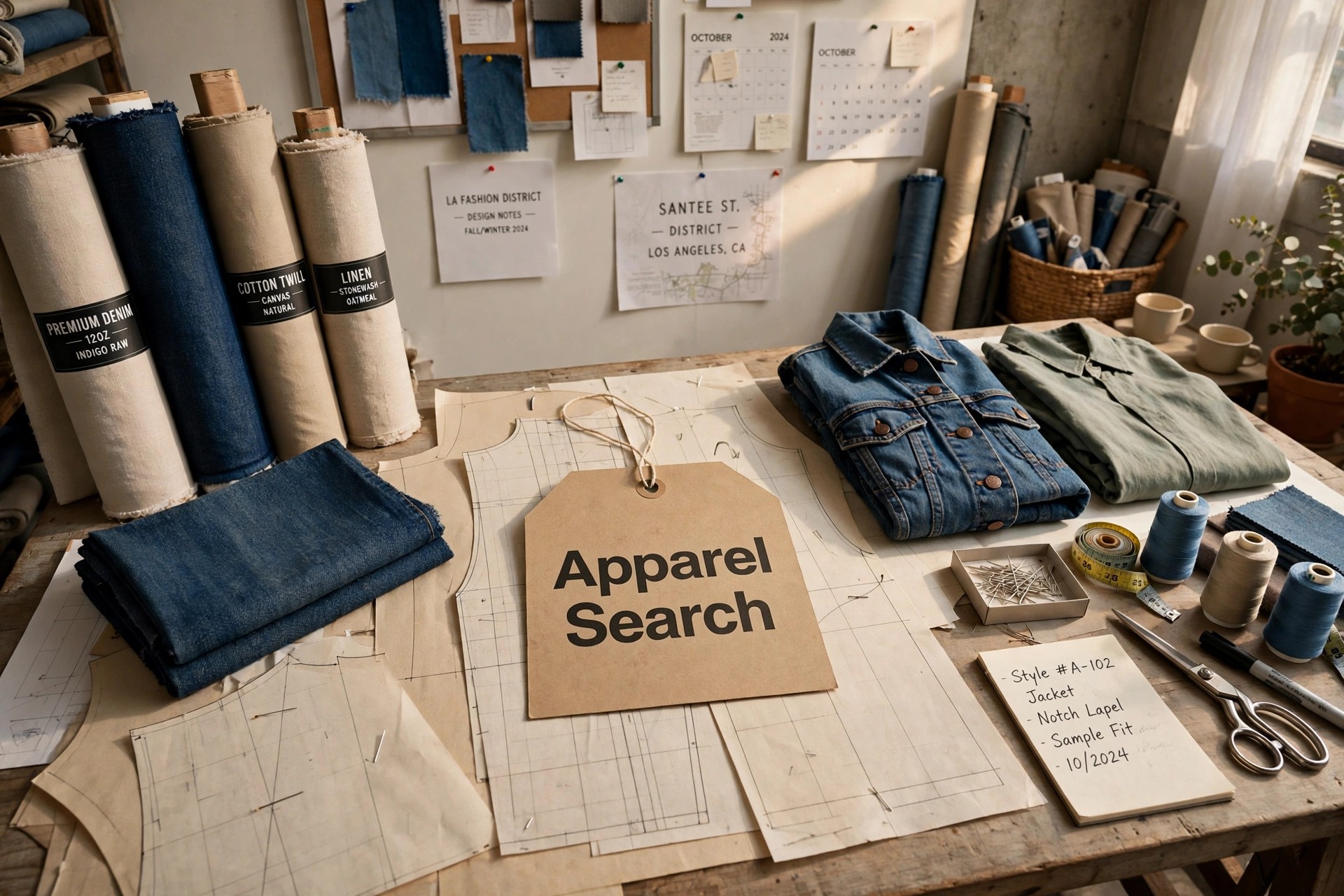
Behind the showrooms sit the rooms where clothing actually takes shape: designers and assistant designers, pattern makers whose drafts decide how a garment will fit, sample makers whose first sews decide whether it can be made at all, technical designers, fit specialists, graders and marker makers. LA's design economy is famously broad — contemporary and junior lines, active and swim, premium denim, street-influenced labels and private-label development for retailers nationwide — and it hires craft at every level, from studio assistants running samples to senior pattern talent whose names travel between companies entirely by reputation.
Denim deserves its own sentence in any honest LA account: the city's premium denim heritage helped teach the whole world to treat jeans as fashion, and the wash, finish and fit expertise developed in its laundries and workrooms remains a named, portable specialty. Across every category the pattern is the same — LA rewards people who can turn an idea into a correct, costable, producible garment, and it can test that ability quickly and without ceremony. Bring a portfolio of real work, not adjectives: tech packs, patterns, samples and fit corrections are the district's interview language, spoken fluently by everyone who hires here.
How to Search LA Industry Work
Search by craft and district, not by the word fashion alone: "pattern maker Los Angeles", "sample maker Fashion District", "technical designer LA apparel", "showroom assistant California Market Center", "production coordinator Los Angeles", "denim designer LA". Design, production and wholesale roles circulate through industry job boards, apparel staffing specialists, showroom networks and direct company applications, and market-week timing concentrates both hiring and introductions — so prepare your portfolio, references and availability before the market calendar turns, not after the lines have already been shown and staffed.
Prepare with the role descriptions in this section and match your evidence precisely to the craft you are claiming: a design portfolio for design roles, construction and fit knowledge for technical roles, line and account experience for wholesale, costing and factory communication for production. LA's industry is large but intensely networked, and its memory is long — a strong market week, a sample delivered right the first time, a fit session handled with judgment will be remembered, and repeated, by exactly the people who do the hiring next season.
The Fit Session: LA's Decisive Room
Every LA design career passes, sooner or later, through the fit session: the standing appointment where a sample is put on a fit model, pinned, measured, argued over and sent back to the pattern table with corrections that decide whether a style lives. Pattern makers, technical designers and sample makers prove themselves in that room — in the precision of a correction, the honesty about what a fabric will not do, the speed of the remake before market. Candidates who want LA's respect should learn to talk about fits they have worked, changes they called and why, in garment language. It is the district's true interview, held daily, whether or not a job is posted.
Common Questions
What does LA mean in fashion job listings?
The industry's shorthand for the Los Angeles design, wholesale and production economy — Fashion District showrooms, design rooms, pattern and sample making, and production and sourcing roles — rather than general retail work.
How do I enter LA wholesale fashion?
Through the showrooms: assistant and temporary roles around California Market Center market weeks are the standard entry, leading to brand sales, showroom and territory careers for staff buyers remember.
What skills does LA production work require?
Producible craft: pattern making, sample sewing, technical design and fit, costing and sourcing knowledge — demonstrated with tech packs, patterns and samples rather than described in general terms.