TenCate
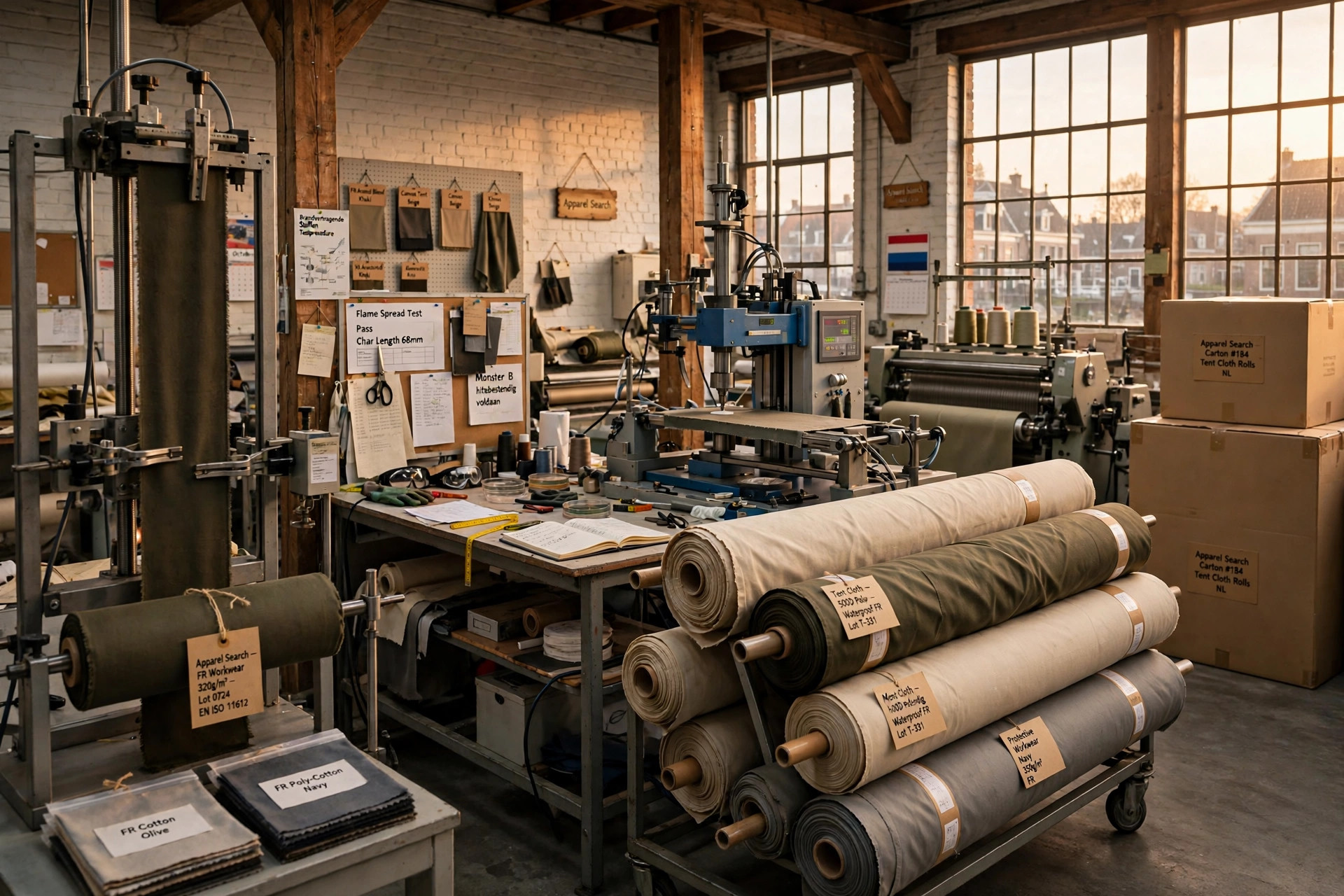
TenCate of the Netherlands, founded over 300 years ago in the record's account, is a materials group unified under one brand after a strategy of consolidating its core markets and acquired companies. Its Protective & Outdoor Fabrics business develops protective fabrics for firefighters, the chemical industry and other hazardous environments, alongside its well-known tentcloth.
Company Snapshot
- Location
- Netherlands
- Fabrics & Products
- Protective and outdoor fabrics — flame-retardant protective fabrics for firefighters and industry, and TenCate tentcloth
Company Profile
The record focuses on two protective ideas. The first is occupational: fabrics used in protective clothing where people contend with hazardous environments, where flame retardancy is a core property. The second is outdoor: TenCate tentcloth, a brand with high awareness in its market, protects against rain and wind and is also known for flame-retardant qualities. The group's wider story in the record is consolidation — many acquired companies and product brands aligned under a single TenCate identity to build a stronger market position.
Technical textiles are bought on performance data, not on appearance, and TenCate's field — 'Protective and outdoor fabrics — flame-retardant protective' — is no exception. The professional approach is to start from the standard the end product must meet, work backwards to the material properties that decide it, and ask the maker for test evidence on the exact product variant being bought. Documentation is part of the product in this family: batch traceability, test reports and application guidance are what a buyer is really paying for alongside the material itself, because the material disappears inside a larger product whose safety or function may depend on it.
Sourcing and Working With TenCate
Protective fabric enquiries should be routed by market: firefighting and industrial protection on one side, outdoor and tentcloth on the other, since they are different product families with different standards. State the protective standard your garments must meet at first contact. The record gives no address or email; use the company's official website, linked from this page, to reach the correct TenCate business unit.
Quality in textiles is a chain, and TenCate controls only its links in it. Map the chain for your product — fibre or yarn supply, fabric production, dyeing and finishing, conversion — and note which links sit outside the mill, because those are where your own checking matters most. A pre-shipment sample from the actual bulk, tested against the approved standard, costs little and settles most questions while the goods are still at the mill. Keep the retained bulk sample until the fabric is converted; it is the reference if anything is disputed later.
Understanding the Range
A functional fabric is only as good as the weakest step in its making, which is why suppliers in this field, TenCate included, tend to control or certify their processes closely. When comparing two offers for the same function, compare the test method and the measured result, the durability of the effect after washing or wear, and any limits the maker states — temperature, chemical exposure, service life. Those four points separate an engineered material from a treated one, and they are all legitimately asked before an order, because the end product's compliance may depend on the answers.
Directory Record
TenCate (Netherlands) Since TenCate was founded over 300 years ago, they have acquired a significant number of companies. Over the past few years we have successfully implemented a strategy to consolidate and develop their core markets, which has made them stronger and more competitive, helping them to maximize value for their customers and shareholders. They have also consolidated their brand portfolio and unified the group under one brand, with a renewed visual identity. With all businesses and products aligned under a common brand, they believe they can build a stronger and more distinctive position in the market, which in turn will ensure they can continue to make materials that make a difference. TenCate Protective & Outdoor Fabrics develops and produces a range of protective fabrics; these are used in protective clothing for firefighters, in the chemical industry and in numerous other places where people have to contend with hazardous environments. TenCate tentcloth enjoys a high degree of brand awareness in its market. This fabric too provides protection against external influences such as rain and wind and is also known for its flame-retardant qualities. Flame Retardant Fabrics
The details above are the company's directory record as listed with Apparel Search, including its address, contact details and product classification. Details can change — for the most current information, check with the company directly.
Common Questions
What does TenCate Protective & Outdoor Fabrics produce?
Protective fabrics for firefighters, the chemical industry and other hazardous environments, and TenCate tentcloth, known for protection against rain and wind and for flame-retardant qualities.
How old is TenCate, on the record's account?
The record states TenCate was founded over 300 years ago and has since acquired a significant number of companies, consolidated under one brand.
How can buyers contact TenCate?
Through the company's official website linked in the References on this page; no address or email is given in the directory record.
More to Explore
- SGS Interknits
- Shahtex (Leicester) Limited
- Shamala Textiles
- Shanghai Best Linen Cotton Textile Factory
- Shanghai Sanmao Textile
- Shaoxing County Tiangong Knitting
- Shenghong Group
- Shijiazhuang Jihua Chemical Textile
- Nanchong Shuncheng Silk
- Spotex International
- Sri Jaisri Exports
- Srinidhi Silks
- Sriyansh Ispat Limited
- Sudaglass
- Supreme Textile Industries
- Tantra Tex
- Textiles Rio Lindo
- Thai Technical Nonwoven
- Tiantai South-West Filter Cloth Factory
- Toray Ultrasuede (America)
- Unimin India
- Unitex International
- Usman Enterprises
- Vardhman Fabrics
- Vrijesh Corporation
- Wazir Group
- West Coast Weaving Establishment
- Westex
- Wujiang Hengyu Textile
- Fabric Factory Directory
- Textile News Articles
- Fabric Mills
- Fabric Retailers
- Fabric Wholesalers
- Yarn
- Fibers
- Textile Machinery
- Clothing Manufacturer
- Textile Industry
- Fabric Definition
- Textile Books
- Textile Industry Events
- Fashion Industry
References & Further Reading
Looking for Fabric Mills and Suppliers?
The Fabric section hub lists every fabric category and mill directory on Apparel Search. Browse the Fabric Mills hub for fabric categories and mill directories, or the Fabric Manufacturers Directory for the wider directory of fabric manufacturers and suppliers.