Terry Fabric Stores
Buying terry cloth by the yard is delightfully practical: the same absorbent loops that make a great towel can become a robe, a baby bib, a beach wrap or a set of reusable cloths. This page explains what to look for in a fabric store and lists terry cloth retailers below.
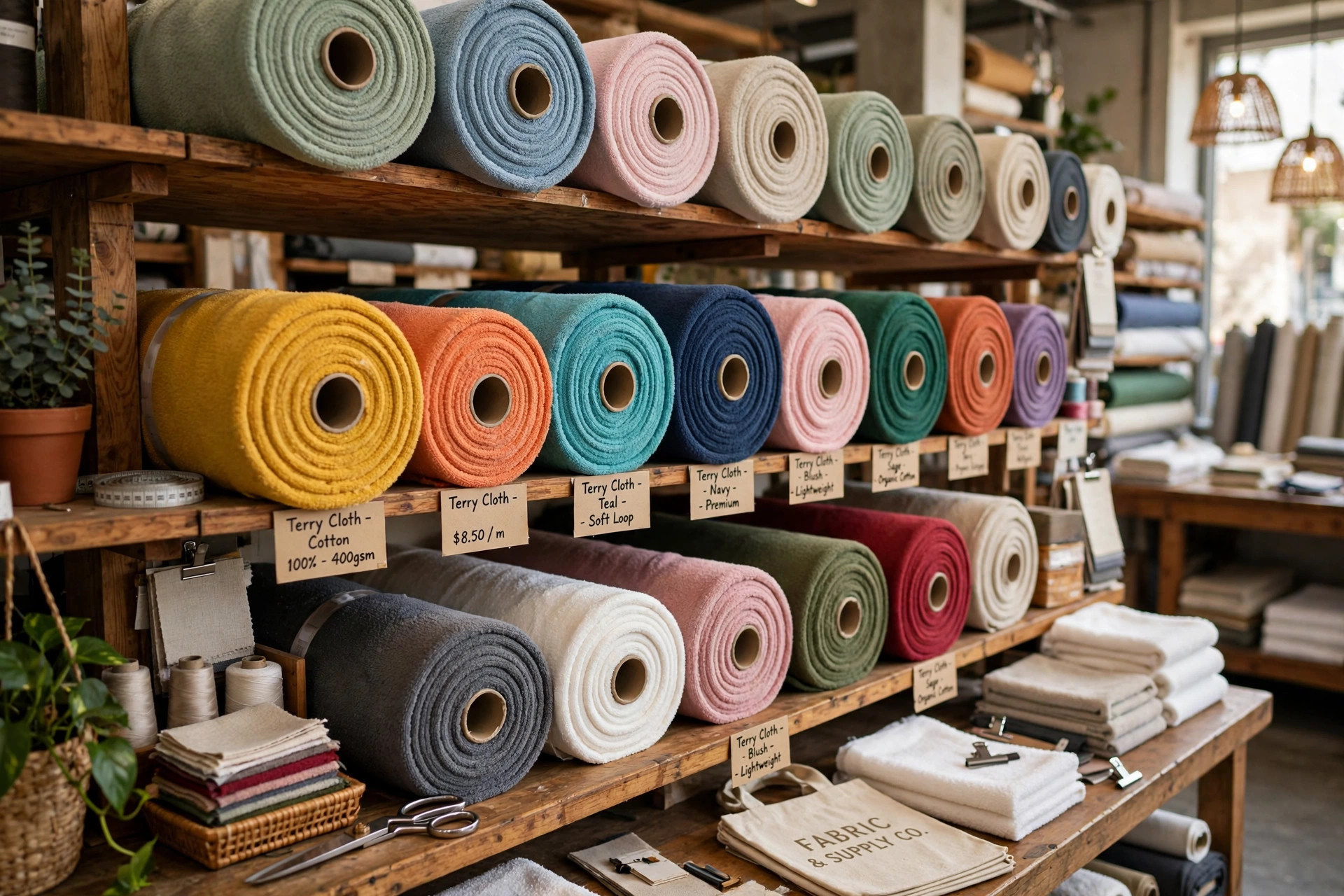
What Fabric Stores Sell as Terry Cloth
In a retail fabric store, terry cloth usually means cotton or cotton-blend toweling sold by the yard or meter from a bolt, in white and in colors, at widths suited to towels and apparel. Some stores file it with household and toweling fabrics, others with apparel fabrics, and French terry for sweatshirts and joggers may sit in a completely different aisle with the knits, so asking staff for both is worthwhile. Its sewing uses cover a wide range: towels and luxurious robes, bath mittens, reusable diapers, stuffed toys and bed linens, and then on into rompers, sundresses, sweat suits, loungewear, activewear and even sweatbands. Few fabrics move so easily between bathroom, nursery and wardrobe.
Stores may also stock toweling in pre-cut or specialty forms: striped kitchen toweling woven to towel width, double-sided bath toweling, terry-backed waterproof fabrics for nursery and care uses, and microfiber terry for cleaning. Each behaves differently at the sewing machine and in the wash. Before buying, unroll a length if you can, look at both faces, and check whether the loops are even, whether the ground weave feels firm, and whether the cloth recovers after you scrunch it in your hand. Terry should feel resilient and thirsty, not papery or limp, and the cut edge should not shed loops excessively when handled.
Choosing the Right Terry for a Sewing Project
Match the cloth to the job before falling for a color. For bath towels, washcloths and bath mats, choose absorbent cotton terry with loops on both sides and enough weight to feel substantial without taking forever to dry. For a robe or cover-up, a slightly lighter terry or a terry with one velour face drapes better and feels elegant, while still drying the wearer. For baby bibs, hooded towels and diaper sewing, softness and washability lead, and many makers back terry with a smooth cotton print so the gentle side sits against the skin and the absorbent side does the work. For sweatbands, spa headbands and small accessories, narrow remnants and lighter toweling are often plenty.
Quantity and shrinkage catch out more projects than pattern choice does. Cotton terry can shrink noticeably, so pre-wash it in the way the finished item will be washed, and buy a little extra length for that shrinkage and for matching or hemming. Check the usable width after allowing for any woven border or uneven edge, especially when cutting large bath sheets or robe panels. If you are buying online, order a swatch for any project where hand and absorbency truly matter, read the fiber and weight details rather than the photograph, and confirm whether the price is per yard, per meter or per pre-cut piece before comparing two stores.
Sewing and Caring for Terry at Home
Terry is friendly to sew, with a few habits that make it easier. Use a longer stitch, support the fabric so its weight does not drag, and expect lint in the machine, which should be cleaned out after a terry project. Loops can catch on pins and presser feet, so test on a scrap, finish raw edges that will be exposed to repeated washing, and bind or hem towel edges firmly because the cut loops will otherwise work loose over time. A walking foot helps when terry is layered with quilting cotton or waterproof backing, as in bibs and changing mats. None of this needs specialist machinery; it needs patience, sharp scissors and a vacuum for the inevitable fluff.
Finished terry projects follow the same care rules as bought towels. Wash without fabric softener if absorbency matters, shake items out so loops stand up, and dry them thoroughly to keep them fresh. Homemade reusable cloths, wipes and diapers benefit from a hot, thorough wash routine suited to their use. One pleasure of sewing with terry is repair: a worn towel can become washcloths, a robe can donate its good sections to bath mittens, and scraps make excellent cleaning cloths. The fabric keeps earning its keep long after the first project, which is part of why fabric stores keep it as a permanent staple rather than a seasonal novelty.
Using the Retailer Listings Below
Two retailers are listed below. Fabric.com offers soft terry cloth for everything from towels and robes to loungewear and activewear, with an emphasis on comfort.
Retail ranges and web addresses change over time, so treat the listings as trusted starting points and verify current stock, width, fiber and shipping terms on the retailer's own site before ordering. If you need trade quantities rather than sewing lengths, step up to the wholesalers page in this section; if you are choosing fabric for a product line, the mills page explains production.
Terry Cloth Retailers in This Directory
Two terry cloth retailers are listed below, each with a short note on what it sells.
Fabric.com
Retail source for soft terry cloth suited to towels, robes, bath mittens, reusable diapers, toys, linens, rompers, loungewear and activewear.
Online Fabric Store
Terry Cloth by the Yard listing describing terry as soft, strong and highly absorbent, with 100 percent cotton as the softest, thirstiest type, in white and many colors.
Common Questions
How much terry cloth should I buy for towels or a robe?
Measure your finished item, add hems and seam allowances, then add extra for cotton shrinkage after pre-washing. For a robe, also allow for large panels, a belt and matching across the width.
Should I pre-wash terry cloth before sewing?
Yes, especially cotton terry for towels, nursery items and apparel. Pre-wash and dry it the way the finished item will be laundered so shrinkage happens before cutting, not after.
Can I sew terry cloth on a regular sewing machine?
Yes. Use a longer stitch, test on a scrap, support the fabric weight, finish exposed edges firmly, and clean lint from the machine afterwards. A walking foot helps for layered projects.
More to Explore
References & Further Reading
Looking for Fabric Mills and Suppliers?
For more retail and wholesale fabric routes, explore the fabric directory on Apparel Search and the Fabric Search hub.