Terry Fabric Guide
Welcome to the terry fabric section of Fabric Search. From this hub you can learn what terry cloth is, how its absorbent loops are made, and where to find the mills that weave it, the wholesalers who stock it, and the stores that sell it by the yard.
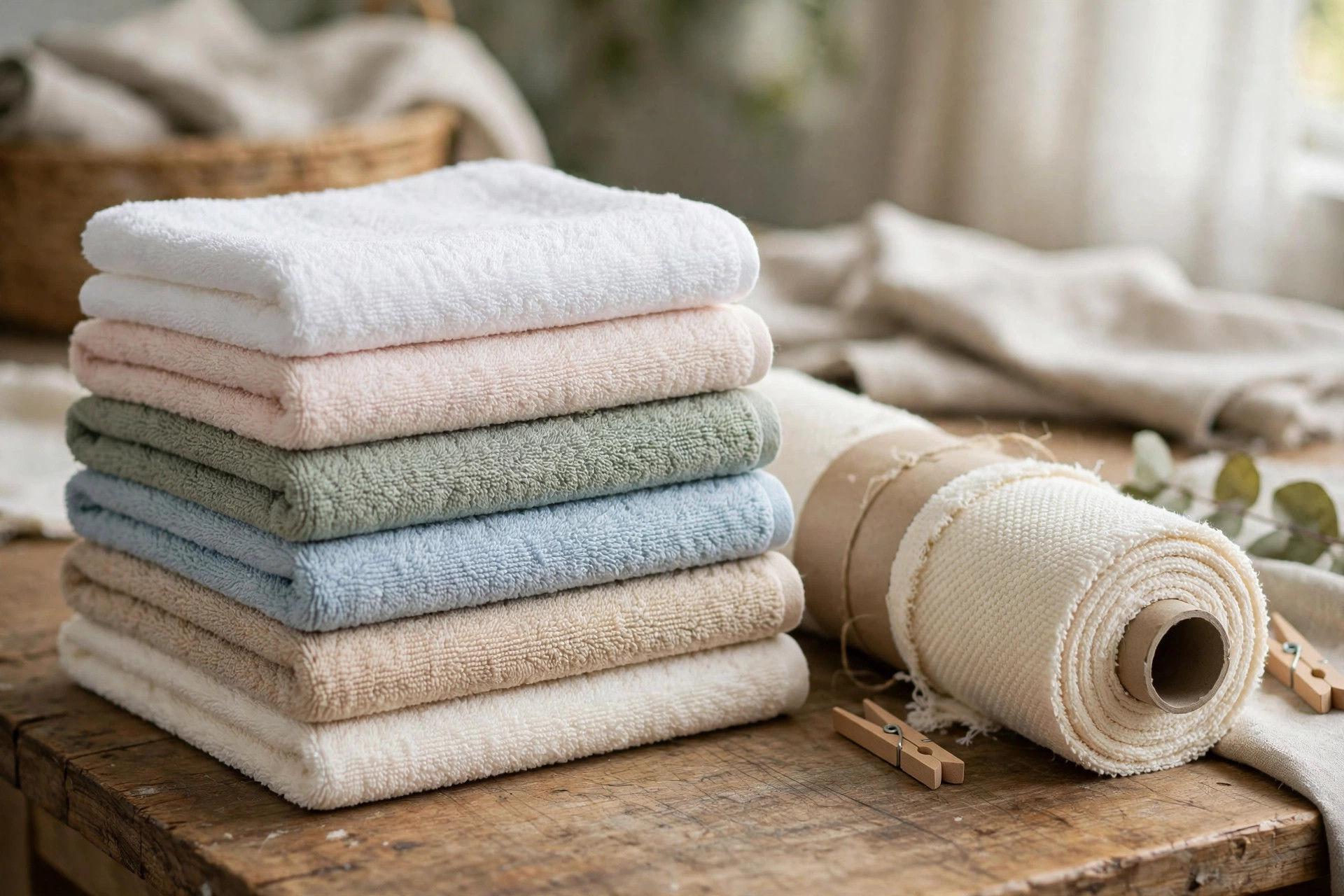
Start With the Cloth Itself
Terry cloth is a pile fabric, typically cotton, covered with uncut loops, and it earns its place in daily life through one talent above all: absorbing water. The loops multiply the surface that touches moisture, so a terry towel dries skin instead of merely wiping it, a terry robe keeps working after a bath or swim, and a terry washcloth stays useful wash after wash. The original guide introduced terry in exactly those practical terms, noting that it is manufactured through one of two methods, weaving or knitting, and that it is an absorbent fabric often used for towels and robes. That short definition is the right foundation, because every page in this section is really about a different stage in the life of that looped cloth.
Woven terry, the classic toweling, builds its loops from extra warp yarns during weaving and can place them on one or both sides of the fabric. Knitted terry and its close family, including French terry, bring stretch and a softer apparel hand to sweatshirts, joggers, nursery goods and casual clothing. Loop height, density, fiber and weight tune the result from a light, quick-drying gym towel to a deep, plush bath sheet. If you are new to the fabric, begin with the main terry fabric page linked in this section, which explains the construction, the difference between terry and French terry, and the care habits that keep loops absorbent instead of coated and flat.
Then Follow the Supply Chain
Once the cloth makes sense, the three directory pages in this section follow it through the trade. The mills page covers the producers who weave terry, from long-established toweling specialists with nineteenth-century roots to large integrated enterprises that weave, finish, cut and sew under one roof. Mills are where loop quality, yarn choice and finishing are decided, so product developers and volume buyers will spend the most time there. Read mill descriptions with washed samples in mind: terry reveals its true hand, shrinkage and absorbency only after laundering, and a serious mill conversation always includes weight, width, fiber and end use from the first enquiry.
The wholesalers page covers the distributors who hold stock between mill and maker, supplying toweling, finished towels and apparel terry in trade quantities to hotels, decorators, brands and smaller manufacturers. The stores page turns to retail, where home sewers and small makers buy terry by the yard for towels, robes, bibs, diaper sewing, loungewear and accessories. Moving through the three pages in order gives a complete picture of how a bolt of looped cotton becomes a hotel towel program, a robe collection or a single handmade gift, and it shows why the same fabric name can mean different constructions in different channels. Use whichever page matches your quantity first, then read the others for context.
Choosing Terry With a Clear Purpose
Good terry choices start with the job, not the color chart. Bath and spa use rewards absorbency, loop resilience and laundry endurance; look for honest weight, firm ground weave and cotton that has not been softened into poor performance by heavy finishes. Apparel use rewards drape, a comfortable inner face and recovery after washing, which is why French terry dominates sweatshirts and casual sets. Nursery use rewards softness, safe construction and relentless washability. Cleaning and microfiber terry reward wicking and lint control over plushness. Each purpose points to a different construction, and this section's pages return to that matching exercise again and again because it prevents the commonest disappointment: buying a beautiful terry that was simply built for a different task.
Care belongs in the choice as well. Cotton terry asks for thorough washing, restrained use of fabric softener, and complete drying, and it repays that care with years of service. Heavier cloth absorbs more but dries more slowly, in the home laundry as much as in a hotel's cost calculations. Lighter cloth is easier to wash, quicker to dry and often better for travel, sport and children. None of these trade-offs has a universal winner. The guides in this section give you the vocabulary, fiber, weight, loop and finish, to state what you need plainly, whether you are writing a mill specification, a wholesale order or a shopping list for two yards of toweling.
How to Use This Hub
Treat this page as the map for the terry section. Newcomers should read the fabric guide first, then visit stores for sewing quantities or wholesalers and mills for trade work.
Terry is one of the oldest ideas in this fabric library and one of the most durable, in every sense. A loop is a humble piece of engineering, yet multiplied across a towel it delivers softness, warmth and absorbency that flat cloth cannot match, which is why terry has outlasted countless novelty fabrics.
Looking for Fabric Mills and Suppliers?
Beyond terry, the full Fabric Search hub on Apparel Search opens every other fabric section in this library.