Terry Fabric
Terry fabric is the looped cloth behind the bath towel, the spa robe and the beach cover-up. Its raised, uncut loops drink up water, feel soft against the skin, and explain why one simple construction has served bathrooms, hotels, nurseries and sportswear for generations.
Shop Terry Cloth Fabric Now
Shop Terry Cloth Fabric on Amazon Shop Terry Cloth Fabric on eBayThese links open the Apparel Search shopping guides for Amazon and eBay, where the product links are kept in one place.
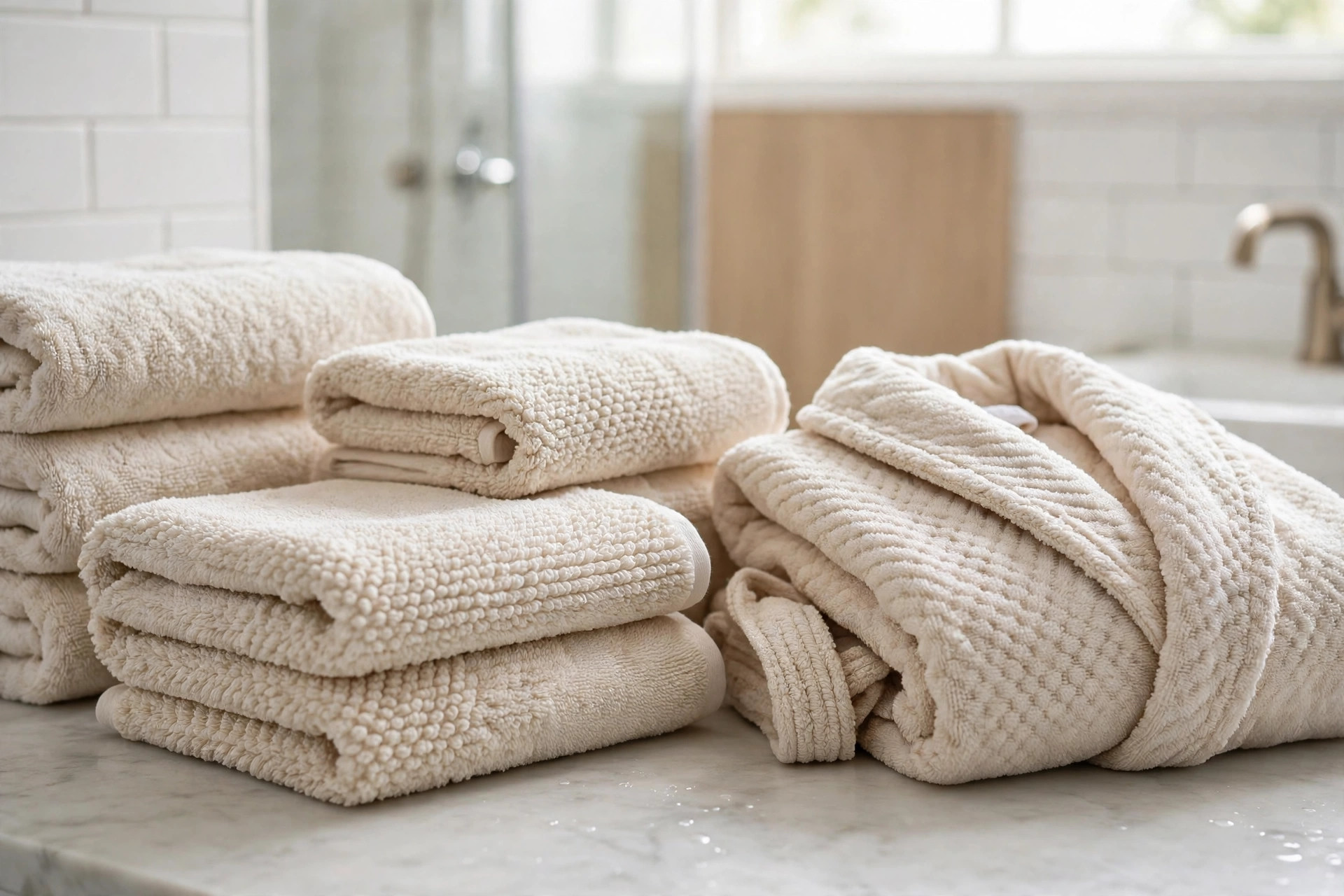
What Terry Cloth Actually Is
Terry cloth, often called toweling, is a pile fabric whose surface is covered with loops that stand up from a woven or knitted ground. Unlike velvet or velour, whose pile is cut, terry loops are left uncut, and that single detail creates its character. Each loop offers extra surface area and tiny air pockets, so the fabric can hold far more water than a flat cloth of the same weight. When you press a terry towel to wet skin, the loops spread, flex and wick moisture into the body of the fabric instead of simply pushing it around. Cotton is the classic fiber because it is naturally absorbent, comfortable and hard-wearing, though terry is also made with cotton blends and other fibers for specific jobs.
The ground structure matters as much as the loops. In woven terry, extra warp yarns form the loops on one or both sides of the cloth, which is why a good towel can be loopy on both faces. Double-sided terry absorbs on both sides and feels substantial, while single-sided versions are lighter. Knitted terry and related loop constructions appear in apparel and baby products where stretch and softness matter more than maximum absorbency. Loop height, yarn size and density together decide whether a terry feels plush and thirsty or thin and quick to dry, so two fabrics both honestly labeled terry can perform very differently in daily use.
Terry, French Terry and Their Close Relatives
French terry is the relative most likely to cause confusion, and the original Apparel Search page pointed readers to definitions for exactly this reason. In French terry, the loops sit mainly on one side while the other side is comparatively smooth, which makes it popular for sweatshirts, joggers, hoodies and casual dresses. You wear the smooth side out and enjoy the soft looped side against the body, gaining warmth and comfort without the bulk of a bath towel. Standard terry cloth for toweling, by contrast, is built first for absorbency and durability, with loops designed to survive repeated hot washing and hard use in homes, hotels, gyms and salons.
Other relatives help clarify the family. Velour terry has its loops sheared on one face for a velvety look often used on robes, while the reverse stays absorbent. Microfiber terry uses very fine synthetic yarns split or engineered for cleaning and detailing, trading some natural softness for strong wicking and lint control. Terry can also appear in diaper cloths, bath mats, washcloths, bibs and cleaning textiles, each tuned by weight and loop construction. When shopping or specifying, the useful questions are always the same: which fiber, loops on one side or two, what weight, and what job must the fabric do every day?
Choosing Terry for Towels, Robes and Apparel
Weight, usually expressed for toweling in grams per square meter, is a practical starting point. Heavier terry generally feels plusher and absorbs more, but it also takes longer to dry and to launder, which is why hotels balance luxury against laundry cost and why a quick-dry gym towel is not built like a spa towel. Longer, well-twisted loops resist pulling and keep a towel looking even, while very soft, loosely twisted yarns can feel wonderful at first yet shed or snag sooner. Cotton terry softens with washing, whereas fabric softeners and silicone finishes can coat the fibers and quietly reduce absorbency, a common reason a once-thirsty towel seems to stop working.
For robes and apparel, drape and warmth join absorbency on the checklist. A robe needs enough body to wrap and stay closed, enough loop to dry the wearer, and a construction that will not feel heavy when wet. For baby and nursery uses, softness, washability and the absence of loose loops that catch tiny fingers matter most. For sport and beach products, colorfastness, sand release and drying speed may outrank plushness. There is no single best terry, only a best match between construction and use, and reading a product description for fiber, weight and loop type will tell you more than a photograph of folded towels ever can.
Care, Longevity and Buying With Confidence
Terry rewards simple care. Wash new towels separately at first, expect some lint while loose fibers clear, and avoid overloading the machine so loops can rinse clean. Detergent residue and softener build-up are the enemies of absorbency, so an occasional thorough rinse helps restore performance. Pull a snagged loop even with its neighbors and trim it level rather than tugging it out, because the loop is anchored in the ground weave and pulling can start a run of damage.
Use the companion pages in this section when you move from learning to sourcing. The mills page covers producers, the wholesalers page covers bulk and trade supply, and the stores page covers buying by the yard for sewing and home projects.
Common Questions
What is the difference between terry cloth and French terry?
Terry cloth for toweling has absorbent loops, often on both sides, built for drying. French terry has loops mainly on the inside and a smoother outer face, so it is used for sweatshirts, joggers and casual apparel.
Why has my terry towel become less absorbent?
Fabric softener, silicone finishes and detergent residue can coat cotton fibers so water beads instead of soaking in. Washing without softener and rinsing thoroughly often restores much of the absorbency.
Is heavier terry always better?
No. Heavier terry feels plusher and absorbs more but dries and launders more slowly. The right weight depends on the job: spa towels, gym towels, robes and baby cloths each favor a different balance.
More to Explore
References & Further Reading
Looking for Fabric Mills and Suppliers?
To explore mills, wholesalers and other fabrics alongside terry, start from the Fabric Search hub on Apparel Search and the wider fabric directory.