Twill Fabric Wholesalers & Distributors
Wholesalers and distributors stand between mills and makers, stocking twill in depth so brands, uniform suppliers, and workrooms can buy proven fabrics without mill-sized commitments. This guide explains the channel and lists its twill suppliers.
The Wholesaler's Role in the Twill Trade
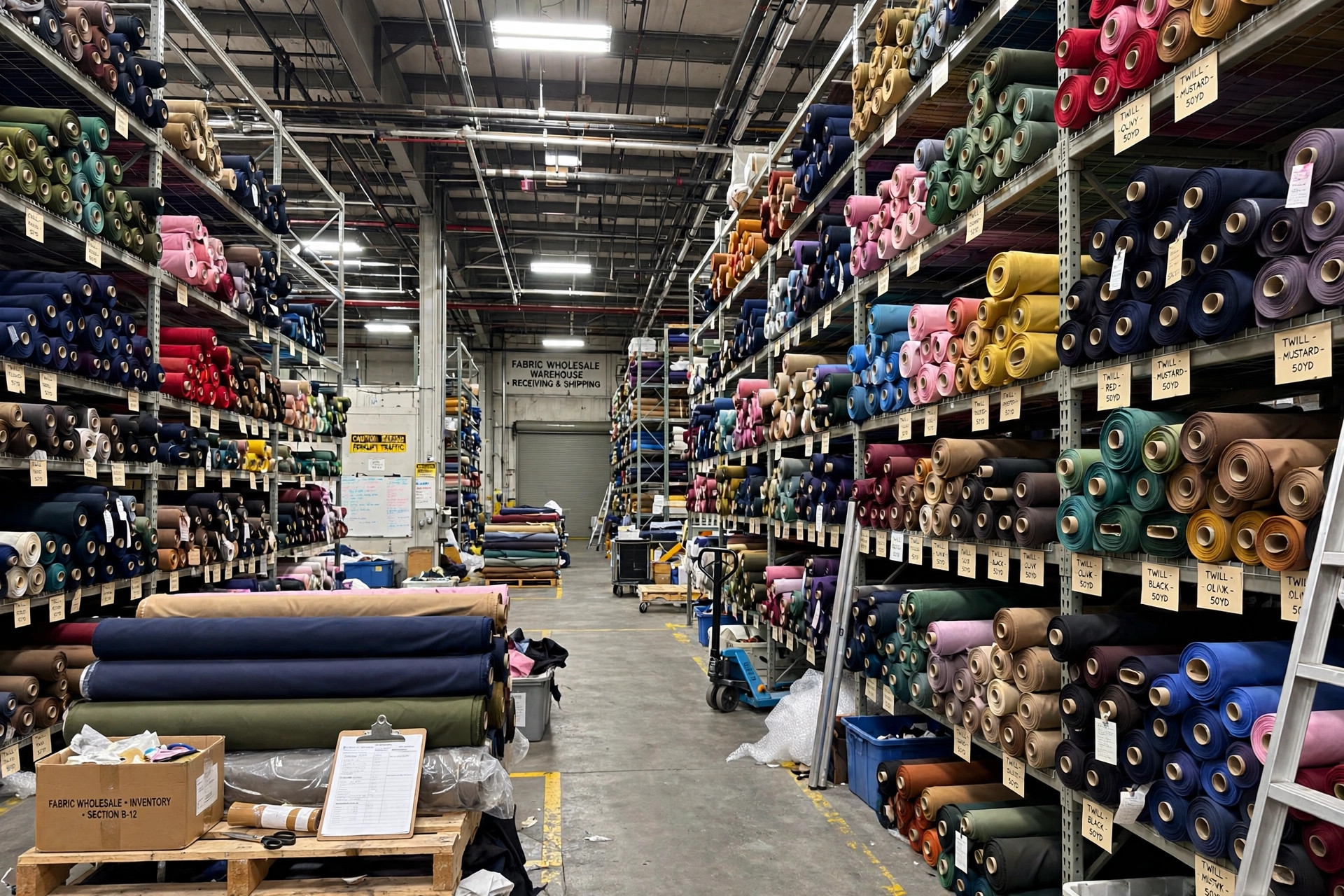
Most twill never travels directly from a mill to the business that cuts it. Mills weave in large, scheduled runs, while garment makers, uniform programs, and interior workrooms need reliable access to particular fabrics in moderate quantities, often on short notice. Wholesalers and distributors fill that gap: they buy twill in volume, warehouse it in range — multiple fibers, weights, and colors of the constructions their customers reorder — and sell it onward by the roll or bolt. For the buyer, the arrangement trades a slightly higher price than mill-direct for immediacy, smaller minimums, and a single supplier across many fabric types.
Twill is a natural wholesale staple because demand for it is steady and predictable. Chino and gabardine constructions for uniforms, cotton twills for workwear and casual apparel, and upholstery twills for furnishings are reordered season after season, so a distributor can stock them with confidence. A good wholesaler also performs quiet quality work on the buyer's behalf: inspecting incoming goods, holding shade continuity across repeat orders, and standing behind the fabric if a roll arrives flawed. When you evaluate the listings below, those services — range, stock depth, and reliability — matter as much as the headline price per yard.
The Listed Wholesalers and Distributors
Fabric Finders, Inc. is a wholesale distributor of fine cotton fabrics, offering a large selection of quality 100 percent cotton ginghams, stripes, seersuckers, and chambrays in rich color assortments, together with piques and twills in patterns and solids — a range aimed at children's wear, shirting, and classic apparel programs where cotton quality is the selling point. Fashion Fabrics Club has long served value-focused fabric buyers, and its presence in this guide reflects the way club and discount channels move staple fabrics like twill to small businesses and serious home sewers alike, at quantities between pure retail and full wholesale.
Maruthi Fabrication, located in Tiruppur in Tamil Nadu, India, works as traders, wholesalers, and suppliers of yarns and fabrics noted for fine weave, varied patterns, good finish, smooth texture, and colorfastness. Its operation sources from established vendors, quality-tests colorfastness and durability, and stores stock in a dedicated warehousing unit — a model typical of India's fabric trading hubs, supplying fabric for dresses, curtains, pillow cases, and bed sheets. Nick of Time Textiles appears in this guide as it did in the stores guide, because it genuinely serves both channels: based in Allentown, Pennsylvania, it supplies twill woven fabrics at discounted wholesale prices to trade buyers while also selling retail through its online store, including hard-to-find fabrics that larger distributors may not carry.
Buying Twill Wholesale, Sensibly
Begin any wholesale relationship with samples and a small first order. Twill quality hides in specifics — yarn quality, density, finish, and shade consistency — that a product description cannot fully convey, so handle the actual cloth and, for apparel, sew and wash a test garment before committing to volume. Confirm the distributor's minimums, roll sizes, and whether cut yardage is available for sampling or small runs. Ask how repeat orders are handled: uniform and workwear programs live or die on the same twill arriving in the same shade months later, and a distributor who tracks lots and flags discontinuations is worth more than one who is merely cheap.
Price comparisons should be made on identical constructions, since two fabrics both called cotton twill can differ enormously in yarn count, weight, and finishing. Include freight, and the cost of your own inspection time, in the comparison. Finally, treat the wholesaler as a market source as well as a supplier: distributors see which twills are moving, which are being discontinued, and what mills are developing, and a short conversation can save a buyer from specifying a fabric that is about to disappear. The listings here are a starting point for those conversations, not a substitute for them.
Twill Fabric Wholesalers Directory
Wholesalers and distributors from the original guide; the Alibaba wholesale portal result is kept in References rather than listed as a distributor.
Fabric Finders, Inc
Wholesale distributor of fine cotton fabrics — ginghams, stripes, seersuckers, and chambrays — with a selection of piques and twills in patterns and solids.
Fashion Fabrics Club
Fabric club and discount channel listed in the original guide as a source of twill and other staple fabrics for value-focused buyers.
Maruthi Fabrication
Tiruppur, India based traders, wholesalers, and suppliers of yarns and fabrics known for fine weave, smooth texture, and colorfastness, with quality testing and dedicated warehousing.
Nick of Time Textiles
Allentown, PA seller providing wholesale and retail twill woven fabrics at discounted prices, including hard-to-find fabrics and accessories.
Common Questions
What is the difference between a twill wholesaler and a mill?
A mill weaves the fabric in large scheduled runs, while a wholesaler buys and warehouses finished twill from mills and resells it in smaller quantities with faster availability and a broader mixed range.
How much twill do I need to buy wholesale?
Minimums vary by distributor — often a roll or bolt rather than the mill's production run — which is why apparel brands and workrooms use wholesalers for moderate quantities and repeat orders.
Why does shade consistency matter for twill?
Uniforms and coordinated garments are cut and replenished over time, so the same twill must arrive in the same shade across orders. Good distributors track lots and can warn buyers about variations or discontinuations.
More to Explore
References & Further Reading
Looking for Fabric Mills and Suppliers?
Compare channels through the Fabric Search hub and the broader Apparel Search fabric directory.