Woven Fabric Mills
Woven fabric mills are where yarn becomes cloth — warping, weaving, dyeing and finishing under one roof or across a coordinated operation. This directory collects mills producing everything from greige cotton and yarn-dyed shirting to tartans, tweeds and stretch wovens, with a short note on each.
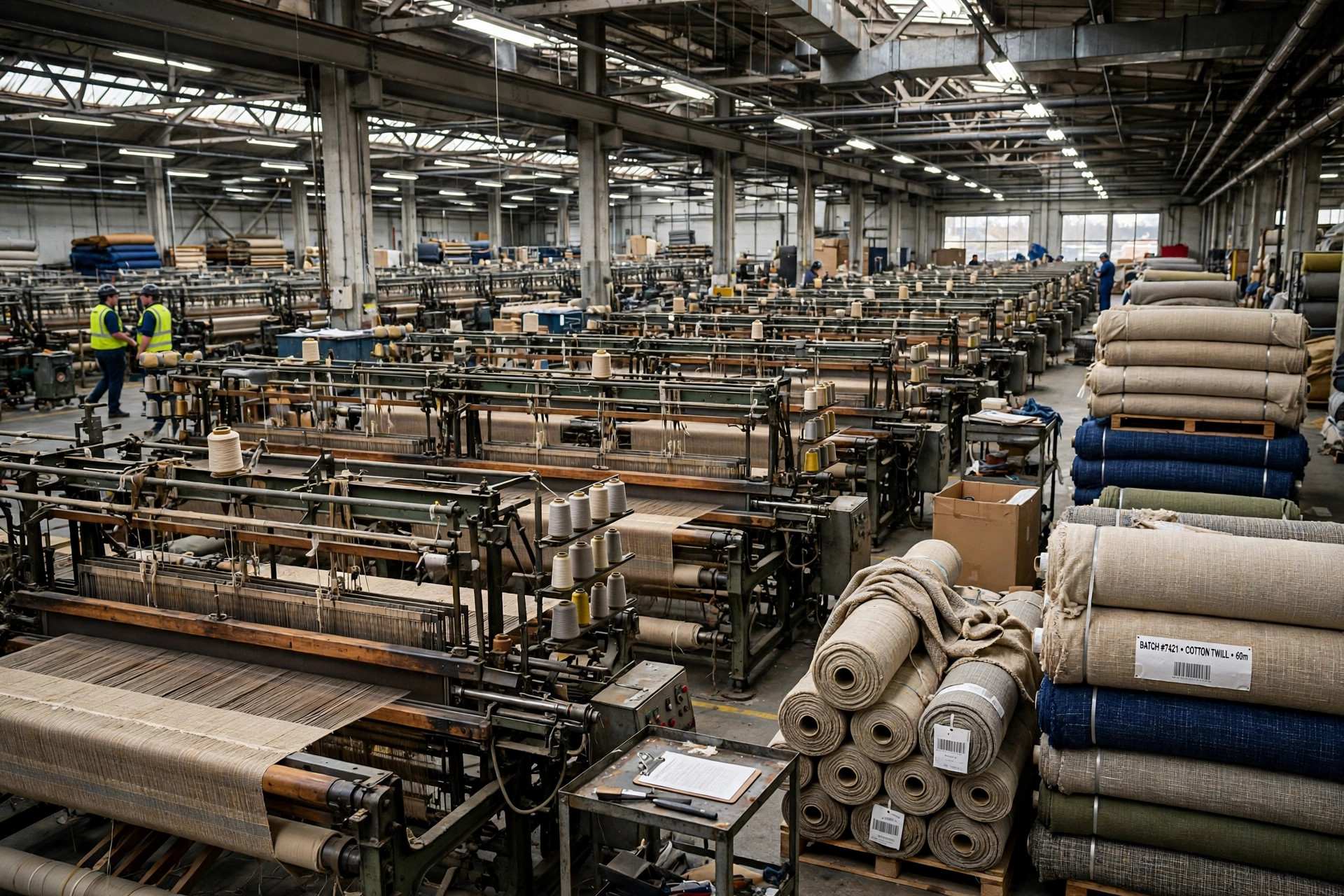
What a Woven Fabric Mill Does
A weaving mill takes yarn in and sends finished or unfinished cloth out. The core steps are warping, where lengthwise yarns are arranged in order and wound onto a beam; sizing, where warp yarns may be coated to survive weaving friction; weaving on looms that interlace warp and weft; and inspection of the greige — unfinished — cloth. Some mills sell greige goods for others to dye and finish, while vertically integrated mills carry the fabric through dyeing, printing and finishing so it arrives ready for garment cutting. Knowing which model a mill follows matters, because it decides who controls color, hand and final performance.
Mills specialize more than outsiders expect. One mill may run wide looms for sheeting and home furnishings, another may focus on apparel-weight cottons in poplins, oxfords and twills, and a third may weave only wool tartans or fancy tweeds with novelty yarns. Equipment, loom width, yarn range and minimum order quantities all differ, so a mill that is ideal for upholstery fabric may be a poor fit for lightweight shirting. The listings below reflect that range, from large multi-plant operations to small specialty weavers with a distinctive product.
Greige, Yarn-Dyed and Finished Fabrics
Buyers encounter woven fabrics at three main stages. Greige goods come straight off the loom and are the starting point for piece dyeing, printing and most finishing. Yarn-dyed fabrics are woven from yarns dyed before weaving, which is how checks, stripes and chambrays get their color woven into the structure itself rather than applied on top. Finished fabrics have completed dyeing and any treatments — softening, wrinkle resistance, flame retardancy, high-visibility or water-repellent finishes — and are ready to cut and sew.
Each route has practical consequences. Yarn-dyed patterns hold their appearance well because the color runs through the yarn, but they require the mill to plan colors before weaving. Piece-dyed greige fabrics offer flexibility to dye to order in smaller color commitments. Finished-fabric specialists can add performance properties that a basic weaving operation cannot. When contacting a mill, it helps to state clearly which stage you buy at, the widths and weights you need, your expected quantities, and whether you require the mill's own stock program or custom production woven to your specification.
Working With Mills as a Buyer
Mill relationships run on specifications. A useful inquiry names the fiber content, weave construction, finished width, weight, color or pattern, finish requirements and target quantity, along with the end use — apparel, home furnishings, industrial or support garments — because mills route inquiries to the looms and lines that fit. Expect questions in return about minimums: weaving is an efficient process at volume, and most mills set minimum order quantities per construction and color that small buyers need to plan around, sometimes by buying from a mill's stock range instead of commissioning production.
Sampling is the normal next step. Mills supply swatches or sample yardage so buyers can test hand, color, shrinkage and sewing behavior before committing. Lead times cover yarn procurement, warping, weaving and finishing, so seasonal apparel programs are usually placed well ahead of garment production. Buyers who cannot meet mill minimums are not out of options — wholesale distributors and converters exist precisely to break mill production into smaller lots, and the wholesaler and store pages in this section cover those channels.
Finally, ask how the mill handles quality claims and continuity. Woven fabric can vary subtly between production lots, and a mill that documents its constructions, keeps loom-state records and offers lab-dip and strike-off approvals before bulk production will save a buyer far more than a small difference in quoted price. Continuity matters most on long-running basics, where the same poplin, twill or sheeting must match across seasons of garments sold side by side.
Woven Fabric Mills Listed in This Directory
The mills below were listed in the original directory with the descriptions summarized here. Product ranges and programs change over time, so confirm current constructions, widths and minimums directly with each mill.
BCN Textiles
Manufacturer and exporter of 100% yarn-dyed cotton woven fabrics, including check, chambray, dobby, jacquard, satin and stripe woven fabrics made to client specifications for color, design and size.
Hamrick Mills
Gaffney, South Carolina mill producing greige woven fabrics in poly-cotton and 100% cotton for home furnishings, industrial, apparel and support apparel markets, including twills, poplins, oxfords, herringbones and plain weaves.
K.R.G. Textiles
Indian mill with monitored production and quality checks covering 100% cotton grey fabrics, polyester-cotton fabrics, bleached and printed fabrics and made-ups, and yarn-dyed fabrics and made-ups.
Linton Tweeds Direct
Carlisle mill designing and weaving textured, novelty fancy tweeds from varied yarn types for ladies' jackets, skirts and coats, with fabrics available to buy online by mail order.
Lochcarron of Scotland
Scottish manufacturer weaving and stocking a large range of authentic tartans, and producing woven fabrics, contemporary accessories and bespoke Highland wear in the Scottish Borders.
Loyal Textiles
Indian textile group offering grey woven and dyed woven fabrics — including sheeting, canvas, satin, drill, twill, gabardine, herringbone and oxford weaves — in wide widths with finishes such as high-visibility and flame retardant.
Pendleton Woolen Mills
Long-established American woolen mill known for wool woven fabrics and blankets, with family-led management continuing a weaving heritage the original directory traced back to 1863.
Schneider Mills
New Jersey weaving company founded in 1916 as a silk weaving business, producing woven fabrics including plain weave, basket weave, twill, satin, rip stop, double-face satin and fancy dobby constructions.
Tweave LLC
Specialist in stretch woven fabrics, applying spandex-covering, warping, weaving, dyeing and finishing to produce stretch wovens originally developed for intimate apparel and later for a broader range of uses.
Weavetec, Inc.
Family-owned specialty weaver in Upstate South Carolina operating since 1987, producing fabrics from upholstery fabric and cotton tapestry to specialty and industrial fabrics.
Common Questions
What is the difference between a mill and a converter or wholesaler?
A mill owns the looms and weaves the fabric. Converters buy greige goods and manage dyeing, printing and finishing, while wholesalers buy finished fabric and resell it in smaller quantities. Each serves a different order size and level of customization.
What are greige goods?
Greige goods are woven fabrics straight off the loom before dyeing, printing or finishing. Many mills sell greige cloth to converters or finishers, while integrated mills carry it through to finished fabric themselves.
What information should I give a mill when asking for a quote?
Give the fiber content, weave construction, finished width and weight, colors or pattern, finish requirements, quantity and end use. Clear specifications let the mill confirm quickly whether its looms and minimums fit your program.
More to Explore
Looking for Fabric Mills and Suppliers?
To compare mills with other fabric sources, see the wider Apparel Search fabric directory and the Fabric Search guide.