Woven Fabric Stores and Retailers
Retail fabric stores are where woven fabric reaches home sewers, designers and small makers, sold by the yard from bolts and rolls. This guide explains what woven fabric retailers typically carry and introduces the stores listed in the original directory.
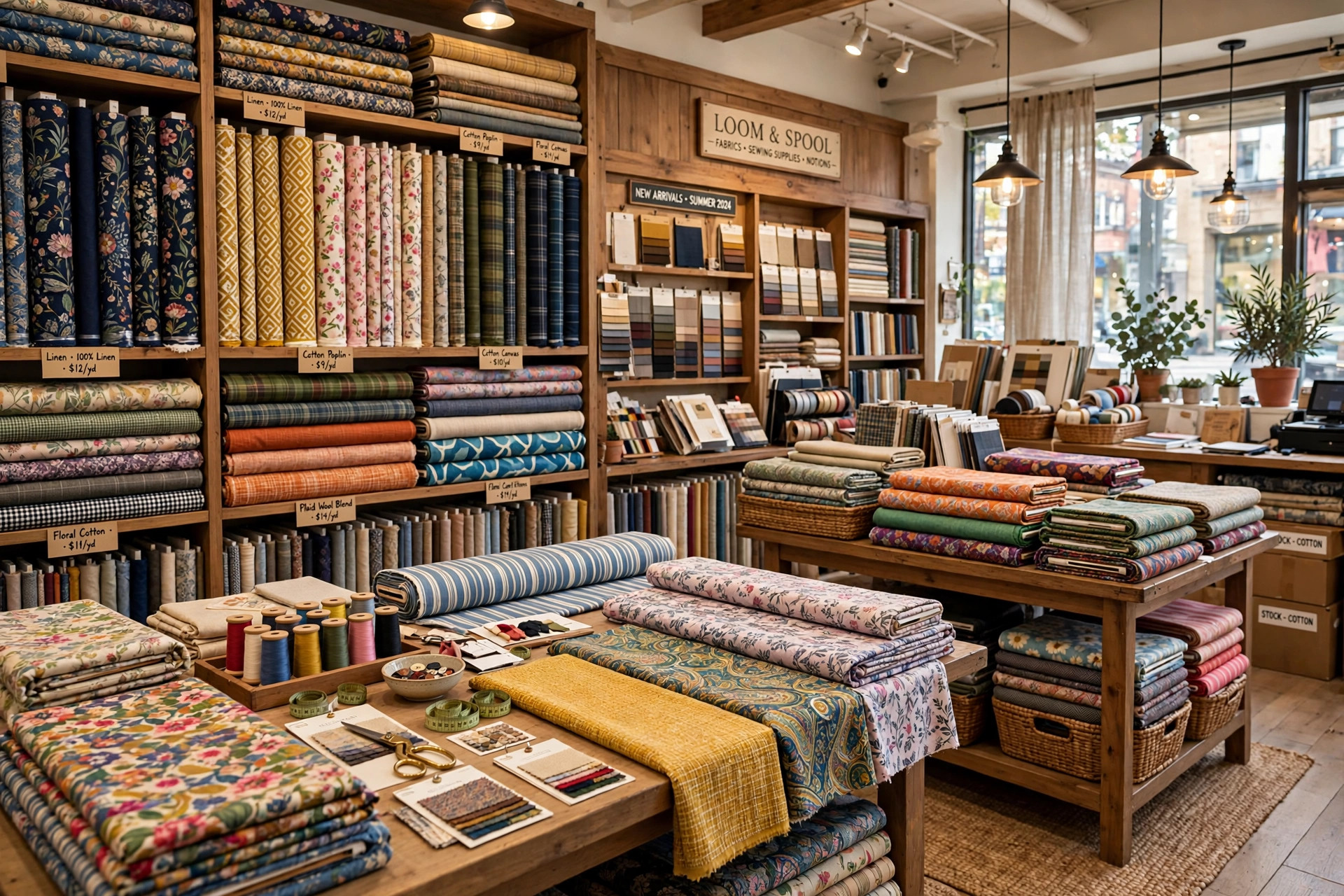
What Retail Woven Fabric Stores Carry
A good retail fabric store stocks woven fabrics across the weights and fibers a sewing community actually uses: quilting cottons and cotton shirting, linen and linen blends, wool suiting and coatings, silk and satin for occasion wear, denim and twill for trousers and jackets, plus upholstery and drapery wovens for the home. Because woven fabric is sold from the bolt, shoppers can unroll a length, check the drape and hand against their pattern, and see the true color in store light before buying — advantages that keep independent fabric stores relevant alongside online sellers.
Retailers differ in character. Some are broad-line stores carrying a little of everything plus notions, patterns and sewing supplies; others specialize, for example in decorator fabrics and closeout upholstery and drapery stock, or in apparel fabrics with strong natural-fiber ranges. Many stores now sell through their own websites as well as a physical shop, shipping cut yardage to customers who have no local store. Knowing a store's specialty saves time: a drapery-weight woven will not substitute for a shirting, however attractive the pattern, and staff at specialist stores are usually skilled at steering projects to the right construction.
Buying Woven Fabric at Retail
Successful retail buying starts with the pattern or project requirements: fabric type, width, yardage, and whether the design needs a one-way print, a plaid or stripe to match, or extra length for shrinkage. Woven natural fibers such as cotton and linen commonly shrink on first washing, so buying a little extra and pre-washing before cutting is standard practice. Check the bolt end or product listing for fiber content and care instructions, and hold the fabric up to light to judge opacity — many light-colored wovens need a lining in garments.
Price at retail reflects fiber, construction and whether the fabric is a current line or a closeout. Closeout and outlet-style stores can offer decorator and apparel wovens well below regular prices, with the trade-off that once a roll sells out it cannot be reordered, so buying enough for the whole project at once matters. For online orders, swatch services are worth using whenever color or hand is critical, since screens render both imperfectly. Keeping notes on what you bought, where, and when helps if a project later needs a matching dye lot or a repeat purchase.
Independent Stores and the Sewing Community
Independent fabric stores do more than sell yardage. They are local knowledge centers where staff advise on interfacing, lining and thread choices, recommend which woven construction will survive a particular garment, and often support classes, alterations contacts and sewing groups. Several of the stores in this directory grew out of weaving or family fabric businesses and carry that history into their ranges, from handwoven goods to multi-generation general fabric shops. That continuity is part of what shoppers are supporting when they buy locally.
The listings below preserve the retail stores from the original directory, spanning in-store and online sellers of woven fabrics. Stock changes constantly at retail, so treat each listing as a starting point: check the store's current website or visit in person to see what is on the bolt today. If you are researching at trade level instead — full bolts, case quantities or production yardage — the mill and wholesaler pages in this woven section are the more appropriate starting points.
A practical tip for store visits: bring your pattern envelope or project measurements with you, along with any fabric scraps you need to match. Staff can then check widths, estimate yardage for the exact bolt in front of you, and suggest a lining, interfacing or alternative woven construction on the spot — help that is much harder to give accurately from a short online message after the fabric has already been cut.
Woven Fabric Retailers Listed in This Directory
Retail stock turns over quickly, so confirm availability, widths and fiber content with each store before planning a project around a specific fabric.
InWeave Fabric
Iowa retailer that began with hand-woven rugs in 1990 and expanded into yard goods, offering quality fabrics at factory outlet or wholesale-style prices.
Hollin Gate - The Online Fabric Store
Long-running fabric seller with a large showroom stock of closeout upholstery and drapery fabrics, also selling through online shops for customers shopping from home.
RTC Fabrics
Fabric retailer specializing in fabrics and notions for active lifestyles, carrying woven as well as knit fabrics from established manufacturers and its own exclusive fabric line.
Stonemountain & Daughter Fabrics
Berkeley, California fabric store run by a father-and-daughter team representing the third and fourth generations of a family in the fabric business.
Common Questions
How much woven fabric should I buy for a garment?
Follow your pattern's yardage chart for the fabric width you are buying, then add a margin for shrinkage on natural fibers and for matching plaids, stripes or one-way prints. When buying closeout fabric, buy the full project amount at once because reorders are usually impossible.
Can I buy woven fabric online by the yard?
Yes. Many retail fabric stores sell cut yardage online and ship it, and swatch services let you check color and hand first. Confirm the fiber content, width and care instructions on the product listing before ordering.
What is the difference between a fabric store and a fabric wholesaler?
A fabric store sells small cut lengths to retail customers for individual projects. A wholesaler sells full bolts or larger quantities to businesses, usually requiring a resale account and minimum orders.
More to Explore
References & Further Reading
Looking for Fabric Mills and Suppliers?
For retail fabric shopping beyond wovens, explore the Apparel Search fabric directory via the Fabric Search hub.