Christian Lacroix Runway
The Lacroix show — embroidery, brocade and color, walking.
A Lacroix runway show is the house's argument made visible: that couture can be joyful. Since he opened his own couture house in 1987 — and added ready-to-wear in 1988, drawing inspiration from diverse cultures — his Paris presentations have sent out clothes of saturated color and worked ornament with a couturier's finish, season after season. This page follows the runway strand of his record in this guide: the shows themselves, look by look. The runway is also where his two registers meet: couture looks and ready-to-wear looks share one standard of finish, so the shows read as a single performance rather than two presentations sharing a name.
The Photos section gathers runway photography across the house's history, and the search routes in the references run Christian Lacroix runway news, photo and video searches. Pair this page with the fashion week page for the calendar around the shows, and with the collections page for the seasons filed in order. Readers new to the house often start here, because a finale viewed whole conveys what a season of description cannot: the density of the color, the weight of the embroidery, the confidence of the composition. The official Christian Lacroix website is linked in the references.
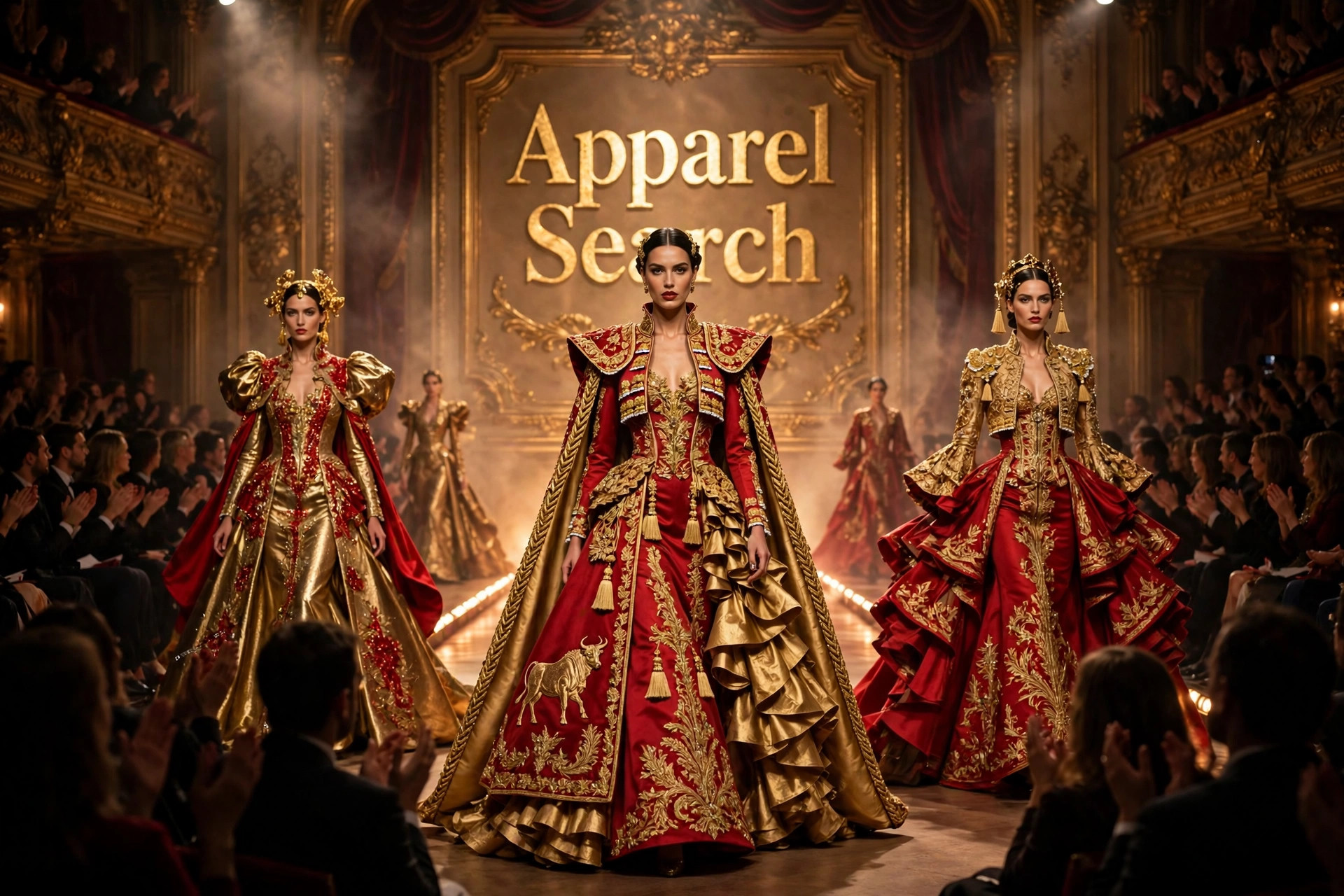
Illustrative image created for this guide — an artistic impression, not this designer's own garments.
News, Photos & VideoCollectionsFall FashionsFashion WeekNewsProfilesRunwaySpring Fashions
The Show as a Color Story
Read a Lacroix show the way it was composed: as a progression of color. Couture discipline orders the sequence — day looks building toward evening, pattern answering pattern — while the inspiration drawn from diverse cultures lets each exit bring a new tradition's palette into the conversation. The effect the photographs in the Photos section preserve is accumulation: by the finale, the runway has assembled a world, and the applause is for the whole of it, not a single dress. Sequencing is the couture inheritance at work: a show built like a composition, with quieter passages placed to make the ornate ones legible, exactly as a couture salon presentation taught its audience to look.
That method descends directly from the founding. A house that began with couture in 1987 learned presentation at couture's level — every look finished as if for a client fitting — and the ready-to-wear shows from 1988 kept the standard, which is why his runway record reads as one continuous performance across both registers. That continuity is a useful check on the photography: a look that appears in both the couture and ready-to-wear records is the house repeating its best idea at two levels, not two houses sharing a stylist.
Reading Runway Photography
His shows reward the detail photograph as much as the full-length shot. The runway image that matters is often the close one: embroidery density, a jeweled button, the scarf and glasses and handbag — the accessories he launched in 1989 — completing a look exactly as presented. Full-look photography matters for the opposite reason: this is a designer of complete outfits, and a cropped image that loses the shoes, the bag or the scarf loses part of the design. The runway search routes in the references gather that photography season by season.
For the calendar view of the same events, turn to the fashion week page; for the founder's chronology, the profiles page. The fall and spring pages in this series follow the runway's two seasonal strands separately.
Photos


Common Questions
What are Christian Lacroix runway shows known for?
Joyful spectacle with couture finish: saturated color, rich embroidery and ornament, and silhouettes drawing inspiration from diverse cultures — presented since his couture house opened in 1987, with ready-to-wear shows added from 1988.
Where does Lacroix present his collections?
In Paris, at his house's seasonal presentations. The fashion week page in this series covers his place in the Paris calendar; this page follows the shows themselves.
What does the Lacroix runway page cover that the fashion week page does not?
The fashion week page covers the calendar and the season cycle. This page follows the presentations look by look — the order of the show, the color story as it builds, and what the photography preserves.