Diane von Furstenberg Profiles
The life behind the wrap dress — Brussels, Geneva, New York, and a second act in 1997.
Diane von Fürstenberg was born Diane Simone Michelle Halfin on December 31, 1946, in Brussels, Belgium. One of the world's most successful fashion designers, she impressed the fashion world when she introduced her now-iconic wrap dress for the working woman in 1972. This profiles page tells her story in order: the European education, the marriage that gave her the name the world knows, the textile apprenticeship, and the New York debut that led, in under a decade, to millions of dresses. Of all the pages in this series, this is the one the others depend on.
In 1966 she transferred to the University of Geneva, where she met Prince Eduard Egon von Furstenberg, heir to the Fiat automobile fortune. The couple married; as Princess von Fürstenberg she apprenticed with the Italian textile manufacturer Angelo Ferretti — a grounding in cloth itself that shows in everything she later made. The biography searches in the references gather the wider career coverage; her official website is also linked there.
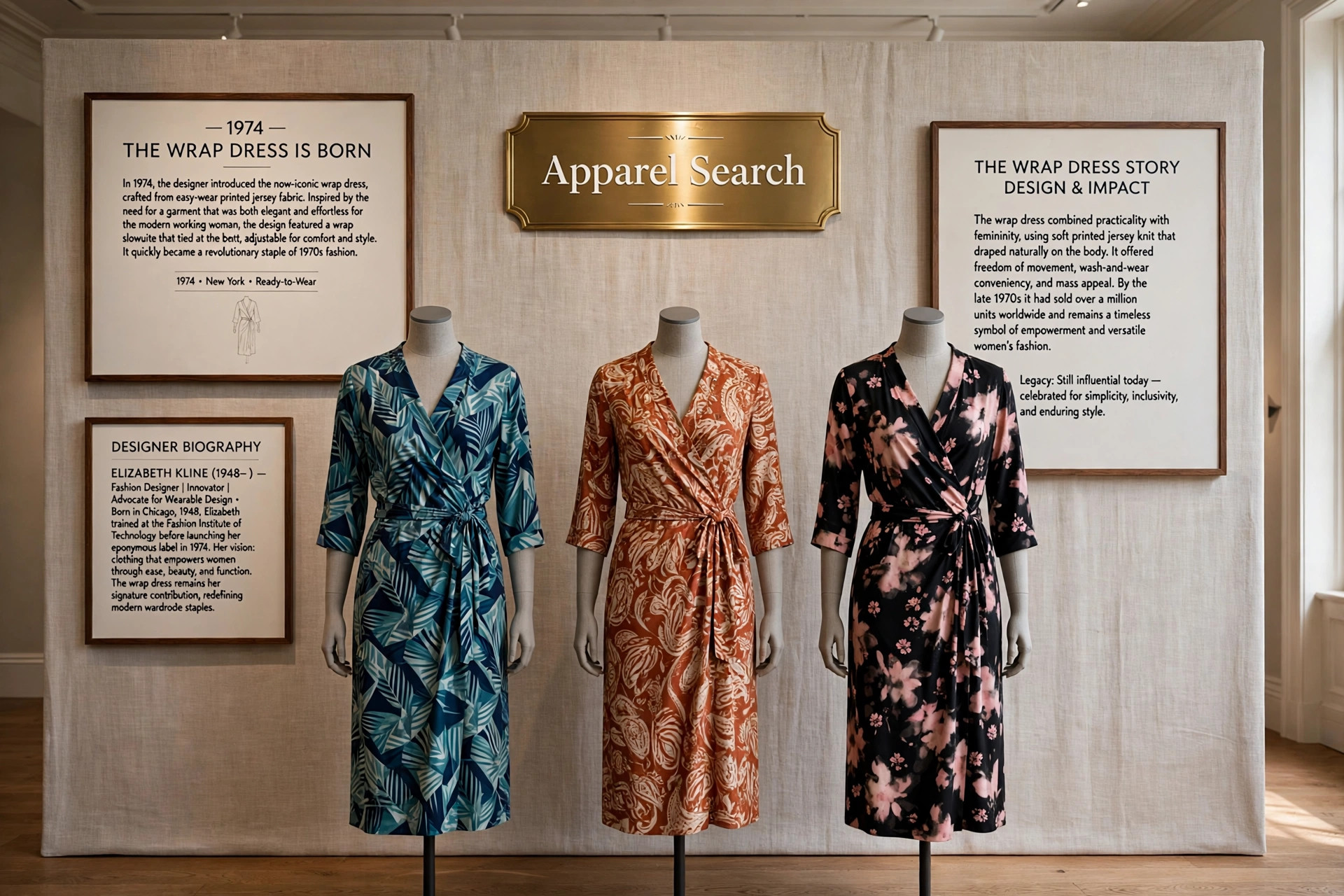
Illustrative image created for this guide — an artistic impression, not this designer's own garments.
News, Photos & VideoCollectionsFall FashionsFashion WeekNewsProfilesRunwaySpring Fashions
New York, the Gotham Hotel and 1972
The von Fürstenbergs moved to New York City in late 1969, where Diane attempted to interest garment manufacturers in her sample designs. In April 1970 she showed her first collection at the Gotham Hotel in New York City. Because she had little experience in producing clothes on a large scale, she at first worked with major women's clothing manufacturers — but in April 1972 she established her own manufacturing business, and the design that business was built on changed American wardrobes.
By the mid-1970s, the wrap dress had revolutionized American women's apparel. It was versatile — working as both a comfortable business dress and an elegant evening gown — and it arrived exactly as a growing number of career-minded women needed clothes that kept up with them. She became a powerful fashion icon of the seventies by acknowledging those needs: a dress that tied at the waist, printed boldly, packed without creasing and asked nothing of its wearer except that she get on with her day. She and Prince Egon separated in 1975 and divorced in 1983.
The Relaunch and the Global Brand
The second act began in 1997, after a hiatus from fashion, when she reemerged on the New York scene with the relaunch of the dress that had started it all — and began transforming her company into the global luxury lifestyle brand it is today, extending the wrap dress's philosophy of ease and print across a full wardrobe. The designer is married to the media executive and philanthropist Barry Diller.
Her collections are sold in over 55 countries, and she has dressed figures from Michelle Obama to Gwyneth Paltrow — the wrap dress's promise, that a woman can look powerful and feel free at the same time, still doing its work two generations on. Read with the collections page, the profile completes its arc: the Brussels-born student who apprenticed in Italian textiles became the designer whose single dress symbolized female power and freedom to an entire generation — and then, unusually, came back to build the brand a second time.
Photos

Common Questions
Who is Diane von Furstenberg?
Diane von Furstenberg — born Diane Simone Michelle Halfin on December 31, 1946, in Brussels, Belgium — is one of the world's most successful fashion designers, known above all for the wrap dress she introduced for the working woman.
When did the wrap dress appear?
She established her own manufacturing business in April 1972, and by the mid-1970s the wrap dress had revolutionized American women's apparel; by 1976 she had sold millions of the dresses.
What happened in 1997?
After a hiatus from fashion, she reemerged on the New York fashion scene in 1997 with the relaunch of the wrap dress, and began transforming her company into the global luxury lifestyle brand it is today.
More to Explore
References & Further Reading
- Diana von Furstenberg Profiles Search
- Diana von Furstenberg Profile News
- Diana von Furstenberg Profile Photos
- Diana von Furstenberg Profile Videos
- Diana von Furstenberg Profiles
- Diana von Furstenberg Biography News
- Diana von Furstenberg Biography Images
- Diana von Furstenberg Biography Video
- Diane von Furstenberg official website
- Fashion Models