Jean-Paul Gaultier Profiles
The life behind the stripes — Arcueil, the cone bra, Hermès, and the farewell show.
Jean-Paul Gaultier (born April 24, 1952, in Arcueil, France) is the couturier Paris nicknamed its enfant terrible — the designer who took the sailor's striped jersey, his grandmother's corset and the clothes of the street, and finished them with an atelier's full technique. No French designer of his generation reached further into popular culture: his costumes for Madonna, his wardrobe for The Fifth Element and his striped perfumes bottles are known far beyond fashion. This profiles page tells the career in order: the self-taught beginnings, the signatures, the Hermès years, and the long farewell. Of all the pages in this series, this is the one the others depend on.
The biography searches in the references gather the wider career coverage, and the designer's official website is linked there as well. The collections, runway and news pages in this series file the fashion work the life produced, and the Brooklyn Museum exhibition pages in this guide record the great 2013–2014 retrospective of his work.
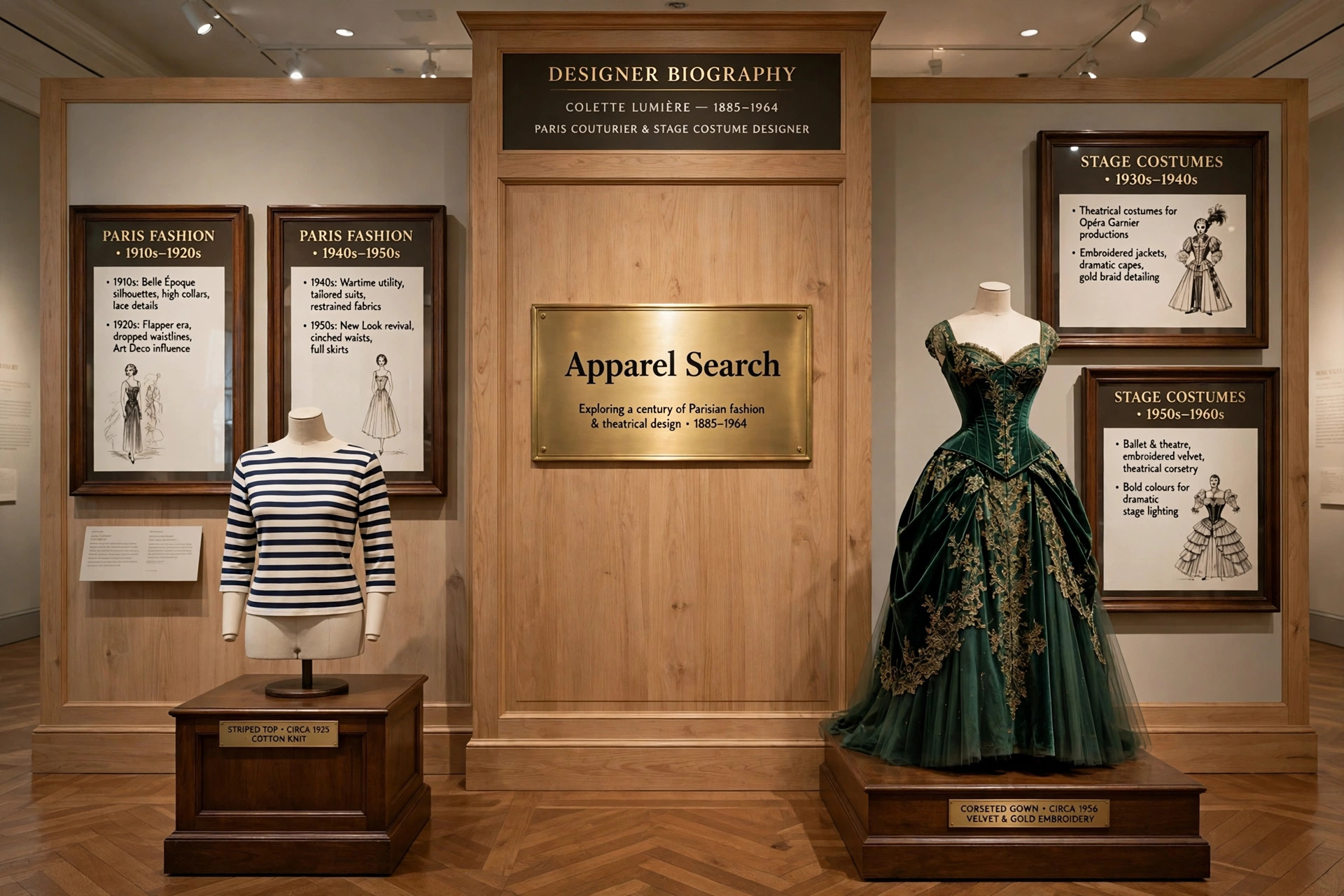
Illustrative image created for this guide — an artistic impression, not this designer's own garments.
News, Photos & VideoCollectionsFall FashionsFashion WeekNewsProfilesRunwaySpring Fashions
Arcueil, the First Collection and the Signatures
Gaultier grew up in Arcueil, a suburb of Paris, and learned his first fashion lessons from his grandmother, whose corsets and slips fascinated him; he sent sketches to couture houses as a teenager and was taken on by Pierre Cardin on his eighteenth birthday, later working with Jacques Esterel and Jean Patou's house before presenting his first collection under his own name in 1976. The vocabulary was complete almost immediately: Breton sailor stripes, underwear worn as outerwear, denim and leather finished like couture, and clothes that exchanged masculine and feminine codes in both directions — men in skirts from 1985, women in pinstripe tailoring cut like armor.
The wider world met him through music and film. He dressed Madonna for the 1990 Blond Ambition tour — the cone bra corset became the decade's defining costume — and created wardrobes for films including The Cook, the Thief, His Wife & Her Lover and The Fifth Element. A television career as co-presenter of Eurotrash made him, unusually for a couturier, a celebrity in his own right, famous in the striped jersey he had made his uniform.
Gaultier Paris, Hermès and the Farewell
In 1997 he launched Gaultier Paris, his haute couture line, and proved the provocations had always rested on serious construction: the couture was applauded precisely for its technique. From 2003 to 2010 he was creative director of Hermès, where the same hand produced some of the most polished luxury clothes in Paris — the two registers, street and salon, finally filed under one name. He retired from ready-to-wear in 2014, the year the great retrospective of his work, The Fashion World of Jean Paul Gaultier: From the Sidewalk to the Catwalk, reached the Brooklyn Museum.
His final couture show came in January 2020, fifty years after he entered the business, staged as a farewell party with the house's whole history on the runway. The house continues, its couture collections created by invited guest designers. Read with the collections page, the profile completes its arc: a designer who never separated high from low, and proved the sidewalk and the catwalk were the same street seen from two ends.
Photos

Common Questions
Who is Jean-Paul Gaultier?
Jean-Paul Gaultier, born in Arcueil, France, on April 24, 1952, is the French couturier known as Paris fashion's enfant terrible — the designer of Breton stripes, corsetry worn as outerwear and Madonna's cone bra, and creative director of Hermès from 2003 to 2010.
What is Jean-Paul Gaultier's most famous design?
The cone bra corset he designed for Madonna's 1990 Blond Ambition tour is the most famous single piece, closely followed by the Breton sailor stripe he returned to across his whole career and the men's skirts he showed from 1985.
When did Jean-Paul Gaultier stop designing?
He retired from ready-to-wear in 2014 and presented his final haute couture show in January 2020; the house continues with guest designers invited to create its couture collections.