Fashion Search Gadgets
A guide to the fashion search gadgets for fashion webmasters, bloggers and searchers.
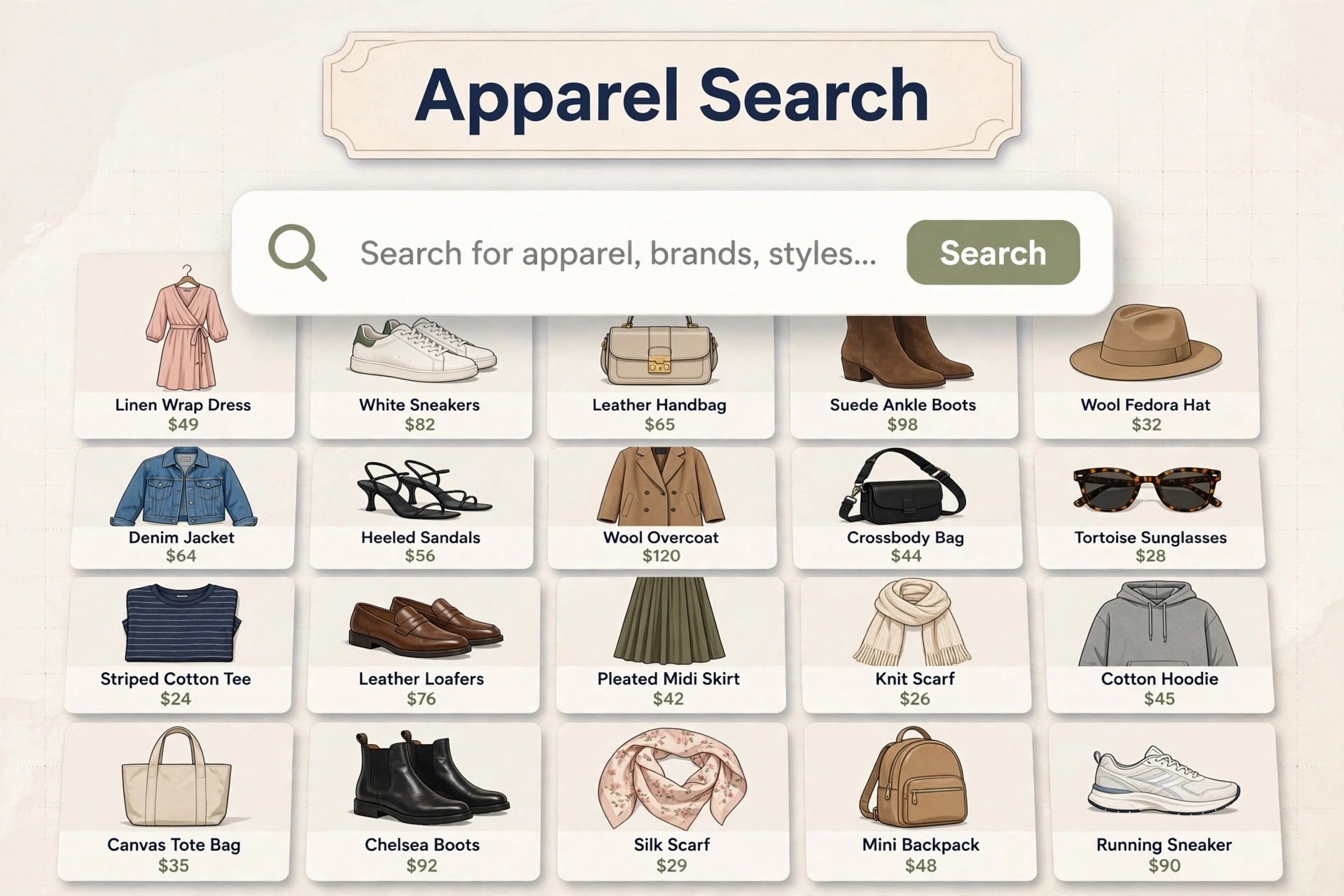
The Fashion Search Gadgets were the utility members of the Apparel Search gadget family: instead of carrying headlines or listings, they carried a search box. The fashion search engines behind them were set to search the industry's leading websites relevant to fashion, clothing, apparel and textiles, and the gadgets let webmasters and fashion bloggers place those engines directly on their own websites — a small panel that turned any fashion page into a doorway into the whole industry's web.
The gadgets ran on Google technology of their era, and they share the family's ending: iGoogle's mobile version was retired on July 31, 2012 and the service on November 1, 2013, after which the gadget code was withdrawn. Fashion search itself is still central to Apparel Search — the site's own search pages are linked here — and this page records what the search gadgets were.
A Search Box That Travelled
Every website of the gadget era wanted to be a starting point, and a search box is the purest starting point there is. By offering its fashion search engines as embeddable gadgets, Apparel Search let other sites offer industry-wide searching without building anything: the engine was scoped in advance to leading fashion, clothing, apparel and textile websites, so results stayed inside the industry instead of wandering the whole web. A blogger gained a genuinely useful tool for readers; the search service gained presence on pages across the fashion web.
Scoped Search, Before It Was Fashionable
The idea behind the gadgets — a search engine limited to a curated set of sites on one subject — was the same idea behind the company's on-site search services, including the fashion search engine and the Apparel Search 3.0 page linked from here. Vertical search has only grown more relevant as the general web has grown noisier: a search that begins inside fashion sources answers a trade question faster than one that begins everywhere. The gadget format died with its platform, but the scoped-search principle behind it is the same one the site search box on current Apparel Search pages still uses.
Searching Apparel Search Today
Webmasters who came looking for the gadget will find the living equivalents on the search pages: the add-search page explains putting Apparel Search search on a fashion website, the search engines directory collects the company's search services, and the fashion widgets and fashion RSS pages cover the other syndication formats that survived. And any reader can simply use the search box on this page — the direct descendant of the travelling search boxes the gadgets once carried from site to site.
Built on Curated Sources
A scoped engine is only as good as its source list, and that list was the real product behind the search gadgets: the leading fashion, clothing, apparel and textile websites, chosen so that a search run from a small blog carried the same industry focus as one run from Apparel Search itself. Curating sources is unglamorous, continuing work — sites launch, close and change direction — and it is the same work that keeps the site's directories useful. The gadget put that curation in a box and lent the box to anyone who asked, which in the syndication-minded web of its day counted as both a service and good marketing.
Common Questions
What did the Fashion Search Gadgets do?
They placed Apparel Search fashion search engines on other websites and iGoogle homepages. The engines were set to search leading websites relevant to fashion, clothing, apparel and textiles, so results stayed within the industry.
Who could use the search gadgets?
Webmasters and fashion bloggers were welcome to use the engines on their own sites, embedding the gadget with a script so their visitors could run fashion searches without leaving the page.
How can I search Apparel Search now?
With the search box on this and every current Apparel Search page, or through the search services collected on the search engines and fashion search engine pages linked from here. The gadget platform, iGoogle, closed on November 1, 2013.