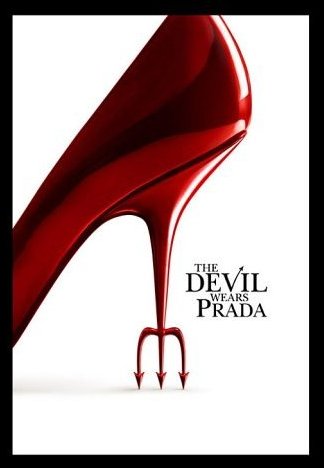
The Devil Wears Prada
A naive young woman comes to New York and scores a job as assistant to one of the city's biggest magazine editors — the ruthless and cynical Miranda Priestly.
A naive young woman comes to New York and scores a job as the assistant to one of the city's biggest magazine editors, the ruthless and cynical Miranda Priestly. That is the whole plot outline of The Devil Wears Prada, and it is enough: the film is the fashion movie by which all other fashion movies are now measured, because it understands that a great fashion magazine is both a temple of style and an office like any other — deadlines, errands, terror and all.
Meryl Streep tears up the landscape as Miranda Priestly, the demanding fashion editor of Runway magazine, a terror to everyone around her, depicted as such from the opening scenes. Into her office walks a young woman who knows nothing of the fashion industry, has never read the magazine, and does not know who Miranda Priestly is.
The Story
The young woman, played by Anne Hathaway, sees the job only as a stepping stone to another journalism position. Showing no fashion sense, she is immediately scorned by everyone — and nonetheless hired by Miranda as her second assistant, beneath a first assistant, played by Emily Blunt, who strives to please her boss and tries to emulate her, without ever quite becoming as hard as she pretends. When Miranda demands that her new assistant obtain the next unpublished Harry Potter manuscript, it is plainly an impossible task designed to force her to quit — and it makes the young woman dig in instead. With the help of one of the magazine's fashion editors, played by Stanley Tucci, she gets a complete makeover and a new security in her work.
Success costs. With her new appearance and the demands placed on her, she starts to lose her friends, her family and her live-in boyfriend, played by Adrian Grenier. Whisked away to Paris with Miranda, facing all the glamour that could be hers — including a flashy if artificial freelance journalist, played by Simon Baker — she is forced to decide where she wants to be in her life. The film contains adult situations, but no nudity or on-screen sex.
Why It Endures as the Fashion Movie
Plenty of films are set in fashion; this one is about the work. The Devil Wears Prada gets the industry's real textures right: the assistant's economy of impossible errands, the closet of borrowed designer clothes that functions as both uniform and reward, the makeover that is less about beauty than about learning the visual language of the room, and an editor whose standards are genuinely terrifying because the magazine genuinely matters to her. Reviewers noted the attempt to make Anne Hathaway into a young Audrey Hepburn; she does not quite reach that pinnacle, but she is certainly pleasant company through the transformation. Streep's Miranda remains the definitive screen portrait of fashion authority — soft-spoken, absolute, and always one impossible demand ahead.
The Prada in the Title
The title's devil wears the industry's most recognisable shorthand for fashion power: Prada. The film uses designer fashion the way the magazine world does — as a language of rank, taste and belonging, legible at a glance across a room. For visitors arriving from the shopping side of this site, the lesson of the film doubles as a viewing guide: watch what each character wears in the first office scenes, and then watch it change. The makeover montage is the plot, told in clothes.
A Note on Sources and Setting
Runway magazine is invented, its editor is invented, and no real magazine is named on screen — the film is careful about that. What is not invented is the working detail: the fashion closet where assistants pull looks, the run-throughs where an editor's glance approves or kills a rail of clothes, and the understanding that in that office, appearance is not vanity but information. Fashion readers recognised their industry; everyone else got a guided tour of it, which is why the film remains the standard first recommendation for anyone curious about how fashion media actually runs.
Photos
Common Questions
Who plays Miranda Priestly in The Devil Wears Prada?
Meryl Streep plays Miranda Priestly, the ruthless editor of Runway magazine. Anne Hathaway plays her second assistant, with Emily Blunt as the first assistant and Stanley Tucci as the magazine's fashion editor who guides her makeover.
What job does the heroine take in the film?
She becomes second assistant to the editor of Runway magazine, a job she takes only as a stepping stone to other journalism — despite knowing nothing of fashion and never having read the magazine.
Is Miranda Priestly a real person?
Miranda Priestly is a fictional editor of the fictional Runway magazine. The film's fashion world is invented, though it is drawn from the real textures of great fashion magazines — their editors, assistants, closets and impossible deadlines.