Apparel Search · Factory Operations Guide
Finishing, Pressing & Packing
Trimming, pressing, folding, polybagging and cartons — the last ten percent of the work that decides how garments arrive.
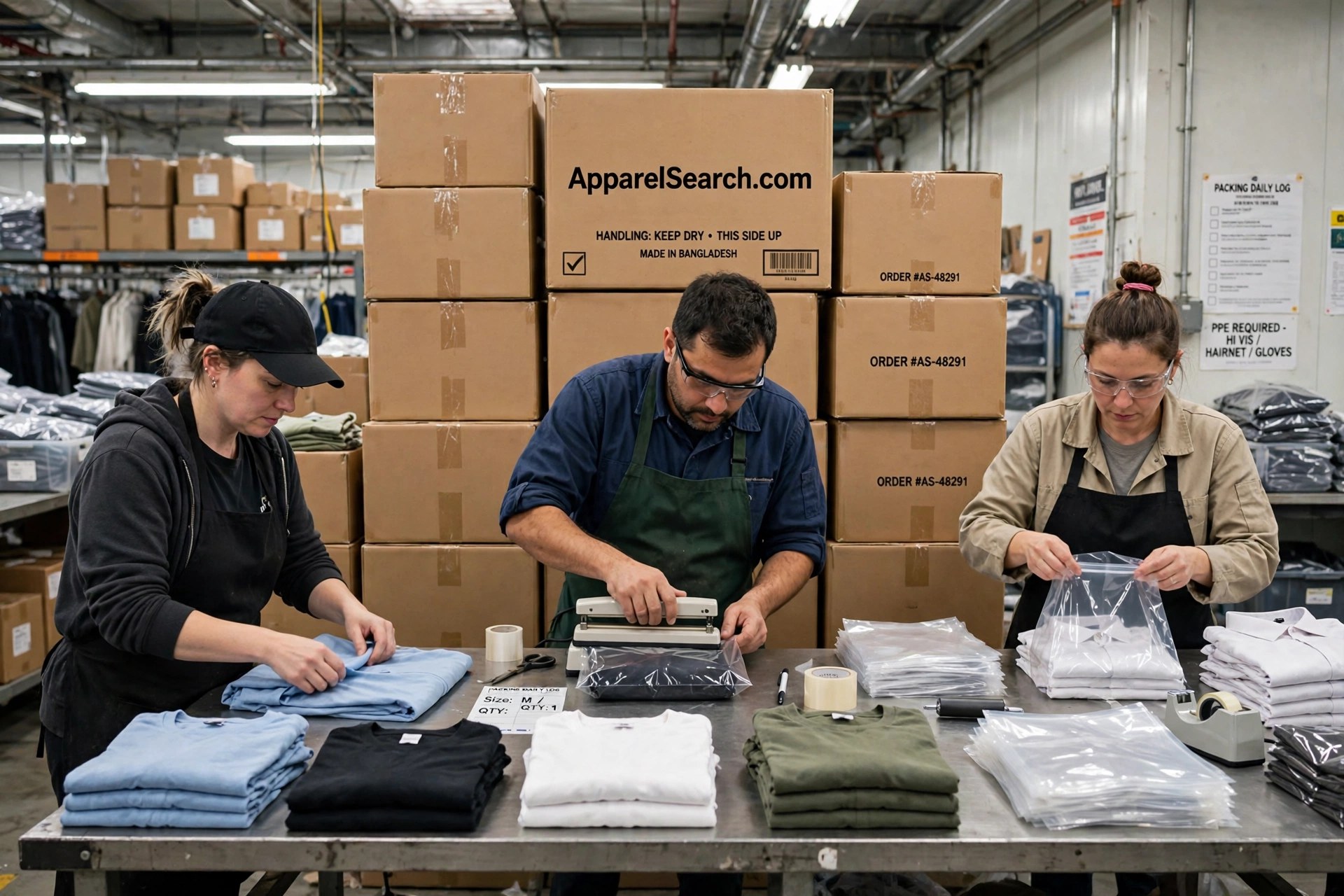
The last department decides the first impression. A perfectly sewn garment that arrives creased, mislabeled or in the wrong assortment reads as a badly made garment, which is why finishing — trimming, pressing, folding and packing — gets its own guide in the Apparel Manufacturing & Factory Operations Guide. Finishing is where the garment stops being production output and becomes a product.
From the Line End to the Pressing Table
Loose thread ends are clipped, chalk marks and production dust removed, and any spots or stains treated. Some styles go through garment washing or special treatments at this stage — work often done by specialist contractors, listed among Apparel Search's factory and contractor directories.
Finished garments pass the last workmanship check described in the quality guide, and garments — above all children's wear — pass through a metal detector to verify no needle fragment remains from the sewing floor.
Steam and pressure give the garment its designed shape: seams are opened or flattened, trousers creased, collars and lapels formed. Factories combine hand irons on vacuum boards for detail work with form presses and steam tunnels for volume and consistency.
Hangtags and price tickets are attached, brand labels checked, and garments prepared as the buyer specified: folded with tissue and boards for shirts, hung on hangers for tailored clothing, each presentation decided long before, in the order instructions.
Individual garments go into polybags (with the safety warnings buyers and regulations require), then into cartons as solid packs or ratio assortments. Cartons are marked, weighed, sealed and listed on the packing list that travels with the shipment.
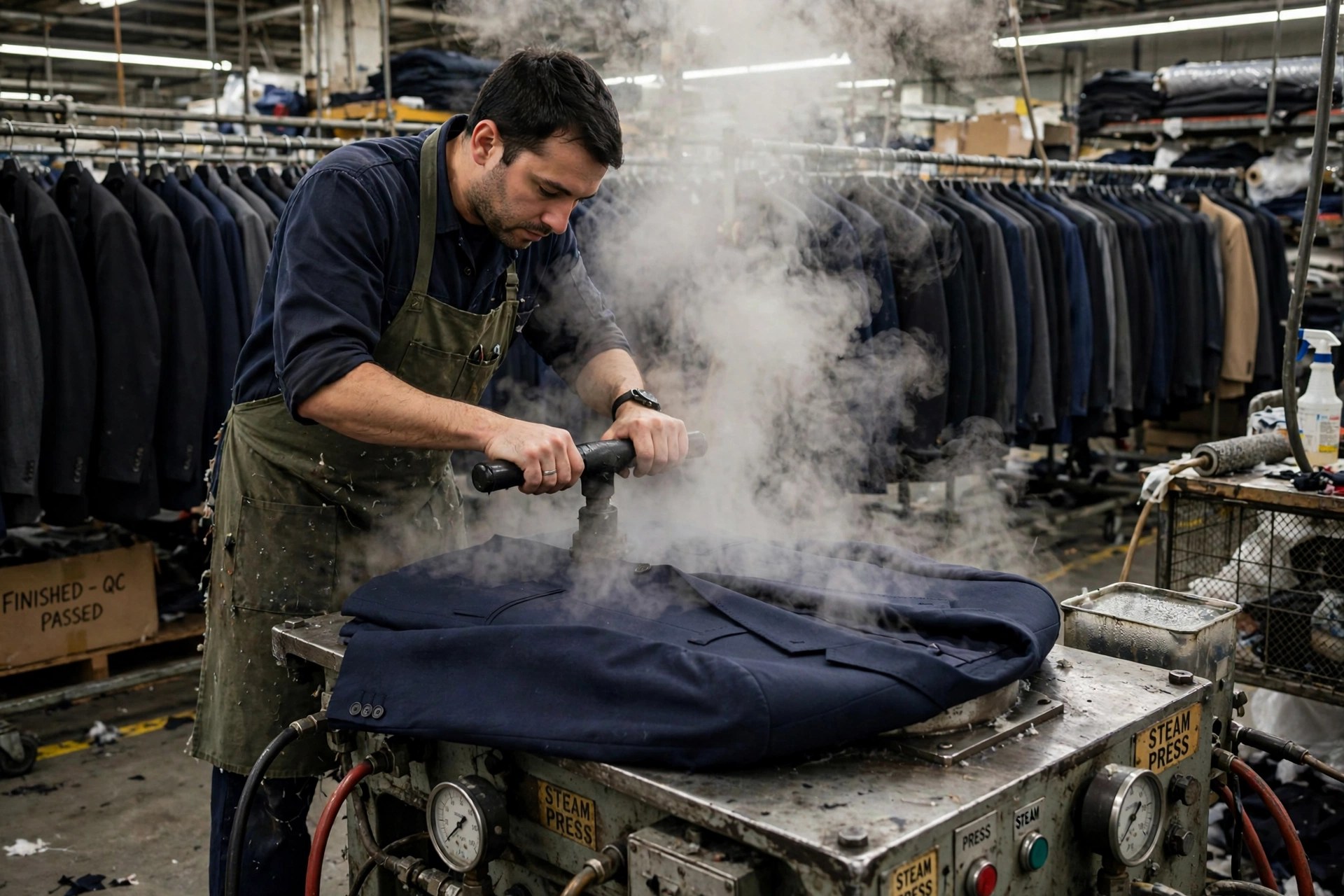
Packing Is an Instruction, Not an Afterthought
Almost nothing about packing is left to the factory's taste. The buyer's instructions specify folding dimensions, bag type, tag placement, assortment ratios, carton size and marks — because the carton is designed to flow straight into a specific warehouse and store system. The production plan reserves time for it: packing a large order to ratio is substantial work, and orders that finish sewing on time still ship late when packing was underestimated.
Folded or Hanging: Two Ways to Travel
How a garment is packed follows how it will be sold. Folded garments — knitwear, shirts, tees — travel flat in polybags and cartons, compact and economical. Tailored and delicate garments travel hanging: on hangers, in garment bags, loaded into hanging containers or rail-equipped trucks so they arrive wearable with minimal re-pressing. Hanging transport costs more per garment and is chosen only when folding would destroy the product's value — a pressed suit folded into a bag is no longer the product that was approved. The choice is made by the buyer at order stage and built into the packing instruction the finishing department follows.
What Good Finishing Looks Like
Open a carton from a good finishing department and every garment matches: same fold, same presentation, correct tags, clean surfaces, accurate counts. That consistency is the visible end of everything in this cluster — the process that began with a tech pack concludes with a box a retailer can open with confidence.
Back to the Apparel Manufacturing & Factory Operations Guide
This page is one department of the Apparel Manufacturing & Factory Operations Guide, Apparel Search's walk through the production floor. The guide connects every department — cutting, sewing, planning, quality, finishing — into one flow.
Common Questions
Why are garments pressed at the factory and then again at retail?
Factory pressing sets the garment's shape and finish as designed — seams flattened, creases placed, the silhouette formed — and gives inspectors a true view of the finished product. Packing and transport then inevitably add wrinkles, so stores steam or press garments again on arrival to present them properly. The two pressings do different jobs.
What is a ratio pack?
A ratio pack is a carton packed to a preset assortment: for example, a dozen shirts in the size and color proportion the retailer ordered for one store. The factory packs to the ratio so the store can unpack a ready-to-display assortment. The alternative is a solid pack, where every garment in the carton is the same size and color.
Why do garment factories use metal detectors?
Broken sewing needles are a real hazard in production: a fragment left in a garment could injure the wearer. Factories control needles strictly — issuing them counted, collecting every fragment of a broken one — and pass finished garments, especially children's wear, through metal detectors as a final verification before packing.
What information goes on a shipping carton?
Carton markings identify the contents without opening the box: the buyer's name or code, purchase order number, style, color, size assortment or ratio, quantity, carton number and count, and gross weight and dimensions. The packing list inside and the carton marks together let warehouses receive, check and route the goods.