Apparel Search · Factory Operations Guide
The Apparel Manufacturing Process
One order followed from the day its tech pack arrives to the day its cartons leave: pre-production, cutting, sewing, inspection, finishing and shipment.
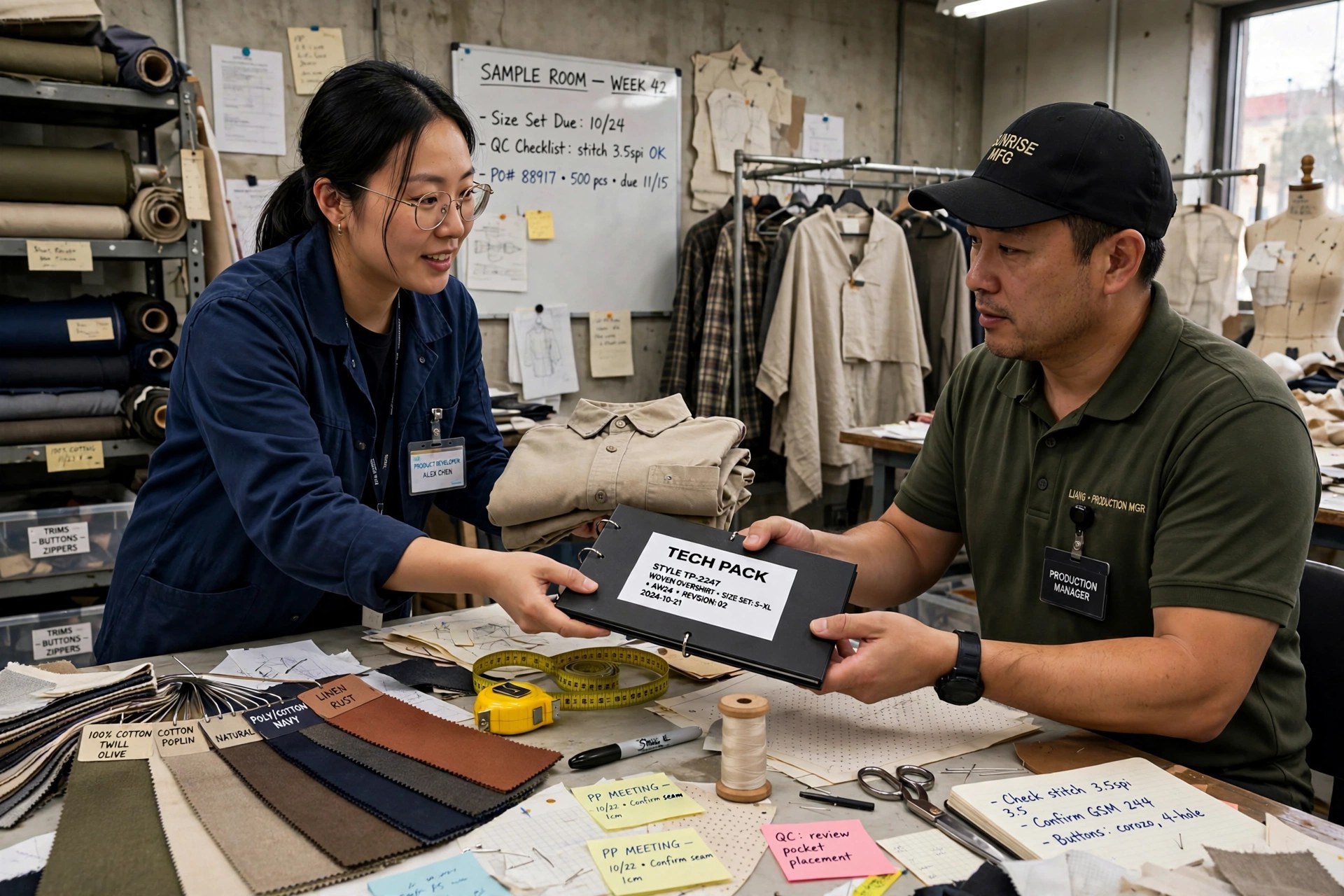
Every garment in a store began as an order on a factory floor. This guide follows one order through the whole of bulk production — the same journey the Apparel Manufacturing & Factory Operations Guide breaks into department guides. The details vary by product and factory, but the sequence below is the backbone of mass-produced clothing everywhere: an approved design is handed over, materials are gathered, and then fabric is cut, sewn, checked, finished and shipped.
Step by Step: One Order Through the Factory
The order arrives as documents: a tech pack with measurements, construction details and materials, plus patterns and an approved sample from development. The factory studies them, makes its own pre-production (PP) sample, and holds a pre-production meeting to settle every question before bulk fabric is touched. The documents side of this stage belongs to product development; the factory's side is turning those documents into a producible plan.
Bulk fabric and trims — thread, zippers, buttons, labels, elastic — arrive and are checked against the order: fabric quantity and shade, trim counts and colors. Fabric is rested (relaxed) so it settles to its natural dimensions before cutting. An order cannot honestly start until its materials are physically in the building, which is why the planning guide treats material readiness as the gate for every schedule.
Layers of fabric are spread on long tables, the marker (the arrangement of pattern pieces) is laid over them, and the pieces are cut out, numbered and bundled by size and shade. The cutting room guide covers spreading, cutting methods and bundling in depth.
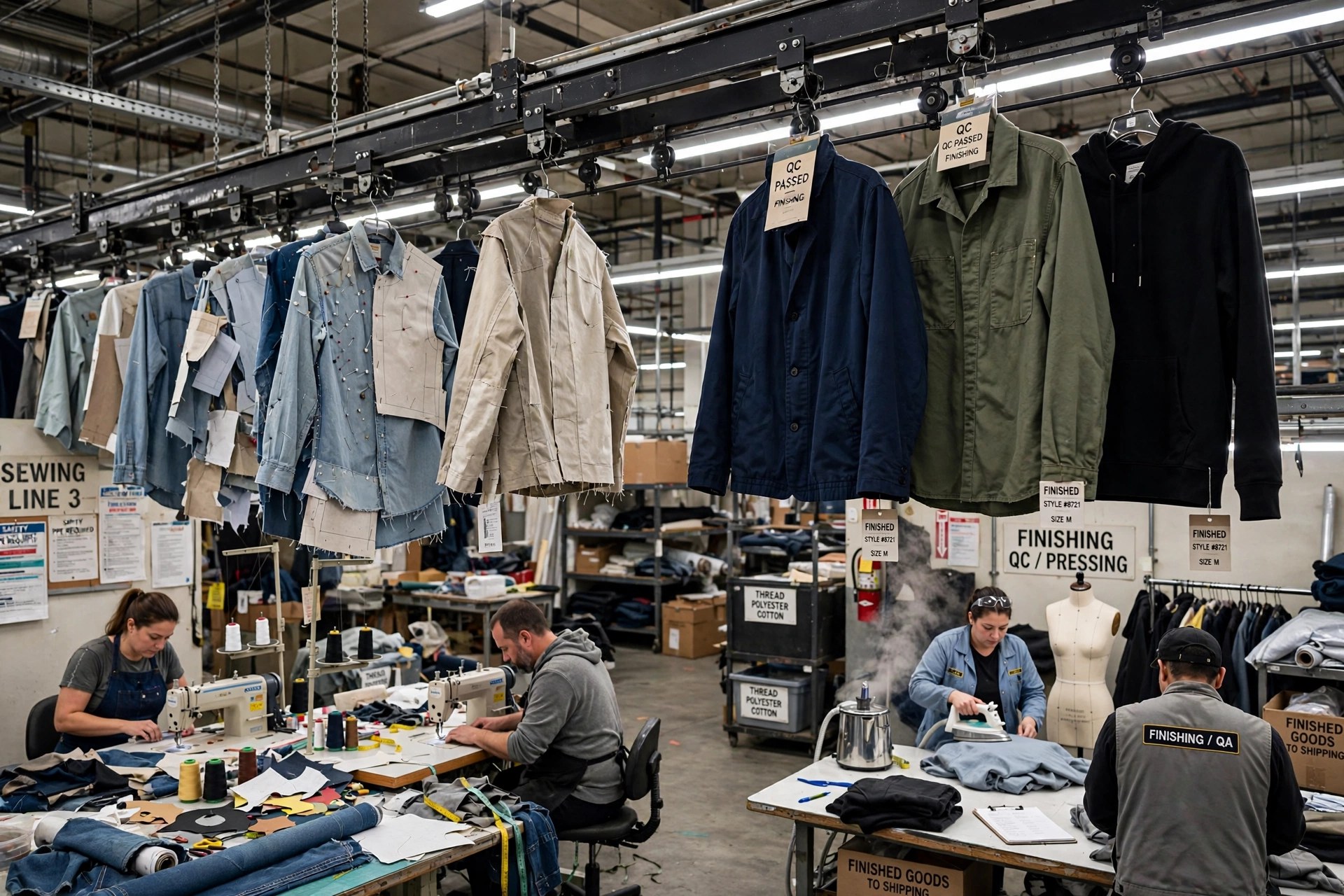
Bundles move to the sewing lines, where each garment is assembled through a planned sequence of operations — one operator sews side seams, the next sets sleeves, the next hems. A shirt may pass through dozens of hands before it looks like a shirt.
Sewn garments are inspected, loose threads trimmed, and stains or marks cleaned. They are pressed, folded or hung, tagged and bagged, then packed into cartons by size and color assortment. The quality guide covers the inspection points and the finishing guide covers everything after the last seam.
Cartons are counted against the packing list, the final inspection is signed off, and the order leaves — to a port, a consolidator or the buyer's warehouse. Only now is the order finished; until then, every department has been working against this date.
The Paperwork That Travels With the Order
A factory order is physical work guided by documents at every step. The tech pack defines the product. The order sheet (or purchase order) defines quantities by size and color and the delivery date. The operation bulletin, explained in the sewing lines guide, defines the sewing sequence. Production reports track daily output against the plan, and the packing list records exactly what went into every carton. When something goes wrong in production, the first question is always which document was wrong, missing or ignored — most factory problems are information problems before they are sewing problems.
Where Orders Go Wrong
The classic failure points sit at the handoffs: fabric that arrives late or in the wrong shade, an approval that comes after cutting was scheduled, a construction detail two departments understood differently, a line that falls behind and compresses finishing into a rush. The department guides in this cluster each address their stage's version of these problems — and the reason experienced buyers ask factories about process, not just price, is that these handoffs are where delivery dates and quality are really decided.
More in This Guide
Back to the Apparel Manufacturing & Factory Operations Guide
This page is one department of the Apparel Manufacturing & Factory Operations Guide, Apparel Search's walk through the production floor. The guide connects every department — cutting, sewing, planning, quality, finishing — into one flow.
Common Questions
What is a pre-production (PP) sample?
A PP sample is a garment made by the factory, usually in actual bulk fabric and trims, before production starts. The buyer approves it to confirm the factory has understood the tech pack correctly. Once approved, it becomes the physical standard the bulk production is judged against.
What happens at a pre-production meeting?
The factory's production, quality and merchandising staff review the style together: the tech pack, the approved sample, construction details, materials, quantities, the production schedule and the quality plan. Anything unclear is settled there, while changes are still cheap.
How long does bulk garment production take?
It depends on the style's complexity, the order quantity, how many production lines the order occupies and whether all materials are in the factory on time. Simple styles in reasonable quantities move through cutting, sewing and finishing in a matter of days on the floor; the longer part of most orders is waiting for fabric, approvals and a free line — which is why planning matters as much as sewing speed.
What is a TOP sample?
TOP stands for Top of Production: a garment pulled from the first pieces off the bulk production line and sent to the buyer. It proves that what the line is actually making matches the approved PP sample, early enough that a problem can still be corrected across the whole order.