Apparel Search · Factory Operations Guide
Quality on the Factory Floor: Inspection in Production
Inline, endline and final inspection — where factories check garments while problems can still be fixed, and how defect records make lines better.
There is an old factory saying: you cannot inspect quality into a garment. But you can inspect problems out of one — provided you look early enough. This guide covers the checkpoints a well-run factory places through production, part of the Apparel Manufacturing & Factory Operations Guide. The laboratory side of quality — fiber and fabric test methods, colorfastness and standard test numbers — lives in the Textile Testing & Quality Standards Guide; this page is about the checks performed by people, on garments, on the floor.
The Checkpoint Map
Before cutting, incoming fabric is inspected — commonly on a points-based system such as the 4-point system — and trims are checked against the order. Defective fabric that reaches the cutting table becomes defective garments at full production cost.
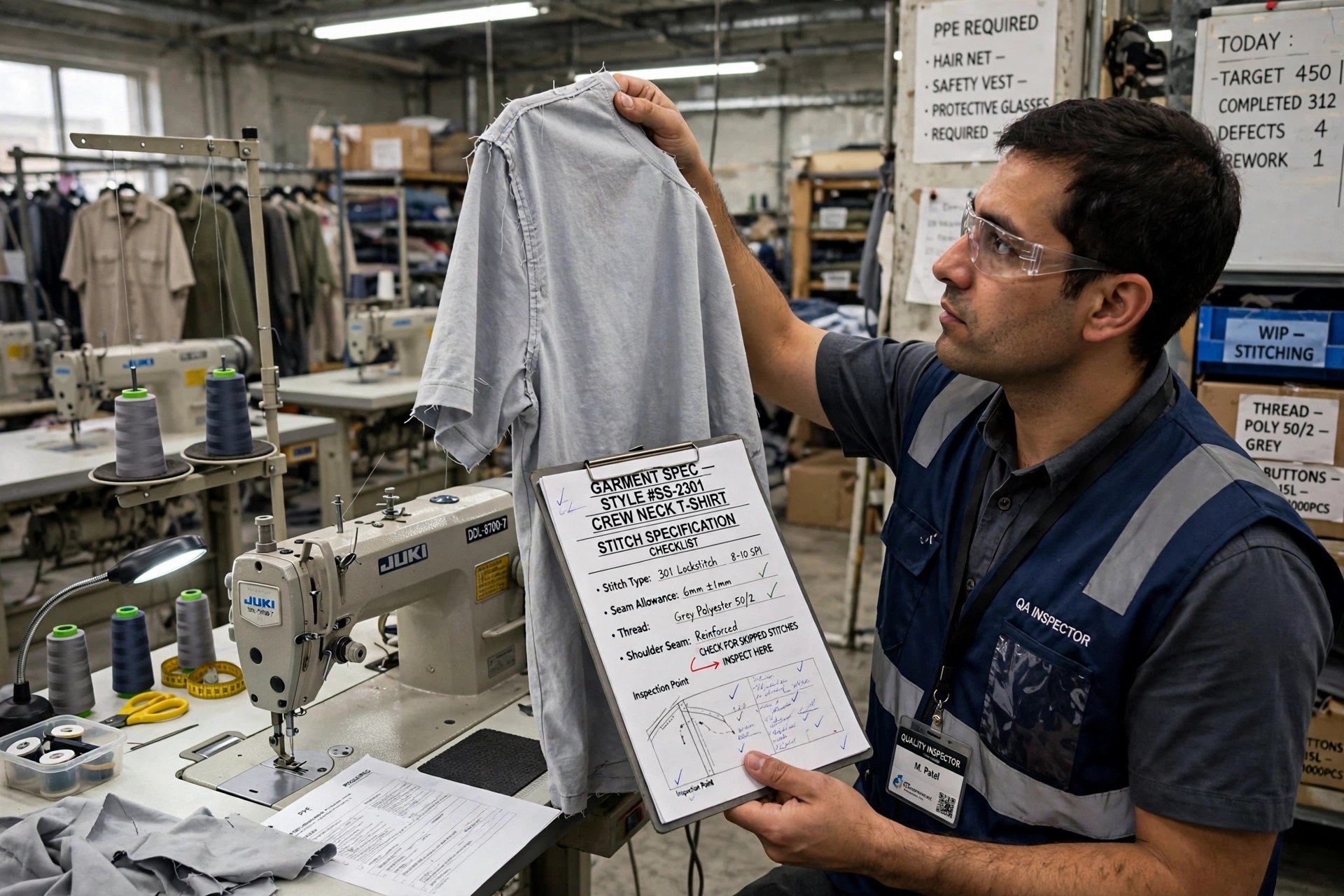
Roving inspectors move along the sewing lines, pulling pieces at the workstations and checking the operation just performed against the approved sample and spec. A mis-set machine or a misunderstood operation is caught after a handful of pieces, and the operator is corrected on the spot.
Every garment leaving the line passes a complete check at the endline table: seams, stitching, symmetry, measurements on a rotating basis, and appearance. Failures go back for repair immediately, and inspectors record defects by type and operation — the data that shows a line exactly where it is going wrong.
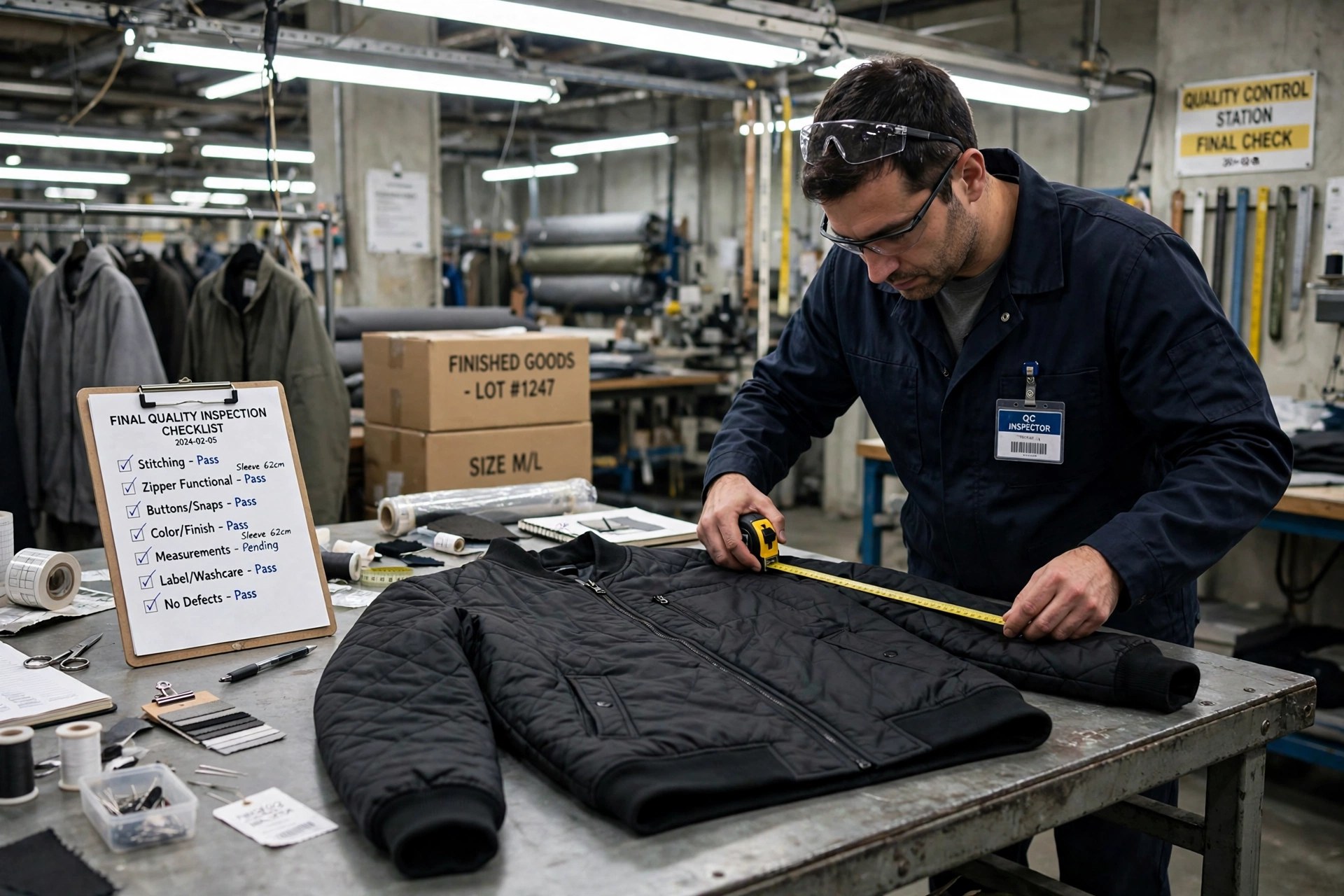
Before shipment, the completed order is sampled and inspected as a whole: workmanship, measurements, labels, assortment and packing against the order requirements, typically under an AQL sampling plan. Apparel Search's guide to running a garment quality inspection walks through conducting one, and the testing guide explains the AQL system behind the sampling.
Defects Have Classes, and the Classes Have Consequences
Not every flaw is equal, and inspection systems classify them so decisions are consistent: critical defects (safety or legal hazards, such as metal contamination) are never acceptable; major defects (open seams, holes, wrong measurements, visible stains) make the garment unsellable; minor defects (a loose thread end, slight shading within tolerance) are recorded and counted but do not by themselves fail a garment. The classification agreed between factory and buyer — usually at the pre-production stage — is what makes an inspection a measurement rather than an argument.
The Feedback Loop Is the Point
Inspection records are not paperwork for their own sake. Tallied by operation, they show a supervisor which station is producing repairs; tallied by style, they show engineering which construction details cause trouble; reviewed at shipment, they show management what to fix before the next order. Factories that chart their defects get measurably better; factories that only sort garments at the end pay for the same mistakes on every order. Quality on the floor is a loop: check, record, correct, and check again — all before the cartons are sealed in finishing and packing.
More in This Guide
Back to the Apparel Manufacturing & Factory Operations Guide
This page is one department of the Apparel Manufacturing & Factory Operations Guide, Apparel Search's walk through the production floor. The guide connects every department — cutting, sewing, planning, quality, finishing — into one flow.
Common Questions
What is the difference between inline and endline inspection?
Inline inspection happens during sewing: roving inspectors check garments at the workstations while production runs, so a faulty operation is caught after a few pieces. Endline inspection happens where garments leave the line: every finished garment is checked completely before it goes to finishing. Inline prevents defects in quantity; endline prevents them escaping.
What are critical, major and minor defects?
The standard classification used in garment inspection. Critical defects are dangerous or illegal — a needle fragment in a garment is the classic example — and allow zero tolerance. Major defects affect function or appearance enough that a customer would reject the garment, such as an open seam or a wrong measurement. Minor defects are small imperfections, like a stray untrimmed thread, that most customers would not notice or mind.
What is a final inspection?
The last check before shipment, normally done on a statistical sample of the packed or ready order rather than every piece. Inspectors verify workmanship, measurements, appearance, labeling and packing against the order's requirements, often using an AQL sampling plan to decide acceptance. It confirms the whole order, which is why the checkpoints earlier in production matter more.
Who inspects garments — the factory or the buyer?
Both, at different points. The factory's own quality controllers run the inline, endline and pre-final checks because the factory is responsible for what it makes. Buyers or third-party inspection agencies typically perform the final inspection, verifying independently before the goods are released for shipment.