Apparel Search · Factory Operations Guide
Apparel Manufacturing & Factory Operations Guide
The production floor as a process: how fabric becomes finished garments inside a clothing factory — cutting, sewing, planning, inspection, finishing and packing, explained department by department.
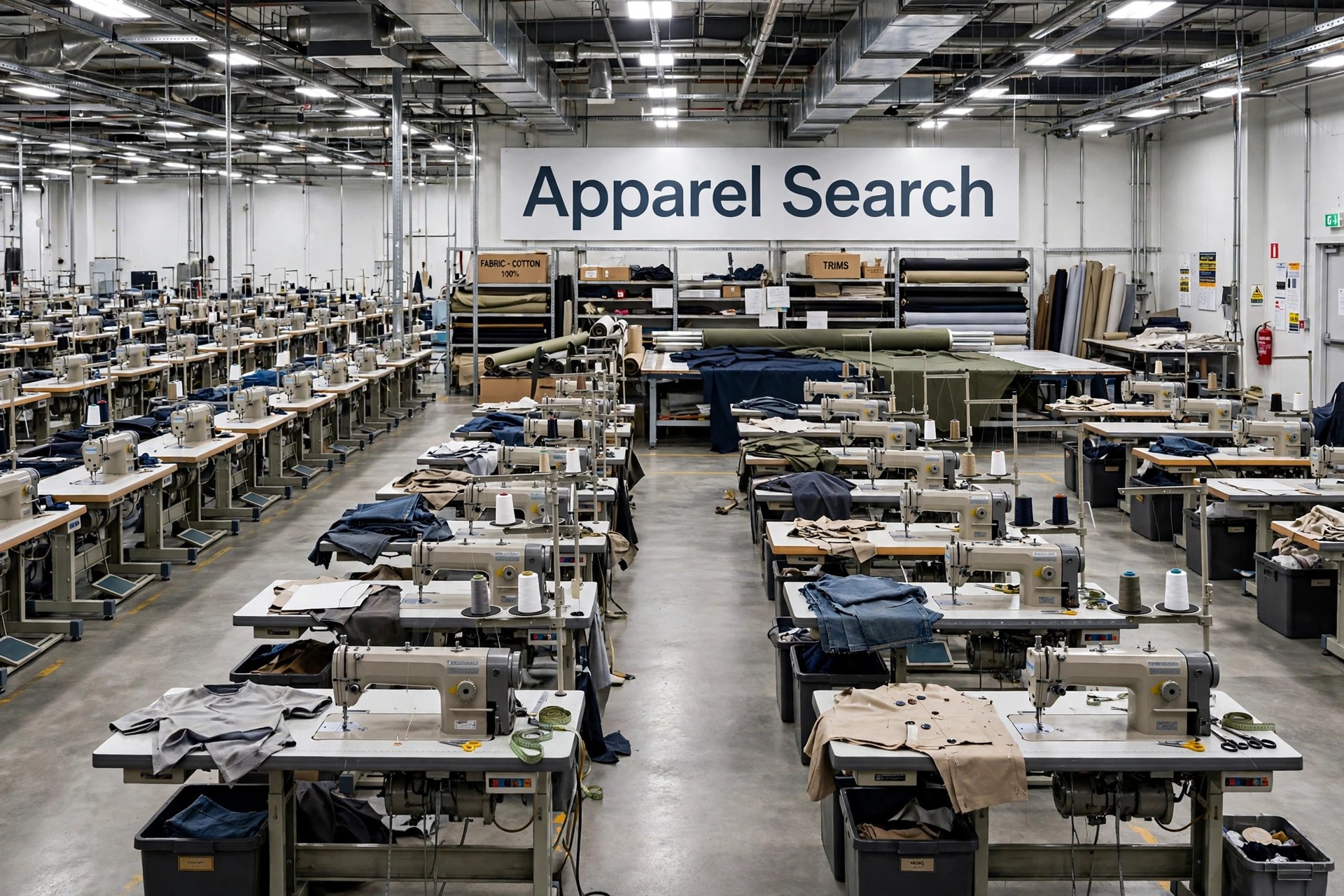
A clothing factory is easy to picture and hard to understand. Rows of sewing machines are the visible part; the real work is the system around them — how fabric moves from a delivery truck to a cutting table, how a thousand cut pieces become a thousand identical shirts, how quality is checked while there is still time to fix it, and how finished garments leave in the right cartons on the right day. This guide explains that system: the operations layer of apparel manufacturing, department by department.
Apparel Search's factory directory and Manufacturer section cover the companies layer — who the factories are and where to find them. This cluster covers what happens inside them. If you buy from factories, sell to them, study production, or simply want to know how your clothes are made, the six guides below walk the floor in the order a garment does.
Factory Operations, Defined
Factory operations are the day-to-day production activities of a garment plant: cutting, sewing, finishing and packing, plus the planning that schedules them and the inspection that verifies them. Operations are distinct from sourcing (choosing the factory), development (creating the product) and costing (pricing the work) — Apparel Search covers each of those in its own guide, linked below.
The Six Guides in This Cluster
Read them in order to follow one order from handover to shipment, or open the department you work in.
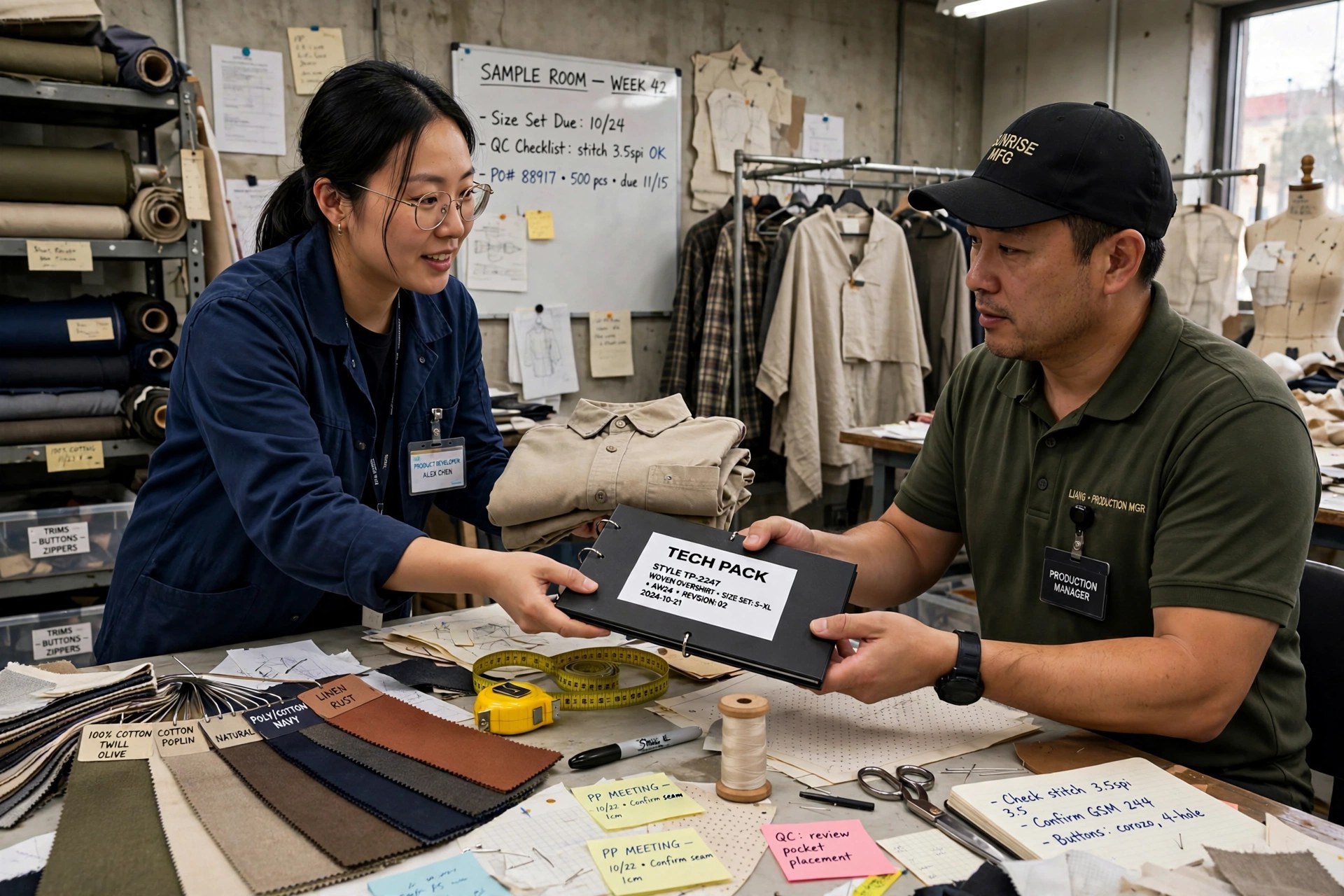 The Apparel Manufacturing ProcessThe whole journey in one overview: handover, pre-production, cutting, sewing, finishing, inspection and shipment — and the documents that travel with an order.
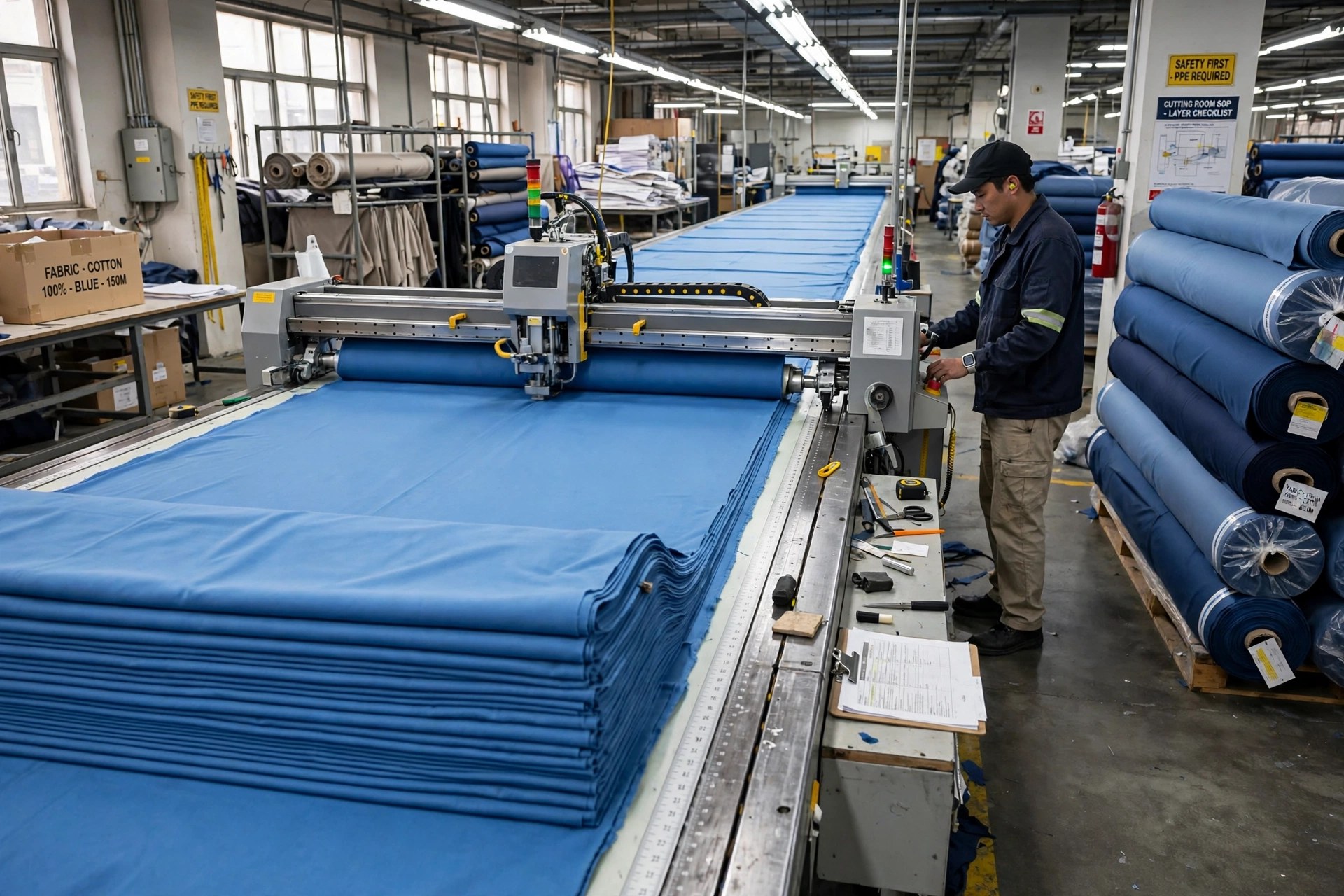 The Cutting RoomSpreading, cutting, ticketing and bundling — how flat fabric becomes the numbered parts the sewing lines will assemble.
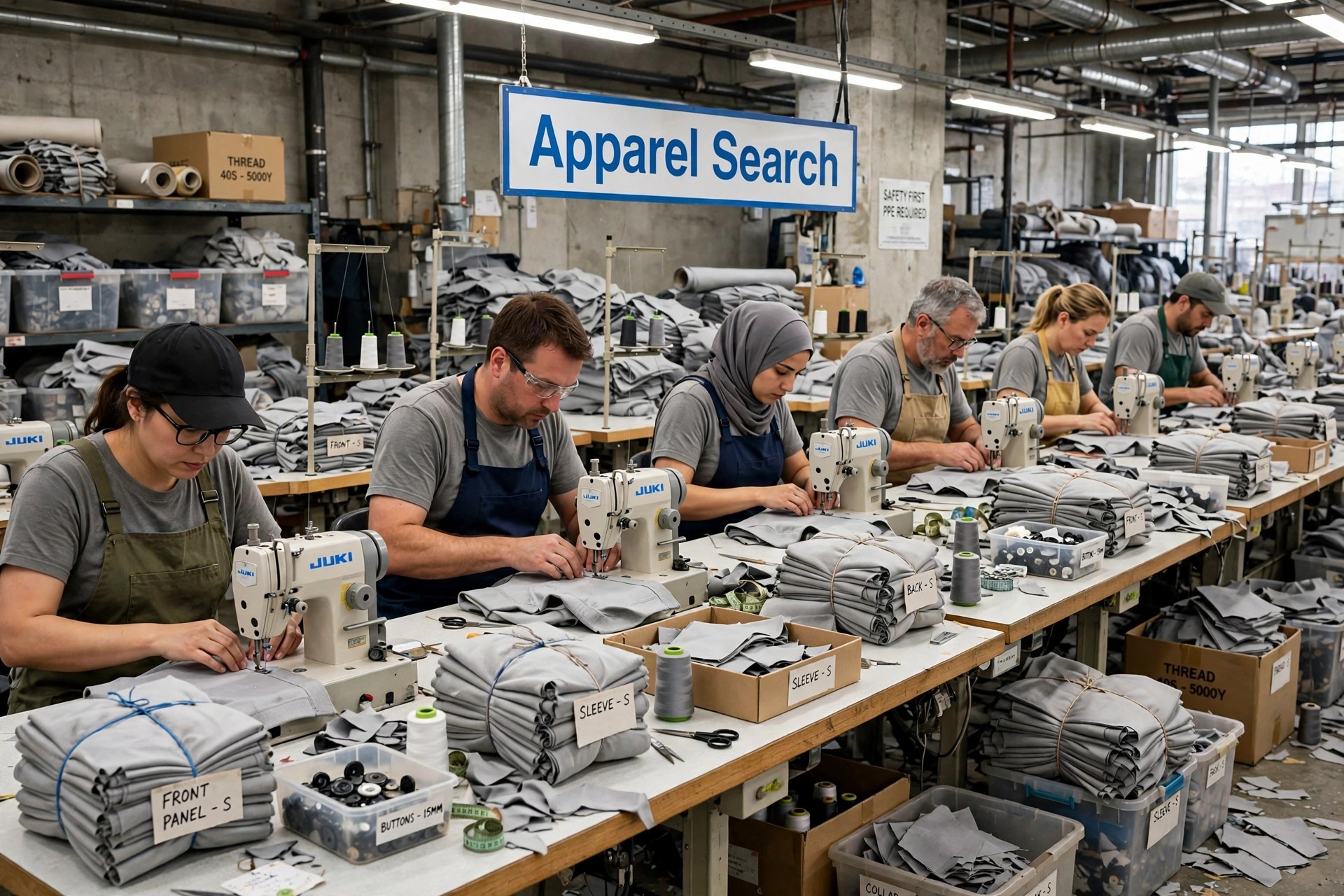 Sewing Production LinesOperation breakdowns, line layouts and line balancing — how dozens of single operations become one flowing line.
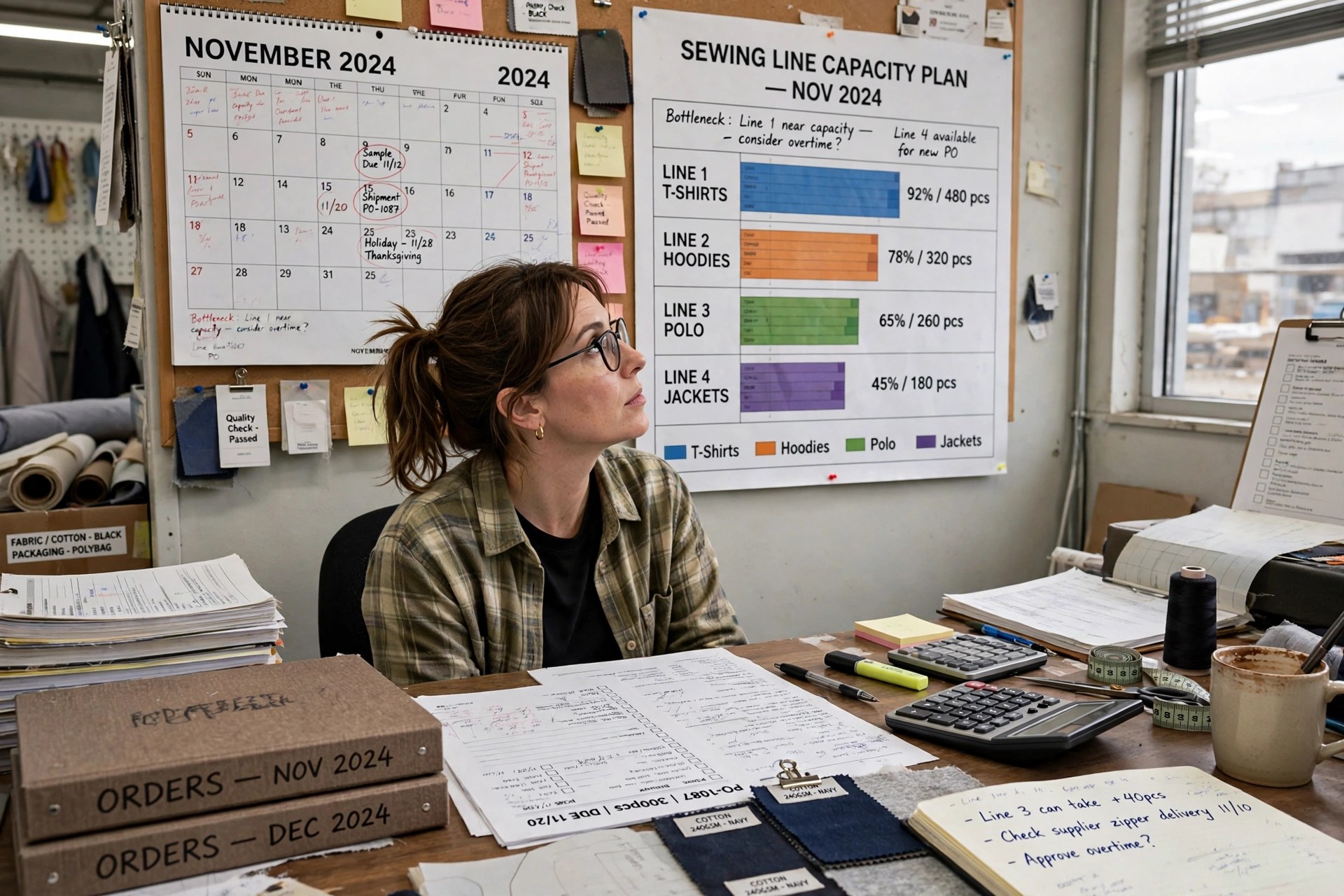 Production Planning & ControlCapacity, line loading and the time-and-action calendar — the planning work that decides whether an order ships on time.
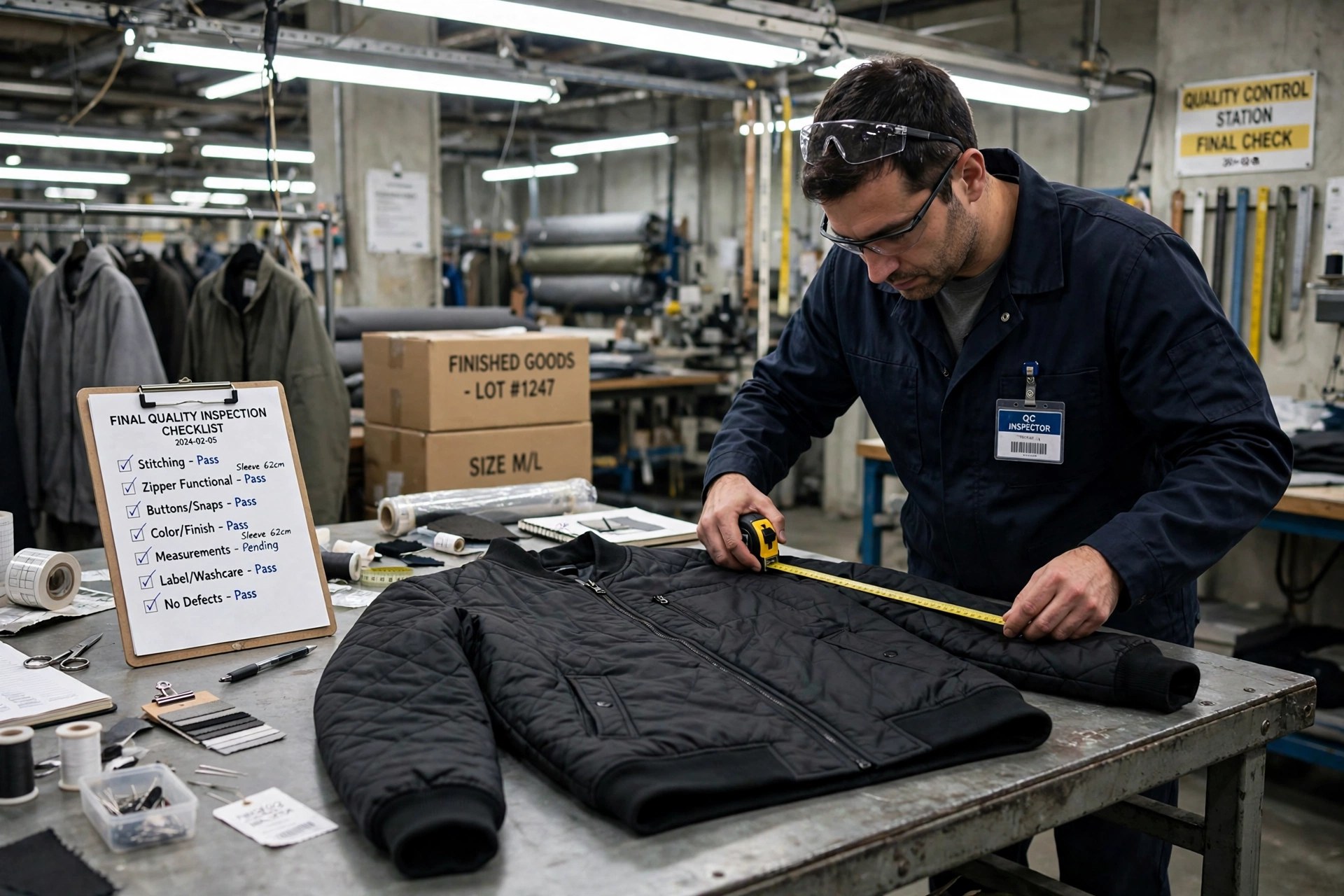 Quality on the Factory FloorInline, endline and final inspection — where factories check garments while problems can still be fixed cheaply.
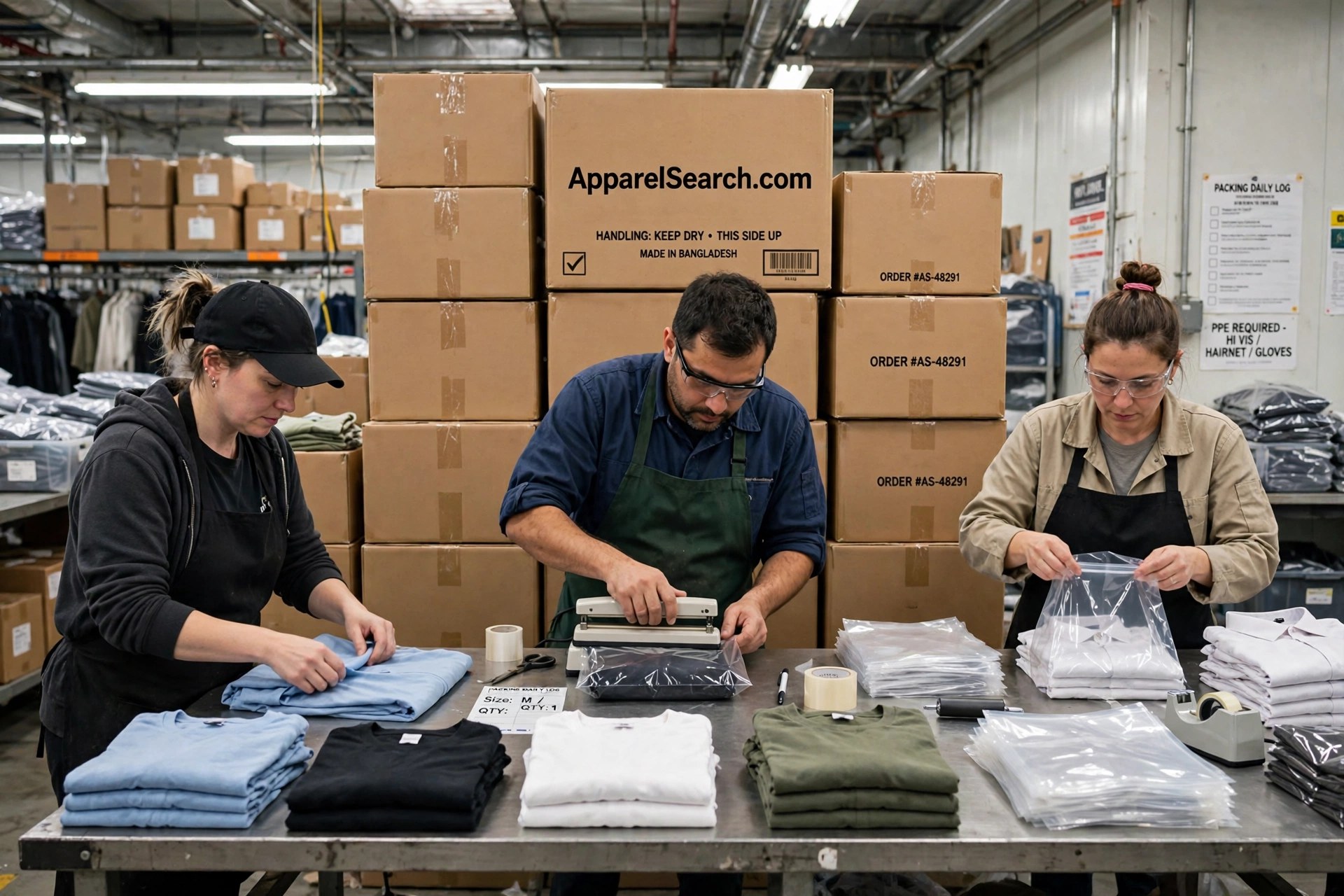 Finishing, Pressing & PackingTrimming, pressing, folding, polybagging and cartons — the last stretch that decides how garments arrive at the store.
Five Departments, One Flow
Nearly every garment factory, whatever its size or country, is arranged around the same flow. Fabric arrives at a store or warehouse area, where it is checked and allowed to rest. It moves to the cutting room, where layers are spread, cut and bundled. Bundles travel to the sewing lines, where each operator performs one operation and passes the work on. Sewn garments go to finishing for trimming, pressing and packing. Threaded through all of it are planning, which decides what runs where and when, and quality checkpoints, which catch problems at each handoff rather than at the loading dock.
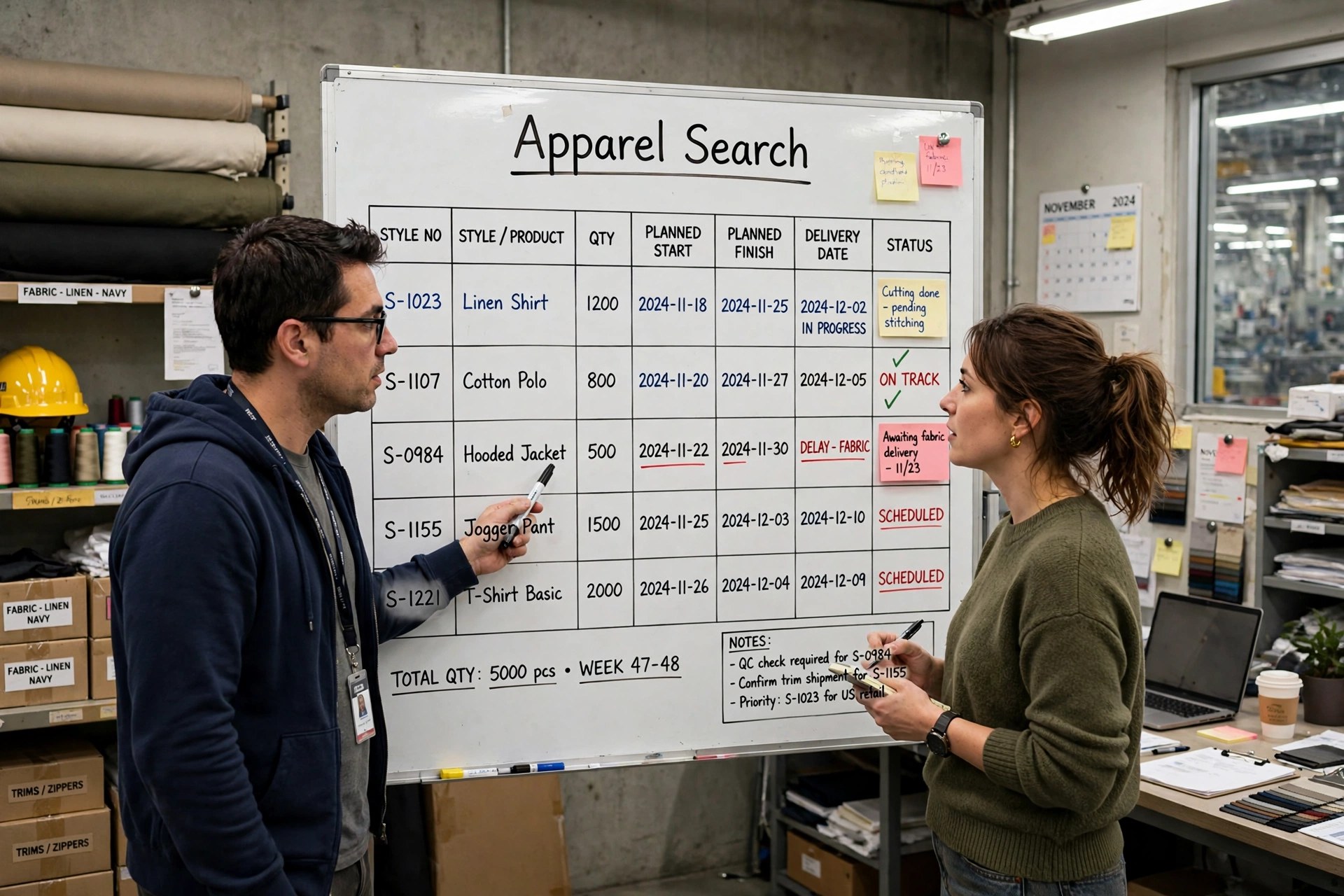
The flow looks linear on paper. In a working factory it is a constant negotiation: a late fabric delivery compresses the sewing schedule, a hard operation slows a whole line, a failed inspection sends work backwards. The operations guides in this cluster explain each stage on its own terms, including where the friction comes from and how experienced production managers handle it.
Scale Changes the Building, Not the Flow
A twenty-machine workshop and a plant with five thousand workers look different in every way except the one that matters: both run the same five-stage flow, face the same handoff problems, and live or die by the same disciplines — accurate cutting, balanced lines, honest planning, early inspection. What scale changes is specialization. In the workshop, one person plans, cuts and checks; in the plant, each function in this guide is a department with its own manager. The guides are written so both readers can use them: the principles are the factory's, at whatever size it runs.
Who Runs the Floor
A production manager owns the order book end to end. Industrial engineers study operations and set the line layouts and targets. Line supervisors keep their lines fed and balanced hour by hour. Quality controllers inspect at the checkpoints described in the quality guide, and merchandisers — the link between factory and buyer — chase materials, approvals and dates. The machines these people run, from spreading and cutting equipment to sewing and pressing stations, are catalogued in the Apparel Search Machinery section.
Related Guides on Apparel Search
Start With the Whole Journey
New to production? Begin with The Apparel Manufacturing Process — one order followed from the day its tech pack arrives to the day its cartons leave — then dive into the department guides above.
Common Questions
What is apparel manufacturing?
Apparel manufacturing is the industrial process that turns fabric and trims into finished garments: fabric is inspected and cut, the cut parts are sewn together on production lines, and the finished garments are checked, pressed, packed and shipped. It happens in factories that range from small workshops sewing a few hundred pieces to plants producing millions of garments a year.
What are the main stages of making a garment in a factory?
The main stages are pre-production (approving samples, patterns and materials), cutting, sewing, finishing and packing. Around those stages sit production planning, which schedules the work, and quality control, which checks the garments at several points instead of only at the end.
What is the difference between a CMT factory and a full-package manufacturer?
A CMT (cut, make, trim) factory sews garments from fabric and trims the buyer supplies. A full-package manufacturer also sources the fabric and trims, manages development and sometimes handles logistics. Both run the same factory-floor operations; they differ in who owns the materials and the surrounding work.
Why does factory organization matter so much?
Because a garment passes through dozens of hands and machines, small disorganization multiplies: one unbalanced sewing station starves every station after it, and one unchecked defect repeats across thousands of pieces. Well-planned floors deliver on time with consistent quality; disorganized ones produce late orders and returns, whatever their workers' skill.