Apparel Search · Factory Operations Guide
The Cutting Room: Spreading, Cutting, Ticketing & Bundling
Where fabric becomes garment parts: lays, markers, knives, numbering and bundle tickets — and the shade discipline that keeps a garment one color.
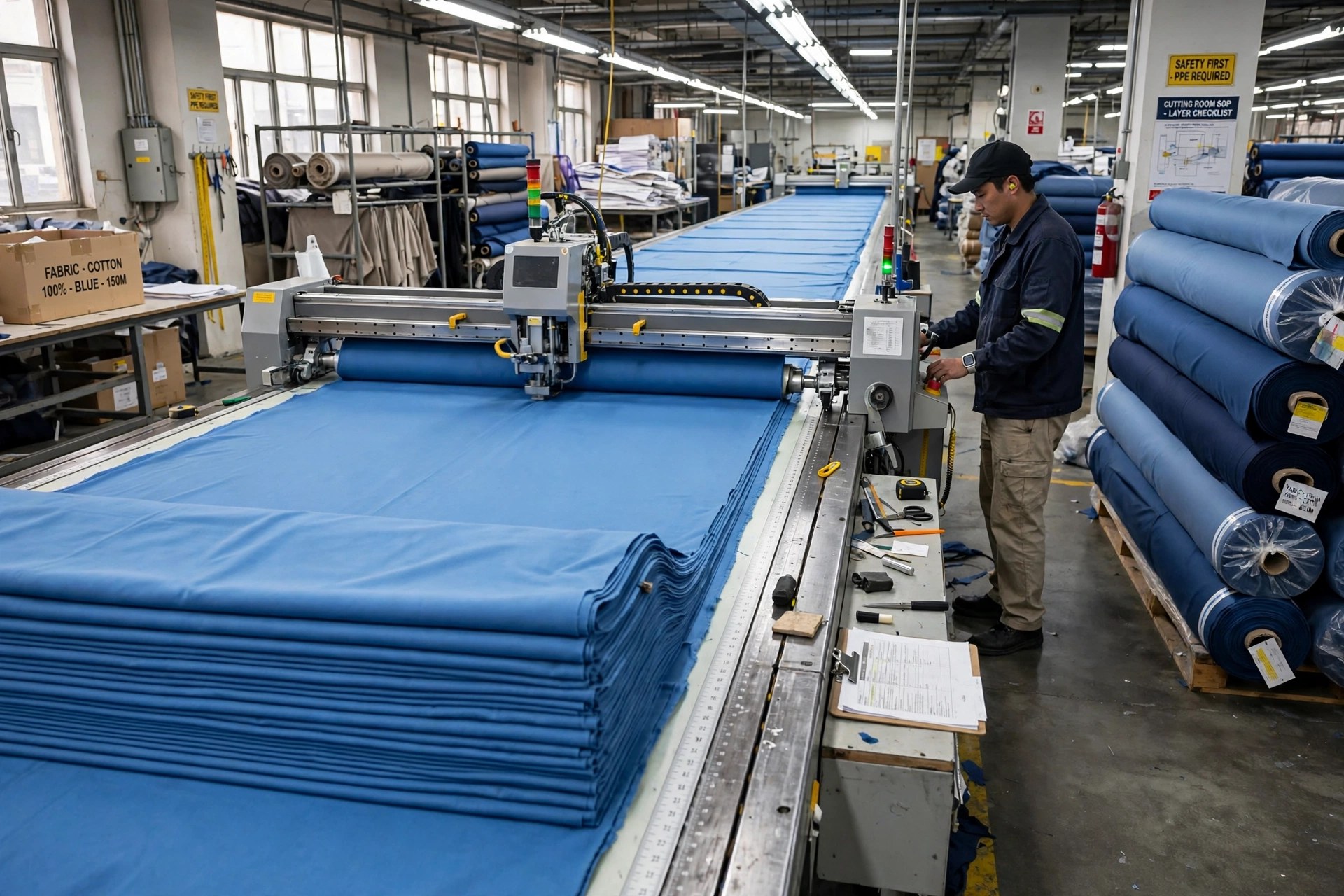
The cutting room is where a garment stops being an idea and becomes inventory. Everything the sewing lines will assemble is created here, and every error made here — a shifted layer, a mixed shade, a mis-sized piece — is multiplied by the size of the order. This guide covers the cutting stage of the Apparel Manufacturing & Factory Operations Guide: how fabric is spread, cut, numbered and bundled for the lines. The companion page on cutting room layout design covers how the room itself — tables, machines, storage and work zones — should be arranged.
Before the Knife: Inspection and Relaxation
Production fabric is checked before it is spread: shade against the approved standard, width, and obvious defects, because a flaw woven into the cloth will otherwise be cut faithfully into garments. Fabric is then rested so roll tension relaxes out of it. Only then is it ready for the table — a step impatient schedules skip and dimensional accuracy pays for.
Spreading: Building the Lay
Spreading means laying fabric in stacked layers (plies) along a long table, to the length of the marker. It can be done by hand for short lays or with a spreading machine that travels the table's length, feeding fabric evenly ply after ply. The spreader watches for tension (stretched fabric shrinks after cutting), alignment at the edges, and the fabric's direction: garments are usually cut with all pieces facing the same way so nap, pile and one-way prints run consistently. Face-to-face spreading pairs plies for garments cut as mirror pairs; face-up spreading is used when every piece must be checked or the fabric has a direction that matters.
The marker — the printed arrangement of all pattern pieces for the sizes in the lay — is laid over the top ply. How efficiently those pieces nest decides how much fabric the order consumes; the marker efficiency guide in the Garment Costing cluster covers that side of the work.
Cutting follows the marker lines through the full height of the lay. Straight knives handle most work, band knives give precision on curves and small parts, die cutters stamp out small repeated pieces, and computer-controlled cutters follow the marker file directly on larger automated lines. The method is chosen for the fabric, the lay height and the precision the parts demand.
Cut pieces are numbered or stickered so parts from the same ply stay identifiable, and cutters check the top and bottom plies against the pattern — the bottom of a tall lay is where knife deflection shows first.
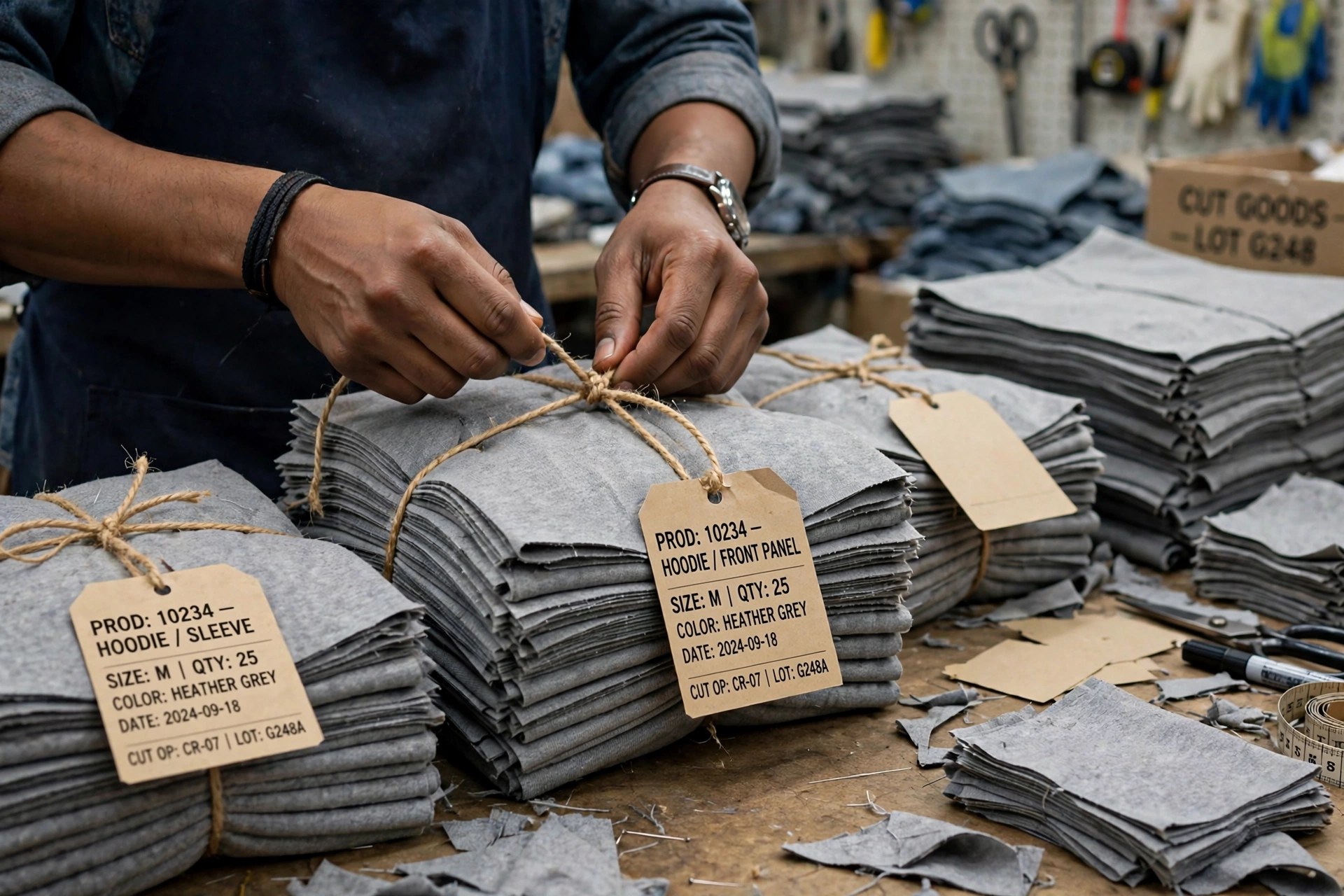
Pieces are grouped into bundles — typically the parts for a set number of garments — tied or bagged, and labeled with a ticket recording style, size, color, bundle number and quantity. Bundles are the unit the sewing lines receive, track and pay against.
Shade Control: The Quiet Discipline
Two rolls of the same fabric order can differ almost imperceptibly in shade — and a sleeve from one roll sewn to a body from another makes the difference obvious. Cutting rooms therefore keep each garment's parts within one roll and one lay section, mark roll changes in the spread, and rely on the numbering and ticketing above to keep matched parts together through sewing. It is unglamorous work that prevents one of the most visible defects in finished clothing.
What the Cutting Room Hands Over
A good cutting room delivers complete, accurate, shade-grouped bundles, on the schedule the production plan set, with the information the lines need attached to the work itself. When sewing lines complain about mismatched sizes or shades, the cause is almost always upstream, at this table.
More in This Guide
Back to the Apparel Manufacturing & Factory Operations Guide
This page is one department of the Apparel Manufacturing & Factory Operations Guide, Apparel Search's walk through the production floor. The guide connects every department — cutting, sewing, planning, quality, finishing — into one flow.
Common Questions
Why is fabric rested or relaxed before cutting?
Fabric comes off the roll under tension and can shrink back once it is released. If it is cut while still stretched, the pieces change size afterward and garments come out off-measurement. Resting the fabric — unrolled or loosely folded for a period before spreading — lets it settle to its natural dimensions so the cut pieces stay the size the pattern says.
What is a ply in the cutting room?
A ply is one layer of fabric in a spread. Cutting rooms stack many plies into a lay so that one pass of the knife cuts dozens of garments at once. The number of plies depends on the fabric's thickness and behavior: thin, slippery fabrics are spread in lower lays than stable, medium-weight ones.
Why are cut parts bundled and ticketed?
A garment may have twenty or more cut pieces, in several sizes and shades, cut from thousands of identical-looking layers. Bundling groups the pieces for one garment section together, and the ticket records the style, size, color, quantity and bundle number — so the right parts reach the right sewing operation and shade-matched pieces stay together.
What causes shade variation inside one garment?
If panels cut from different rolls or different parts of a lay — which can differ slightly in shade — are mixed in one garment, the difference shows at the seams. Cutting rooms prevent it by keeping each garment's parts from the same roll and the same section of the lay, which is exactly what the ticketing system is for.