Apparel Search · Factory Operations Guide
Sewing Production Lines: Operations & Line Balancing
How dozens of single operations become one flowing line: operation bulletins, bundle and hanging systems, and the bottleneck math of line balancing.
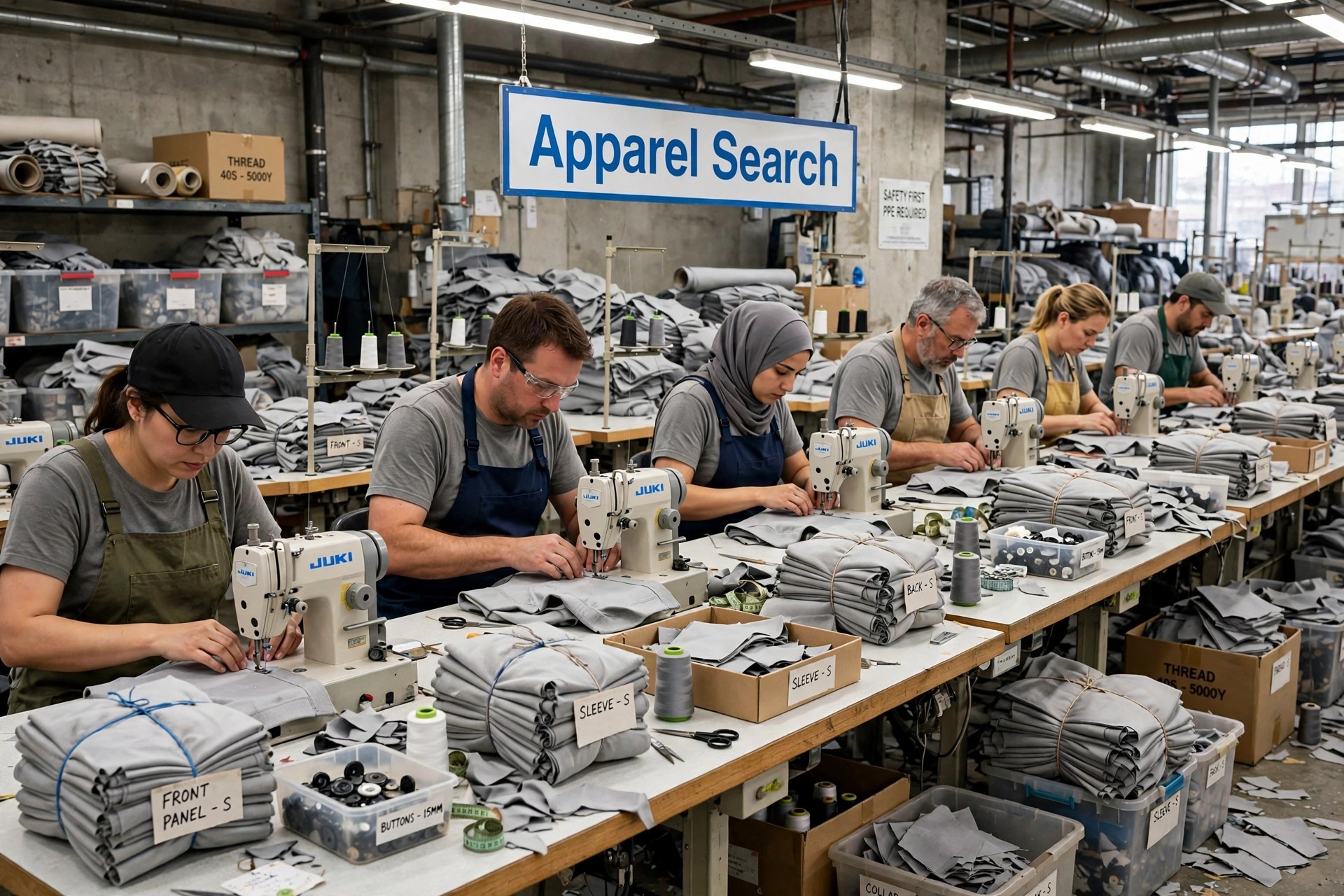
A jacket is not sewn; it is assembled — through thirty, fifty, sometimes a hundred separate operations, each done by a different pair of hands. The sewing line is the system that organizes those hands so the parts arriving from the cutting room leave as finished garments at a steady rate. This guide, part of the Apparel Manufacturing & Factory Operations Guide, explains how lines are built from an operation breakdown, the main ways work flows through them, and the balancing act that keeps them moving.
The Operation Breakdown: A Style Translated Into Work
Before a line is set up, industrial engineers break the style into its operation bulletin: every operation in assembly order, the machine it needs, and its standard allowed minutes (SAM). A basic shirt's list runs from making the pocket and placket through setting sleeves and collar to buttonholing and buttoning. The bulletin decides the line's staffing, its machines and its expected output — and it is the document the costing of the style is built from, a connection covered in the Garment Costing cluster's labor cost and SMV guide.
How Work Flows: Three Line Systems
The classic arrangement. Bundles of parts move station to station; each operator performs one operation on every piece in the bundle, ties it back up, and passes it on. Flexible and simple to run, but work waits in bundles between stations, so defects surface late and garments take a long path through the line.
Each garment travels the line individually on a hanger carried by an overhead conveyor, arriving at each station automatically and leaving for the next the moment its operation is done. Work in progress drops sharply and a problem garment is visible immediately, at the cost of the conveyor system and less flexibility for very varied styles.
A small team of multi-skilled operators shares a group of machines and assembles whole garments or large sections, balancing work among themselves. Quality feedback is fast and operators see the finished product, but the system depends on training and works best with stable teams and moderate style variety.
Line Balancing: The Whole Craft in One Problem
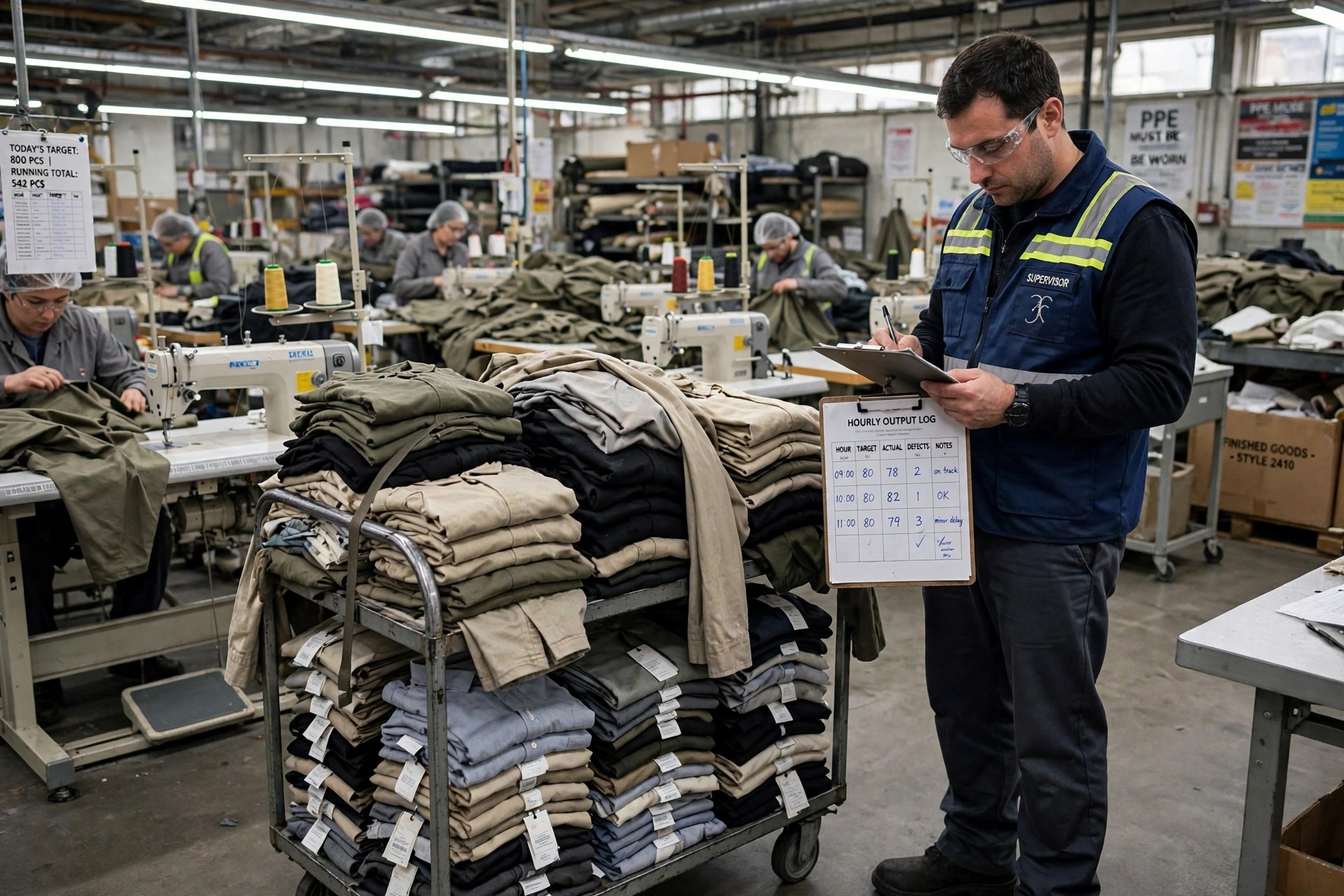
Give thirty operators thirty operations of unequal length and the line produces at the pace of its slowest station. Balancing is the work of equalizing the load: splitting long operations between two or more operators, combining short ones, moving helpers to the constraint, and re-checking as operators speed up with practice. Supervisors watch work-in-progress piles the way drivers watch traffic — a growing pile in front of one machine is a bottleneck announcing itself, and the fix is applied there, not by pushing the whole line harder.
Machines Follow Operations
Stations are equipped by the bulletin: single-needle lockstitch machines for general seaming, overlock machines to neaten and join knit edges, coverstitch machines for hems on knits, and special machines for buttonholes, buttons, bartacks and labels. The equipment itself is catalogued in the Apparel Search Machinery section; the operations point is that a line is a chain of matched capacities, and a missing special machine holds up a style as surely as a missing operator.
Quality Enters Here
Lines are also where quality is made or lost, which is why inspection is woven into the line rather than saved for the end — roving inline checks at the stations and a full check at the end of the line, covered in the factory floor quality guide. A balanced line with fast feedback produces both speed and quality; an unbalanced one produces neither for long.
More in This Guide
Back to the Apparel Manufacturing & Factory Operations Guide
This page is one department of the Apparel Manufacturing & Factory Operations Guide, Apparel Search's walk through the production floor. The guide connects every department — cutting, sewing, planning, quality, finishing — into one flow.
Common Questions
What is an operation bulletin?
An operation bulletin (or operation breakdown) is the document that lists every sewing operation needed to make a style, in sequence: attaching the pocket, closing the side seams, setting the collar, hemming, and so on. Each line gets its machine type and its standard time. It is the blueprint the line is set up and balanced from.
What is a bottleneck in a sewing line?
The slowest operation in the sequence. Because work flows station to station, the line's output can never exceed its slowest station's output; work piles up in front of it and stations after it starve. Line balancing is mostly the work of finding and relieving bottlenecks.
What is the progressive bundle system?
The traditional way of organizing sewing: bundles of cut parts move from operation to operation, with each operator completing one operation on the whole bundle before passing it on. It is simple and flexible, but bundles waiting between stations mean a lot of work in progress and slow feedback when a defect appears.
How is a sewing line balanced?
By comparing each operation's standard time and the target output: operations that take longer than the line's rhythm get extra operators or machines, quick operations are combined at one station, and work is redistributed until each station finishes at roughly the same pace. Supervisors re-balance whenever the style, the crew or the target changes.