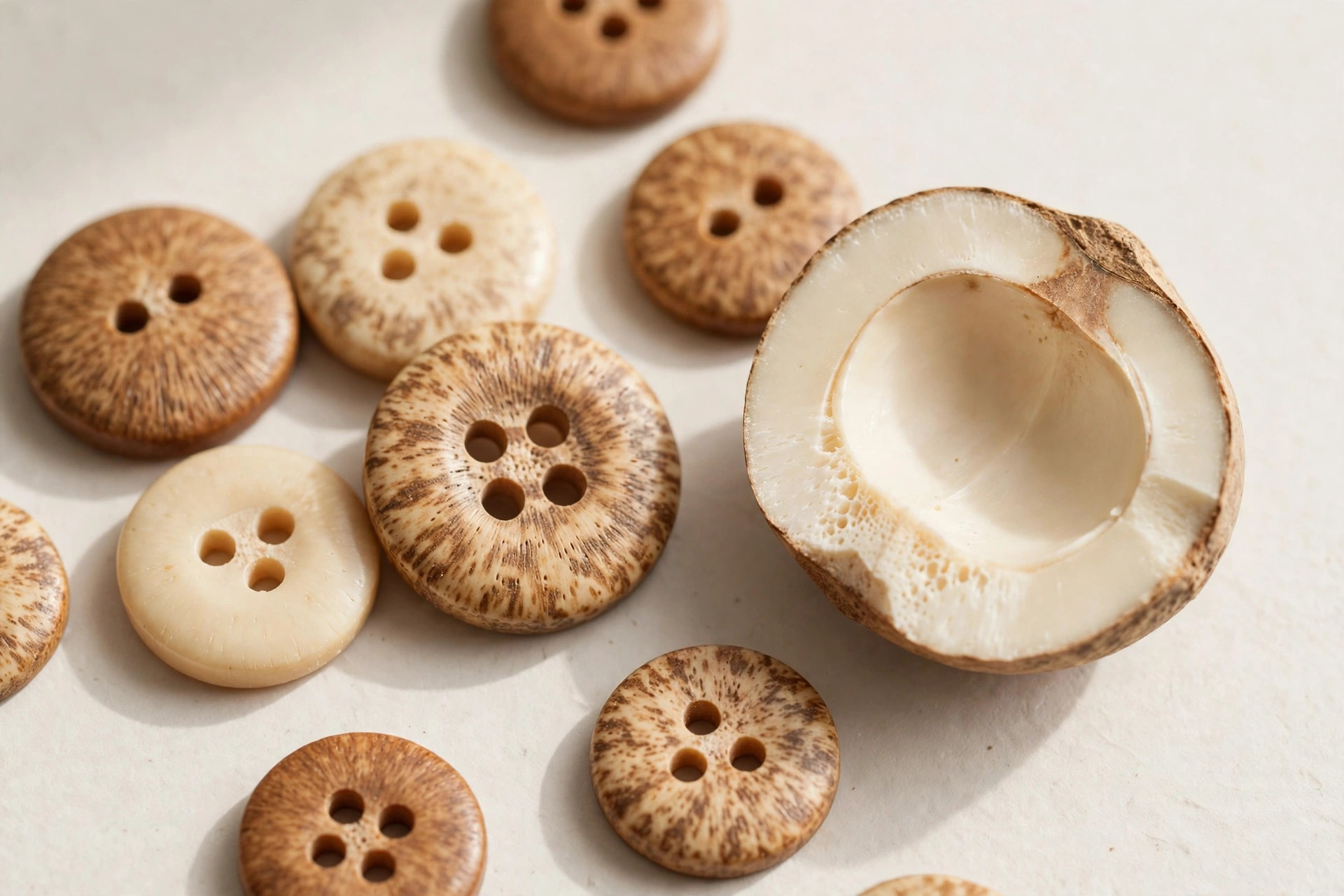
A corozo button is a button cut from corozo — the seed of the tagua palm, a dense natural material known as ‘vegetable ivory’. Sliced, turned on a lathe, drilled, dyed, and polished, corozo produces a hard, smooth button with a fine natural grain that takes dye richly, which is why it remains the standard button on quality suits and tailored clothing.
From Tagua Nut to Button
Tagua palms grow in Central and South America, and their large seed heads hold nuts that dry, over months, into a material almost as hard and white as elephant ivory. Button makers saw the dried nuts into blanks, turn each blank to profile, drill two or four holes (or fit a shank), then dye and polish the buttons. Because every nut differs slightly, finished buttons carry a subtle, living grain that no molded plastic reproduces — hold a corozo button to the light and the grain shifts like wood or horn.
Why Tailoring Chooses Corozo
Quality suits and blazers specify corozo for practical as well as aesthetic reasons. It is noticeably harder and more scratch-resistant than standard polyester resin buttons, it does not melt — a scorched corozo button chars like wood, while plastic softens — and its dyed colors stay deep and even through dry cleaning. The natural source matters to brands as well: tagua is harvested from fallen nuts without felling the palm, making corozo a renewable, biodegradable alternative to both plastic and horn. Natural buttons are a small family on Apparel Search — compare the coconut button, a rougher, casual cousin — and corozo is its most refined member, frequently made as a shank button for coats.
Care and Limits
Corozo is durable but it is a natural seed, not a mineral: a hard blow can chip an edge, and prolonged soaking is unwise. Normal wear, washing, and dry cleaning suit it well — it has dressed tailored clothing for well over a century. Its one real drawback is cost: harvesting, drying, and turning nuts is slower than molding plastic, so corozo appears where the garment's price can carry it.
FAQs
- Is a corozo button plastic?
- No. Corozo is a natural material — the dried seed of the tagua palm. It is hard and smooth like plastic, which is why it is nicknamed vegetable ivory, but it has a fine organic grain and, unlike plastic, it chars rather than melts when burned.
- How can you tell a real corozo button?
- Look for fine, irregular grain under the surface — real corozo shows subtle streaks that change with the light, while molded plastic looks perfectly uniform. Corozo also feels dense and cool in the hand and takes dye with unusual depth.
- Is corozo a sustainable material?
- It is one of the more sustainable button materials: the nuts are gathered after they ripen and fall, the palm is not cut down, harvesting supports rainforest communities, and the finished button is natural and biodegradable. Its footprint is mainly transport and the slow drying time.
Detailed Guides: see Corozo Button in the glossary A–Z listing of the Apparel Search fashion glossary for related terms.