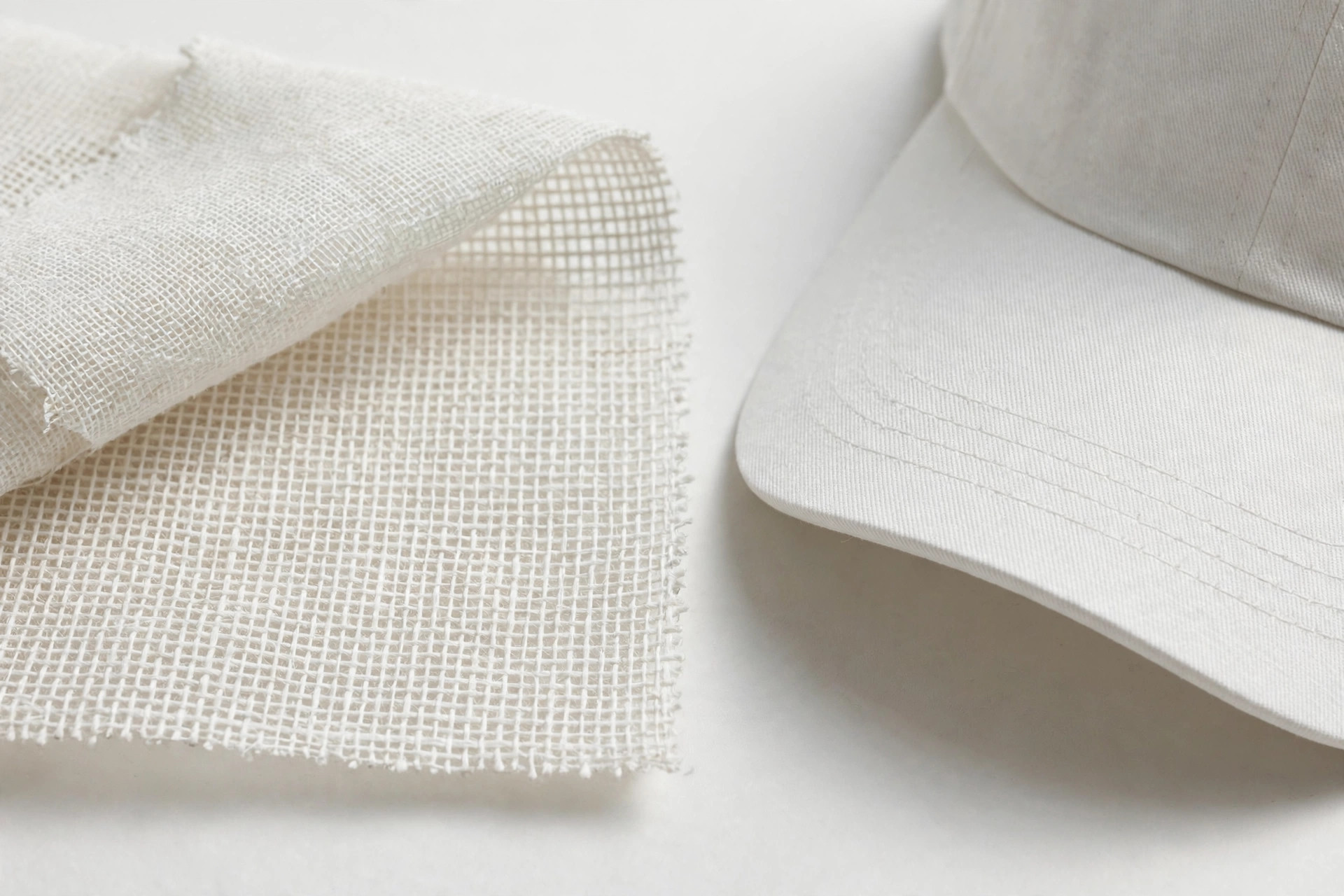
Buckram is a coarse, open-weave fabric — traditionally cotton or linen — that has been heavily stiffened with starch, glue, or resin so it holds a firm, board-like shape. In apparel it is used out of sight, as the internal stiffener inside cap brims and peaks, structured bag bases, hat bodies, and other garment parts that must keep their form instead of draping.
Where Buckram Is Used
Buckram is a structural material, chosen wherever a soft textile has to behave like a shaped form. Cap makers sandwich it inside the brim or peak so the visor keeps its curve; bag makers line bases and sides with it so a tote or satchel stands up on its own; and milliners block and shape hat bodies over it. The same stiffened cloth has a long second life outside fashion in traditional bookbinding, where it covers hardcover books — a reminder of how durable the material is.
- Caps and hats — brims, peaks, and crown fronts that must hold a crisp shape.
- Bags — bases, side panels, and flap stiffening in structured styles.
- Millinery — a blockable foundation for shaped and trimmed hats.
- Garment details — historically, stiffened waistbands, collar stands, and costume pieces.
How Buckram Is Made and Handled
Buckram starts as a loose plain-weave cloth; the open grid is what lets the stiffening agent penetrate and lock every yarn. It is sold in grades from flexible to board-stiff, and in millinery weights that can be dampened, shaped over a block, and left to dry rigid. Cut it with shears rather than tearing, and keep finished pieces dry: water and steam break down traditional starch and glue stiffeners, so a buckram-stiffened cap brim that goes through a wash can come out permanently softened and wavy. Modern resin-stiffened grades tolerate moisture better, but specifiers still treat buckram parts as shape-critical and keep them out of wash-tested zones.
FAQs
- Is buckram the same as interfacing?
- They are relatives, not twins. Both stiffen fabric from inside, but interfacing is usually a lighter fusible or sew-in layer bonded across a whole panel, while buckram is a much stiffer, open-weave material used in defined parts — a brim, a base, a hat body — that must hold a rigid shape.
- What is buckram made from?
- Traditionally a loosely woven cotton or linen cloth stiffened with starch or glue. Modern buckram may use synthetic fibers and resin stiffeners, which hold up better to moisture but behave the same way in construction.
- Does buckram soften when it gets wet?
- Traditional starch- and glue-stiffened buckram does soften and can lose its shape permanently when soaked. Resin-stiffened grades resist moisture better. Either way, buckram-stiffened parts such as cap brims are best spot-cleaned rather than washed.
Detailed Guides: see Buckram in the glossary A–Z listing of the Apparel Search fashion glossary for related terms.