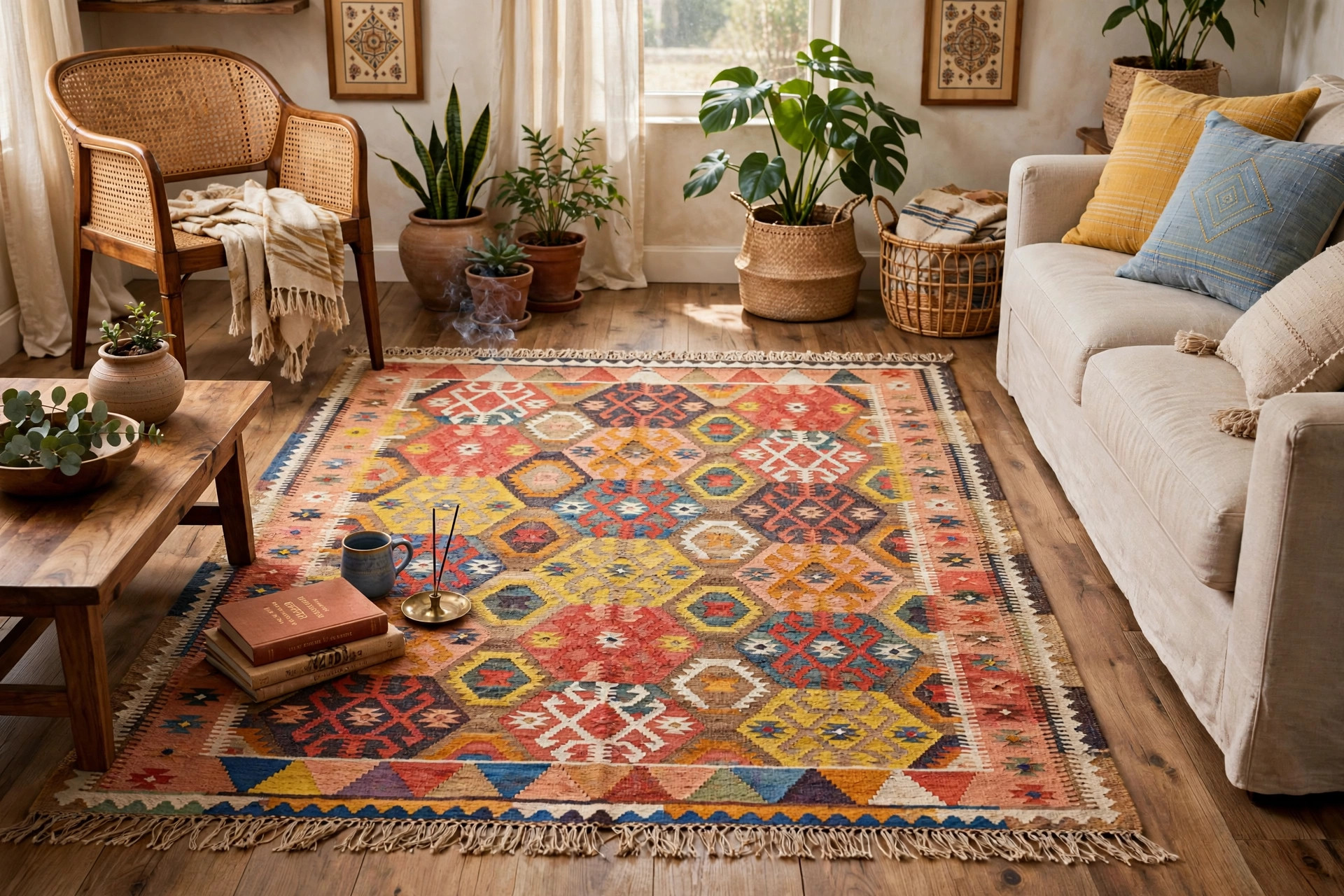
Dhurrie (also spelled dhurri or durry) is a thick, flat-woven cotton cloth traditionally handwoven in India - most familiar as colorful rugs and floor coverings, but also made into furnishings and throws.
How Dhurries Are Made
Dhurries are woven on handlooms with a flat weave - the weft threads pass over and under the warp with no pile knotted in. Because the pattern is woven straight through the cloth, a dhurrie looks the same on both sides: it is fully reversible. Traditional designs are geometric - stripes, diamonds, and tribal motifs - often in bold contrasting colors, though modern dhurries come in muted contemporary palettes too.
Dhurrie vs. Pile Rugs
- Dhurrie - flat-woven, no pile; lighter, reversible, and easy to shake out or wash
- Pile rugs (Persian, Oriental) - knots tied onto a foundation create a plush surface; heavier, one-sided, and more formal
The flat construction makes dhurries practical for high-traffic rooms, layering over other rugs, and warm climates where a heavy pile rug would be too much.
In Fashion and Interiors
Beyond floor rugs, dhurrie weaving shows up in upholstery fabric, wall hangings, tote bags, and throws. Fashion has borrowed its bold geometry for prints and its sturdy handwoven texture for accessories. Each region of India has its own dhurrie tradition - from the jail-inspired geometric patterns of Agra to the vibrant weaves of Rajasthan - so "dhurrie" covers a wide family of related textiles.
FAQs
- How is a dhurrie different from a carpet?
- A dhurrie is flat-woven with no pile, making it thinner, lighter, and reversible. A carpet or pile rug has knotted tufts standing up from the surface.
- What are dhurries made of?
- Traditionally cotton, sometimes with wool. Modern versions may include jute or synthetic blends, but classic dhurries are cotton flatweave.
- Are dhurries durable?
- Yes - the tight flat weave is very hard-wearing, which is why dhurries have served as everyday floor coverings in India for centuries.
- Can you wash a dhurrie?
- Small cotton dhurries can often be hand-washed or gently machine-washed; large ones are best shaken out, vacuumed, or professionally cleaned.
Glossary: see the full fashion glossary for more apparel industry terms.