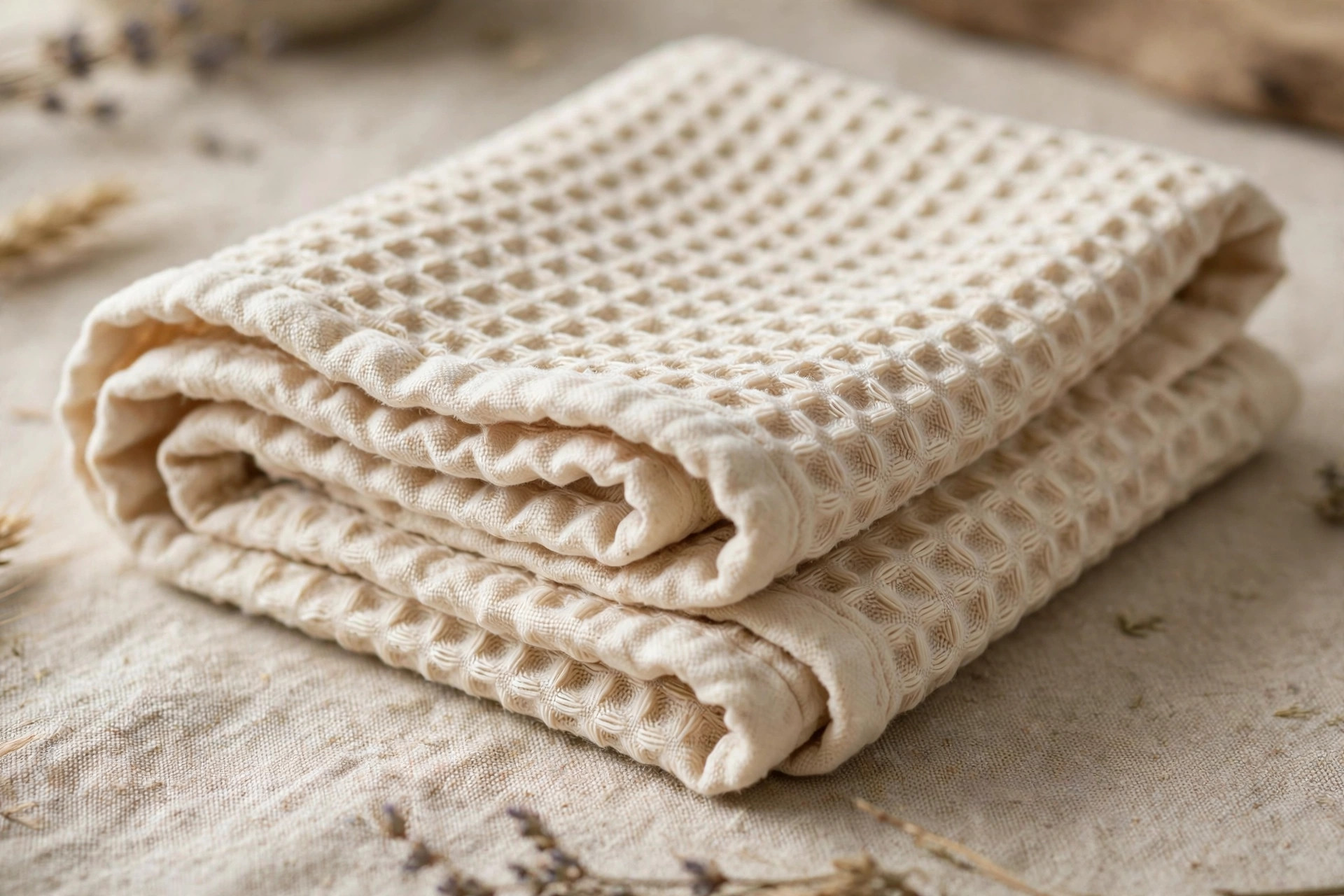
A dishcloth is a small cloth used for washing dishes - typically a woven cotton (sometimes linen) textile valued for absorbency, with roots in simple homespun utility fabrics.
More Than a Rag
The humble dishcloth is a small study in textile engineering. The best ones use weaves built for the job: waffle weave, with its honeycomb pockets, holds water and creates scrubbing texture; plain-weave cotton is softer and lint-free for glassware. Absorbency is the whole point, which is why cotton and linen dominate - both fibers drink up water, unlike synthetics that just push it around.
From Homespun to Store Shelf
Before dishcloths were a product, they were simply worn-out household textiles cut down for a second life - the original recycling. Hand-knitted and crocheted dishcloths remain a staple project for crafters, and the classic white cotton dishcloth with a colored stripe is a design icon of the mid-century kitchen. Today you will find them in cotton, linen, bamboo blends, and the familiar Swedish-style cellulose-cotton sponge cloths.
Textile Terms Around It
- Dish towel / tea towel - larger, for drying rather than washing
- Washcloth - the bath equivalent, usually terry cloth
- Scrim - a coarse open-weave cloth sometimes used for heavy-duty wiping
FAQs
- What is the best fabric for a dishcloth?
- Cotton in a waffle or textured weave is the all-rounder: absorbent, durable, and easy to launder hot. Linen is excellent but pricier.
- Dishcloth vs. sponge - which is better?
- Dishcloths launder clean in hot water and dry fully between uses; sponges stay damp and harbor bacteria faster. Cloth wins on hygiene if washed often.
- How often should you replace a dishcloth?
- With daily hot laundering, a good cotton dishcloth lasts months. Replace it when it thins out, smells despite washing, or loses absorbency.
Glossary: see the full fashion glossary for more apparel industry terms.