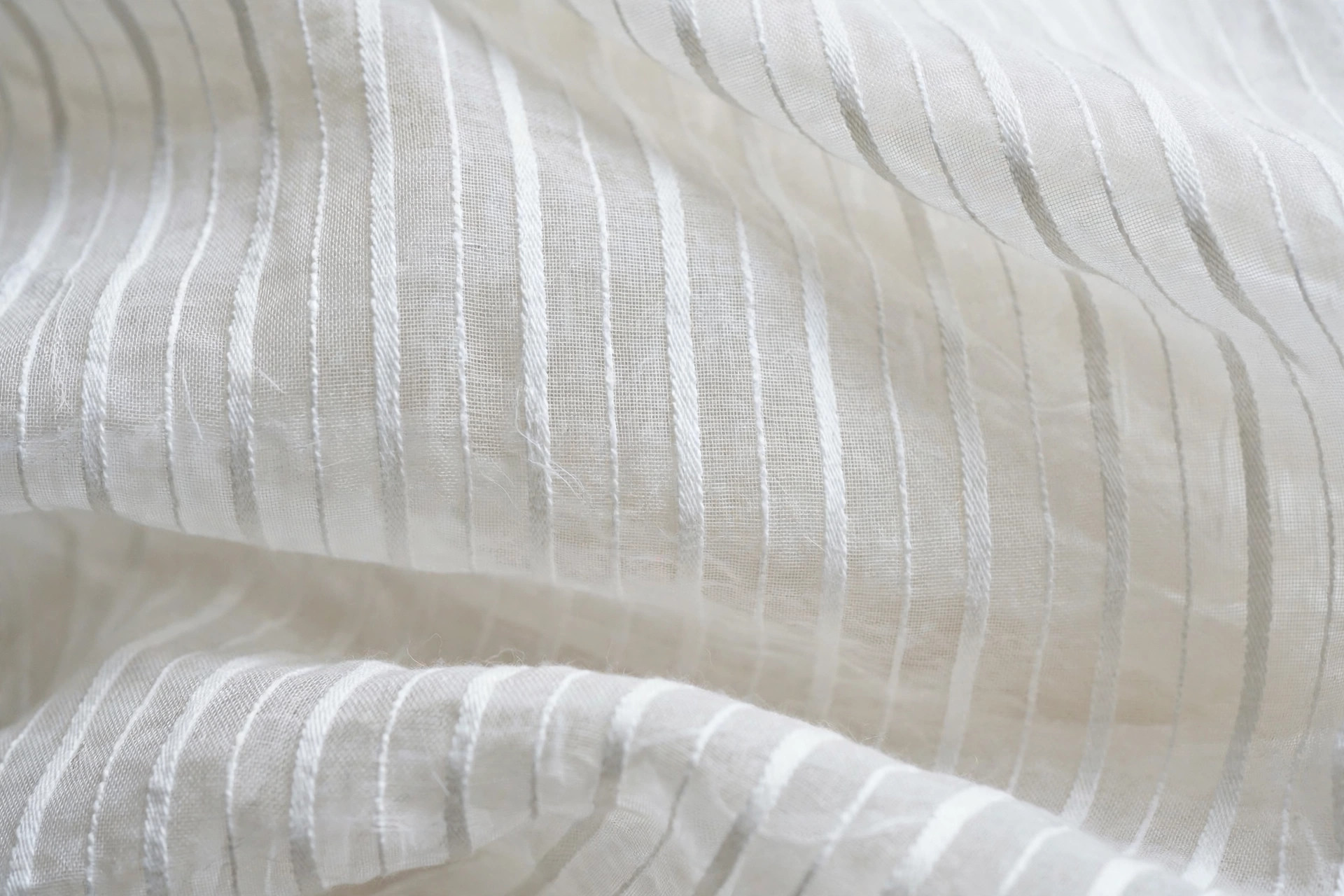
Dimity is a thin, sheer cotton fabric with a corded effect - fine crosswise or lengthwise ribs or stripes formed by grouped yarns. Crisp to the touch, it is traditionally woven from combed yarn about 36 inches wide.
What Dimity Looks and Feels Like
Hold dimity to the light and you will see its signature: delicate raised cords running in single, double, or triple groupings across a sheer plain-weave ground. The cords come from doubling certain yarns so they stand slightly proud of the surface. The hand is crisp rather than soft - dimity holds a little body, which is part of its charm in curtains and summer dresses. It resembles lawn but with that unmistakable corded stripe.
How It's Used
- Curtains and sheers - the classic use; crisp, light, and pretty at a window
- Summer dresses and blouses - cool and airy with subtle texture
- Christening gowns and heirloom sewing - a traditional favorite for fine whitework
- Bed furnishings - dust ruffles, canopies, and lightweight coverlets
Caring for Dimity
Dimity's crisp texture survives washing fairly well - the cords are structural, not a finish that washes away. Wash gently in cool water and it keeps its character. Like most fine cottons it can wrinkle, so a light press restores the smooth, corded look.
FAQs
- Is dimity still woven today?
- Yes, though it is a specialty fabric now - look for it at fine fabric stores and shops serving heirloom sewers and curtain makers.
- What colors does dimity come in?
- Traditionally white or pastels, which show off the sheer corded texture. White remains the classic.
- What is the difference between dimity and lawn?
- Both are fine sheer cottons, but dimity has raised cords or stripes while lawn is smooth and even throughout.
- Why is dimity 36 inches wide?
- That was the traditional loom width for this fabric; the narrow width is part of its historical specification.
Glossary: see the full fashion glossary for more apparel industry terms.