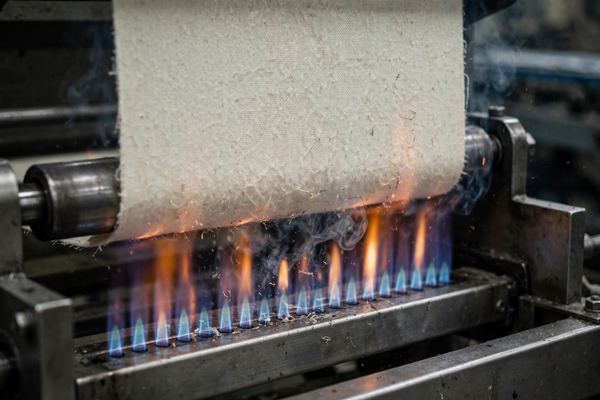
Singeing is passing fabric quickly over a flame (or heated plates) to burn off protruding surface fibers - giving a smooth, clean finish for printing and dyeing.
Why Singe Fabric
Loose surface fibers cause problems: they blur printed designs, pill in wear, and interfere with even dyeing. Singeing removes them in one fast pass, leaving a clean surface that takes prints crisply and dyes evenly. It's standard preparation for any fabric bound for printing.
How It Works
Fabric moves at high speed over rows of gas burners - the exposure lasts fractions of a second. That's long enough to burn off the fine protruding fibers but far too short to scorch the fabric itself. Speed control is everything: too slow and the fabric scorches, too fast and fibers survive.
After Singeing
Singeing is usually followed by desizing and scouring, which wash away the ash residue and prepare the fabric for dyeing or printing. The singed-then-scoured fabric has the cleanest possible surface for whatever comes next.
FAQs
- Is singeing safe for the fabric?
- Yes when done correctly - the exposure is fractions of a second.
- Which fabrics are singed?
- Cotton and blends bound for printing; synthetics can melt so need care.
- Singeing vs shearing?
- Singeing burns fibers off; shearing cuts them mechanically. Often used together.
Glossary: see the full fashion glossary for more apparel industry terms.