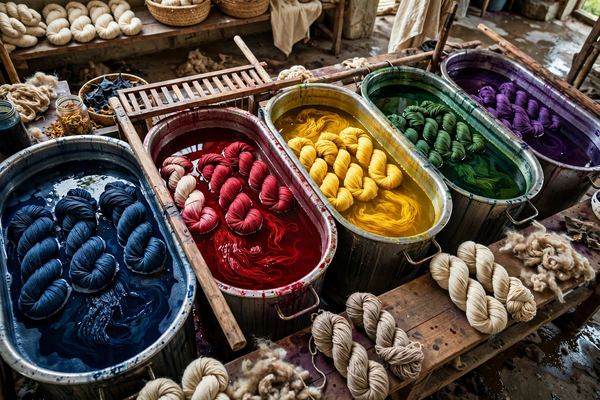
Yarn dyeing is dyeing yarn before it's woven or knitted into fabric - enabling stripes, plaids, checks, and rich multi-color patterns.
How Yarn Dyeing Works
Yarn is dyed in skein, package (cone), or beam form - the dye penetrates the yarn completely before weaving begins. Then the colored yarns are woven or knitted together according to a pattern draft, creating stripes, plaids, gingham, dobby weaves, and other designs where the pattern comes from the arrangement of colored yarns, not from printing.
What It Enables
- Patterns: stripes, plaids, gingham, dobby patterns - impossible with piece dyeing
- Deeper color: dye penetrates the yarn fully, giving richer color than surface-level piece dyeing
- Better colorfastness: thorough penetration means color holds through more washes
Cost
Yarn dyeing costs more than piece dyeing - you're paying for dyeing the yarn plus the more complex pattern weaving. That's why yarn-dyed shirting and flannel command higher prices than solid piece-dyed equivalents.
FAQs
- What's the difference between yarn-dyed and piece-dyed?
- Yarn-dyed: color in the yarn before weaving (patterns possible). Piece-dyed: solid color applied to finished fabric.
- Are yarn-dyed fabrics better quality?
- Generally yes - better color penetration and fastness, at higher cost.
- What fabrics are usually yarn-dyed?
- Shirting, flannel, chambray, denim warp yarns.
Glossary: see the full fashion glossary for more apparel industry terms.