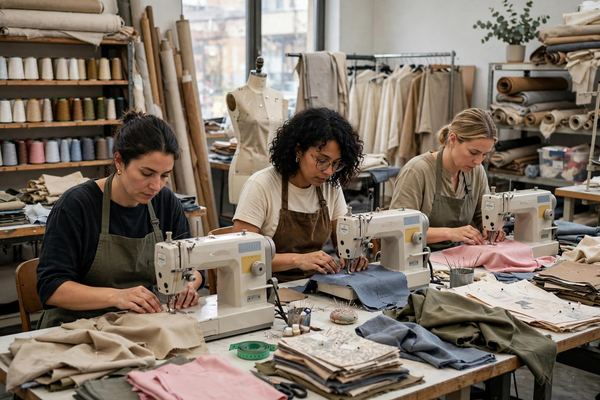
A sample room is a workshop where skilled sewers and pattern makers create sample garments - protos, fit samples, and sales samples - during product development.
What Happens in a Sample Room
Sample rooms are where designs become physical garments. Pattern makers draft and adjust patterns, cutters cut small quantities of fabric, and skilled sewers assemble the samples. The pace is fast and iterative - a designer reviews a proto, requests changes, and the sample room turns a revised version around in days, not weeks. This tight loop of make-review-revise is the engine of product development.
Sample Room vs Factory
- Sample room: small runs, skilled generalists who sew many garment types, development focus - speed and flexibility matter most
- Factory: bulk production, specialized operators who repeat one operation, efficiency focus - cost per unit matters most
Why Brands Need One
Local sample rooms speed development enormously. Sending every iteration to an overseas factory means weeks of shipping and communication per round; a local sample room can turn revisions in days. For brands developing collections on tight timelines, a good sample room nearby is one of the most valuable resources they can have.
FAQs
- How much does a sample room charge?
- Varies widely - simple styles $50-150 per sample, complex ones more.
- Can a factory be its own sample room?
- Large factories have sample departments, but dedicated local sample rooms are faster for development.
- What skills do sample makers need?
- Pattern making, sewing across garment types, and reading tech packs.
Glossary: see the full fashion glossary for more apparel industry terms.