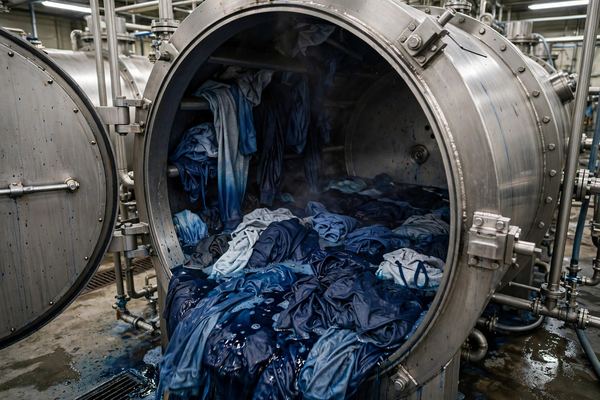
Garment dyeing is dyeing fully constructed garments rather than dyeing the fabric or yarn first. It allows color decisions late in production.
How It Works
Garments are sewn from undyed fabric - called PFD, or prepared-for-dyeing - and then the finished pieces go into dye machines. The dye penetrates seams, pockets, and linings along with the shell fabric, giving garment-dyed pieces their characteristic slightly varied, lived-in look. After dyeing, garments are washed, dried, and finished as usual.
Advantages
- Late color decisions - choose colors closer to the selling season, when trends are clearer
- Smaller inventory risk - sew in greige, then dye to demand instead of guessing color splits months ahead
- Unique hand feel - the dye-and-wash process gives a soft, broken-in character that's hard to fake
Limitations
Not all fabrics dye evenly after construction - differences in tension between panels can cause shade variation. Every trim, thread, and label must be dye-compatible or it will come out a different color (or melt). And dye shrinkage must be accounted for in patterns, or finished sizes will miss spec.
FAQs
- What's PFD fabric?
- 'Prepared for dyeing' - undyed fabric ready to take color.
- Does garment dyeing affect sizing?
- Yes - account for dye shrinkage in patterns, typically 3-5%.
- Which brands use garment dyeing?
- Common in casual wear, denim, and anywhere a soft washed look is wanted.
Glossary: see the full fashion glossary for more apparel industry terms.