Menswear Buyers: Finding Buyers for Men's Clothing
Finding buyers for men's clothing — stores, directories and buyers guides
A fashion designer, wholesaler or manufacturer may find it easier to design and manufacture men's clothing than to find buyers to purchase it. That is one of the most difficult challenges in the fashion industry, and it is shared by newcomers and established brands alike: even owners and licensees of very popular brands do not always find a buyer easily. Menswear is bought by a distinct set of retailers — dedicated men's wear stores, department stores, formal wear and tuxedo shops, big and tall specialists, sporting and outdoor retailers — and each buys on its own calendar and terms. This guide explains how to reach menswear buyers: working from men's clothing stores and their directory categories, and using a salesman buyers guide when the buyer at a large chain cannot be reached directly.
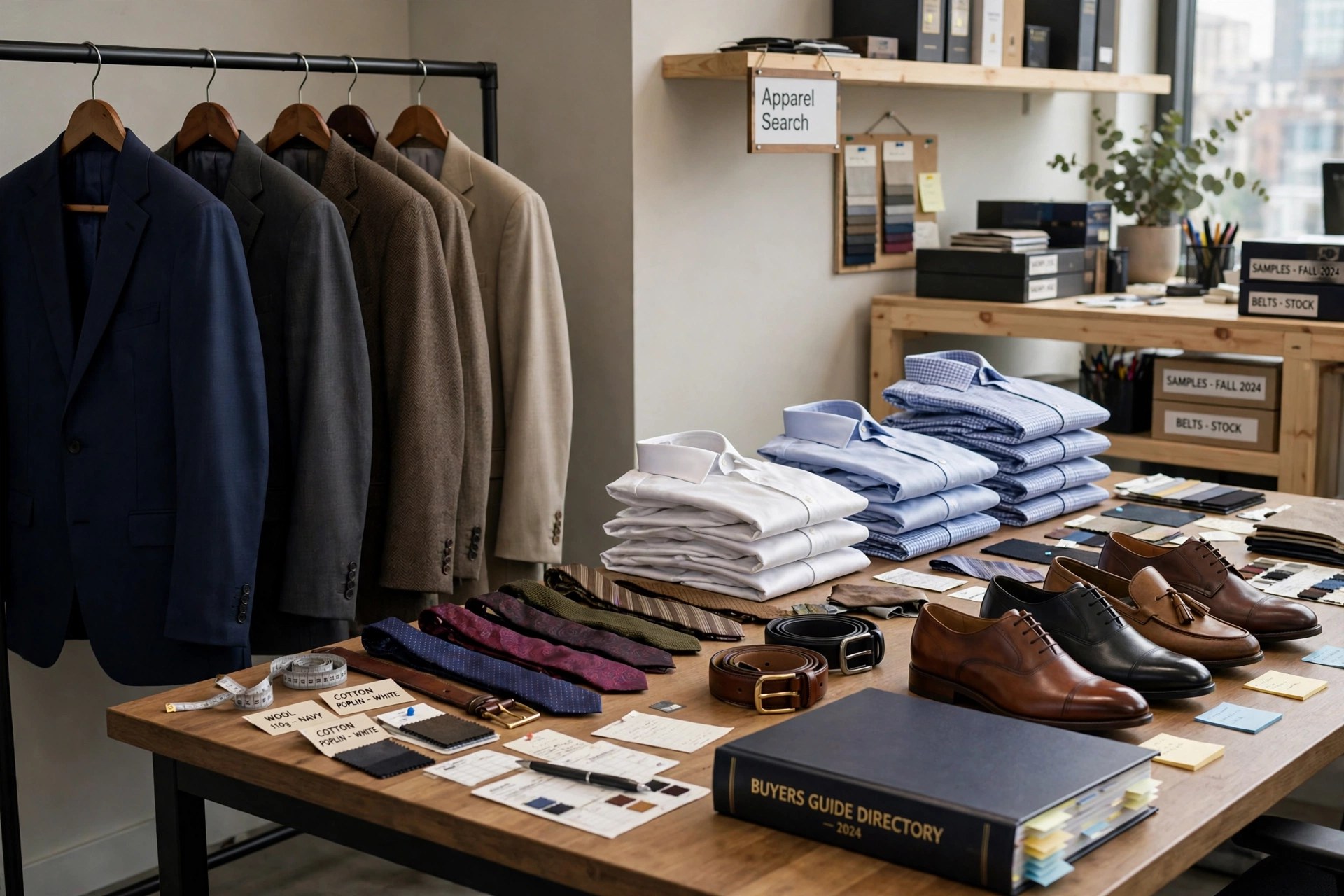
Start With Men's Clothing Stores
One way to find men's clothing buyers is to browse the internet for men's clothing stores. Contact the stores and ask them to provide information on the buyer contacts. For independent men's wear stores, that request often reaches the right person quickly, because in a smaller store the owner commonly buys the merchandise personally and can say exactly what the store needs, at what prices, and for which delivery dates. Department stores and national chains are a different task: obtaining the buyer names, buyer e-mail addresses or buyer phone numbers for a large department store can be challenging, because chains keep individual buyer details unpublished and route inquiries through general offices.
Men's Clothing Store Directory Categories
If you wish to contact clothing stores without the use of a buyers guide, search the men's clothing store directory categories. The categories are: Men's Clothing; Men's Shoes; Young Men's; Tuxedos; Men's Suits; Men's Swimwear; Big & Tall; Custom Fit Clothing; Men's Outerwear; and Men's Underwear. Each category corresponds to a distinct buying decision. Suits and tuxedos are bought by tailored-clothing buyers and formal wear specialists who work to occasion calendars and fitting services. Big and tall is a specialty market with its own stores and its own size ranges, bought by specialists who know that customer well. Swimwear and outerwear are strongly seasonal, so their buyers review lines well ahead of the selling season. Shoes, underwear and custom fit clothing each have dedicated retailers whose buyers rarely purchase across the other categories.
A targeted search follows from that structure. Choose the categories your line genuinely belongs to, list the stores in them, and approach each store for the buyer of that category rather than sending a general catalogue to every men's store that exists. A short list of well-matched stores, each contacted with prices and delivery terms suited to it, produces more appointments than a long undifferentiated mailing.
Salesman Buyers Guides for Named Contacts
If receiving the proper contact details is difficult, purchasing a salesman buyers guide is the established alternative. The salesman buyer guides are typically updated on a regular basis to make certain that the contact details for men's store buyers are up to date and correct. All of the books may have a few errors, but for the most part they are kept well up to date. Clothing store buyer details change often, so encountering a few outdated details is common: buyers change quicker than buyer guides can be printed. Look for men's apparel buyer guides at the Fashiondex Book Store, and check the Fashion Books section for further titles. Verify a named contact before a costly sample shipment, and keep your own notes on who bought, who declined, and when each buyer asked to see a future season.
Presenting a Men's Line to a Buyer
Menswear buyers buy fit, fabric and reliability as much as style. A useful presentation states the size range, including big and tall where offered, the fit blocks used, fabric content and care, wholesale prices and margins, minimum orders, and delivery dates the factory can actually meet. For tailored clothing, construction details and alteration arrangements matter; for basics such as underwear, T-shirts and outerwear, replenishment terms and consistency from season to season matter more. Knowing the store's existing assortment — and naming the gap your line fills — shows the buyer the decision has been thought through from the store's side of the desk. The Menswear Guide section of this site and the Men's Apparel overview provide background on how the men's trade is organized.
Common Questions
How can a manufacturer find buyers for men's clothing?
Browse men's clothing stores, work from the directory categories that match the line — suits, tuxedos, big and tall, outerwear, shoes and so on — and contact each store for its buyer. For large department store chains, whose buyer details are not published, use a salesman buyers guide.
What store categories buy menswear?
Men's wear stores, department stores, formal wear and tuxedo shops, big and tall specialists, young men's stores, shoe stores, and swimwear, outerwear and underwear specialists all buy men's lines, usually through buyers dedicated to that category.
How current are salesman buyers guides?
The guides are updated on a regular basis to keep men's store buyer contact details correct, but buyers change jobs quicker than guides can be printed, so a few outdated details are common. Verify a contact before sending samples.