01Flat or Wedge
Two Silhouettes: The Flat and the Wedge
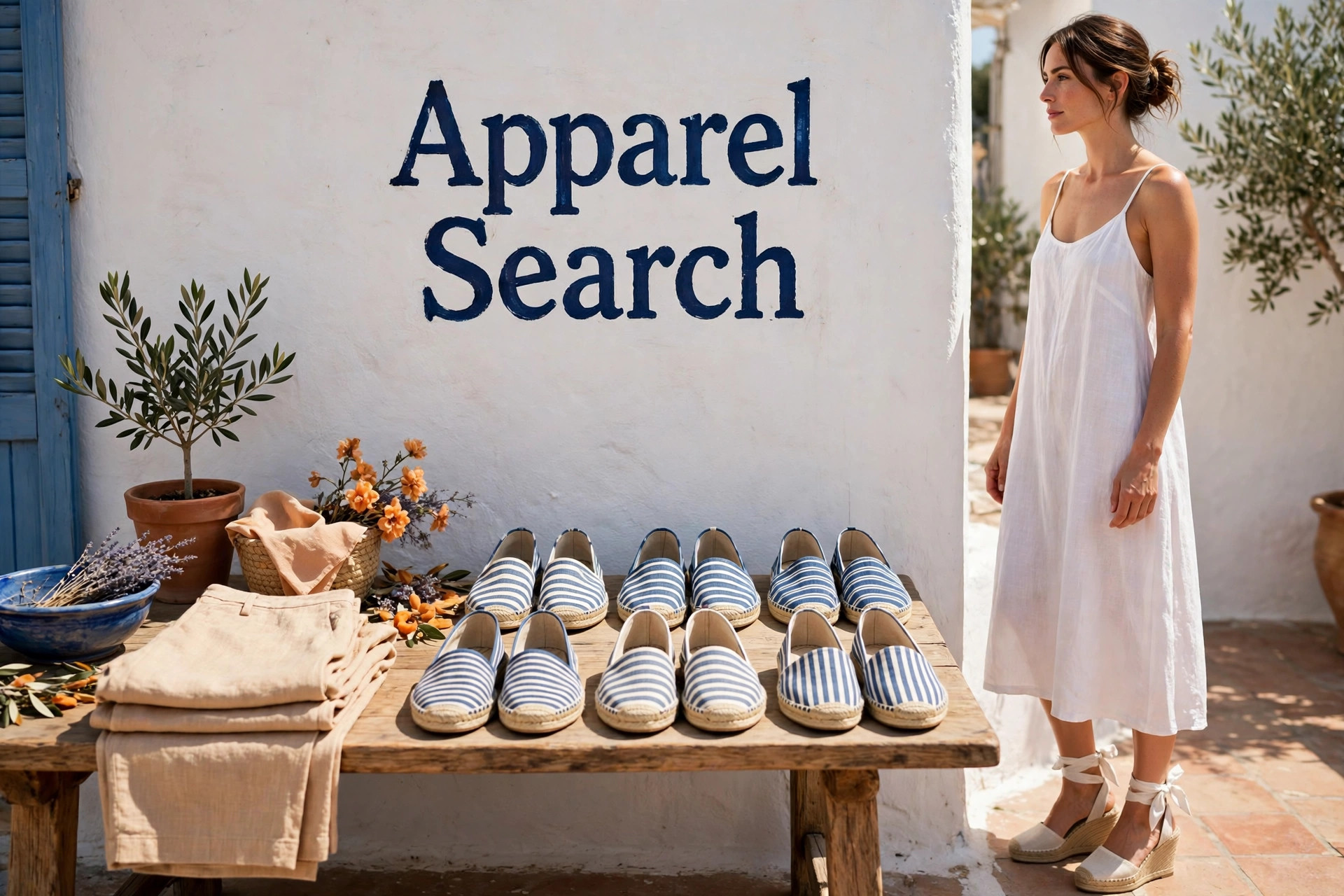
An espadrille is defined by its sole — braided jute rope — and divided by its height. Everything else about styling the shoe follows from that one choice: the flat is a leisure shoe that happens to look elegant, and the wedge is a dress shoe that happens to be comfortable. Pick the silhouette by the outfit’s ambition, not by habit.
Flat espadrilles are the original: a canvas or cotton upper stitched to a rope sole, worn barefoot, made for markets, beaches-that-aren’t-quite and long slow days. They style like a softer ballet flat — the comparison runs through how to style ballet flats — and they ground dresses and shorts without any formality. Wedge espadrilles wrap the jute around a raised heel, usually with ankle ties or a closed toe, and that height changes their job entirely: they lengthen the leg, hold their own under midi and maxi lengths, and are the rare summer heel you can walk in on grass and cobbles. Between the two sits the low platform flatform, casual like the flat but with the wedge’s extra presence. The full range of uppers and constructions is in the women’s espadrille shoes guide and the women’s espadrille sandals guide; this page is about wearing them.
02Summer Pairings
Sundresses, Linen and Crops: The Natural Partners
Sundresses are the espadrille’s home outfit. A flat pair under a short or knee-length dress keeps the look easy and daytime; a wedge pair under a midi or maxi dress is the complete summer-evening formula — the rope sole keeps the dress from reading formal, and the height keeps the hem off the ground. Ankle-tie wedges want a hem that shows the tie, so midi beats maxi unless the dress has a slit. Linen is the fabric match: linen trousers, shorts and shirts share the espadrille’s natural-fiber, slightly-creased ease, and a tonal outfit — natural canvas espadrilles with white or sand linen — is the shoe’s most reliable combination.
Cropped trousers and jeans are the third partner, because the espadrille needs an ankle to work against. Crops, cigarette pants and rolled straight-leg jeans all show the shoe and, on wedges, the tie; long wide trousers swallow a flat espadrille entirely and fight a wedge’s laces. Shorts sit with flats, always — a wedge with shorts tips the proportions toward the leg and works only in deliberately dressed-up beach-town outfits. Prints are welcome everywhere in this section: a striped canvas espadrille with a plain dress, or a plain espadrille under a printed one, but not both patterned at once.
03Work Boundaries
Where Espadrilles Can and Cannot Go at Work
Summer is when the espadrille tests the office dress code, and the boundaries are consistent across most workplaces. The wedge passes more often than the flat: a closed-toe wedge espadrille in black, navy or natural canvas, worn with tailored cropped trousers, a midi skirt or a shirt dress, reads as a summer shoe rather than a holiday shoe in business-casual and creative offices. The flat rarely passes: canvas flats sit in the same category as trainers and sandals in most codes, however neat the pair. Open espadrille sandals follow your office’s sandal rule, not its shoe rule.
Three limits hold almost everywhere. Formal and client-facing settings exclude the jute sole outright — rope reads leisure at any height. Wet-weather commutes exclude it practically, as the care section explains. And ankle ties, while pretty, are the most casual detail the shoe offers; for the office version of the wedge, choose a plain strap or a closed slingback style instead — the same day-to-evening judgment as how to style mules, applied to rope instead of leather.
04Jute Sole Care
Keeping Jute Soles Alive: Dry Is the Whole Rule
Jute is a plant fiber, and the espadrille’s one real weakness follows from it: water is the enemy. A soaked jute sole absorbs moisture, swells, loses its shape and can rot or pull away from the stitching if it stays damp. So espadrilles are dry-day shoes — check the forecast, skip them on wet pavements, and never treat them as rain shoes however summery the shower looks. If a pair does get caught out, stuff the uppers with paper to hold the shape and dry the shoes slowly at room temperature, away from radiators and direct sun; heat dries the jute brittle and cracks it.
Routine care is gentler. Brush dry dirt from the rope with a stiff brush, working around the sole rather than across the stitching. Clean canvas uppers with a damp cloth and mild soap, dabbing rather than soaking, and let them dry fully before wearing — the canvas-to-jute stitching line is where damp does its damage. Store espadrilles stuffed lightly and out of the crush zone of the shoe rack; a flattened jute sole does not spring back. Treated this way, a good pair lasts several summers, which is the correct ambition: the espadrille is a simple, repairable, natural shoe, and dry storage is nearly all it asks.
Questions
Common Questions
Can espadrilles get wet?
They should not. The jute sole absorbs water, swells and can rot or come unstitched if it stays damp, so espadrilles are dry-weather shoes. If a pair does get caught in rain, stuff them with paper and dry them slowly at room temperature, away from radiators and direct sun — never in a dryer.
Are espadrilles appropriate for work?
In relaxed and creative offices, a closed-toe wedge espadrille in a plain color with tailored trousers or a midi dress sits within a summer business-casual code. Flat canvas espadrilles and open sandals read as leisure shoes in most workplaces, and formal offices exclude the jute sole entirely.
Do you wear socks with espadrilles?
Traditionally no — the canvas or cotton upper is designed to be worn barefoot and moulds to the foot. If you need a barrier, use low no-show socks that stay hidden inside the shoe; a visible sock undoes the espadrille’s clean summer line.
More to Explore
Search Apparel Search