Proportions First
Volume Below, Definition Above
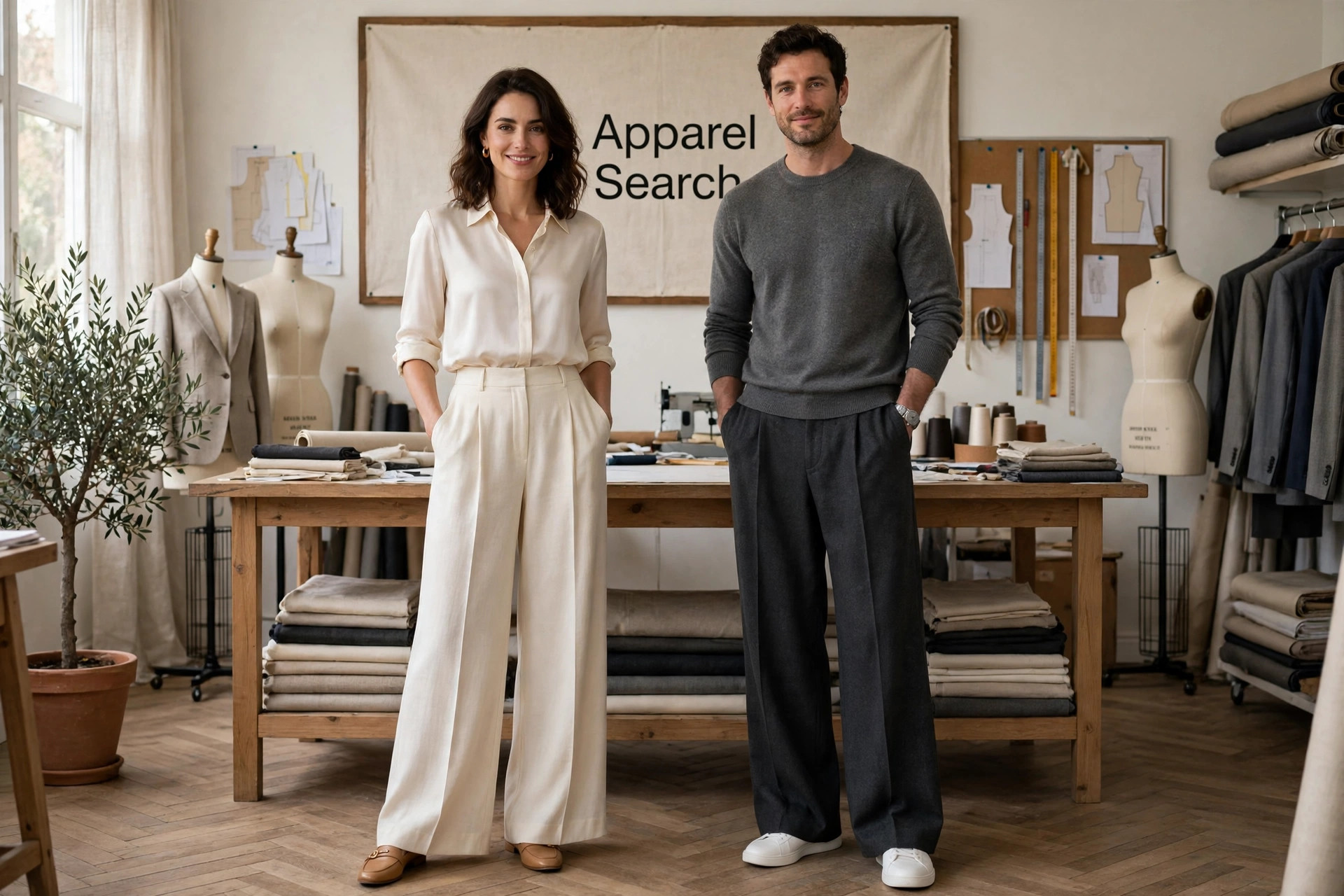
Wide-leg trousers fall wide from the hip or the thigh all the way to the hem, in tailored fabrics rather than denim. That is what separates them from wide-leg jeans: the cloth is smoother, the crease or drape is deliberate, and the same pair has to be able to sit in a meeting and at a dinner without changing character.
Proportion is the whole skill. A wide leg adds volume across the entire lower half, so the top half must supply shape: a tucked shirt or knit, a cropped or waist-length layer, or a blazer that shows the waistband where it opens. Left untucked, a long loose top over wide trousers creates a single column with no waist at all, and the outfit reads as larger than the person in it. Rise helps — a high rise lengthens the leg and gives a tuck somewhere to land, which is why most successful wide-leg trousers sit at or above the natural waist. Hem them to skim the floor in their intended shoes, with the front breaking just once over the shoe. The garment background is in the women’s trousers guide and the men’s trousers guide; for the denim version of the silhouette, see how to style wide-leg jeans.
Shoes and Tucking
Show the Waist, Ground the Hem
Tucking is not optional decoration on wide-leg trousers — it is the mechanism that makes them work. A full tuck is the cleanest answer with shirts and blouses; a front half-tuck suits fine knits and t-shirts in casual outfits; a fitted top that simply ends at the waistband needs no tuck at all. What fails is length without a break: any top that covers the waistband and ends mid-hip will fight the trousers for the outline and win in the wrong way.
Pointed shoes and loafers: the polish
A pointed flat or heel peeking from under the hem extends the leg and keeps tailoring sharp, while a loafer grounds the trousers for work and smart-casual wear. Both show enough shoe to finish the line. See how to style loafers for sock and hem pairings.
Sneakers and sandals: the ease
A clean, low sneaker relaxes wide-leg trousers for weekends, and a flat or heeled sandal does the same in summer. The condition in both cases is the hem: it must clear the ground cleanly rather than pooling over the shoe, so casual pairs are often hemmed a fraction shorter.
Boots need care: a chunky boot widens the foot of an already wide leg, so let the shoe stay sleek and the trouser supply all of the width.
Fabrics by Season
Drape in Summer, Structure in Winter
Fabric decides how a wide leg moves, and movement is most of its effect. In warm weather the trouser should flow; in cold weather it should hold a line. Choosing the wrong weight for the season is why a pair that looked elegant in the shop can look limp or stiff at home.
Linen, cotton and fluid cloth
Linen and linen blends, light cotton and fluid viscose trousers breathe and sway, suiting tucked tanks, shirts and sandals. Creasing is part of linen’s character — press the trousers, then let the day happen. The linen cuts are covered in the women’s linen wide-leg trousers guide.
Wool, crepe and heavier twill
Wool and wool-blend trousers, heavier crepe and dense twill hold a crease, fall straight and pair with knits, blazers and coats without collapsing under them. A lined wool pair in charcoal, navy or black is the winter workhorse — warm enough outside, smooth enough indoors.
Between seasons, a mid-weight crepe or twill in a neutral does the most work. Satin and silk wide-leg trousers belong to evenings: keep the top matte and let the trousers be the event.
Work and Casual
One Pair, Two Registers
For work: crease, tuck, blazer
Choose a pressed, full-length pair in wool, crepe or twill, tuck a shirt or fine knit, and add a blazer that ends at or above the hip so the waist survives. Pointed flats, heels or loafers finish it. The wide leg reads as intentional tailoring — fluid instead of fitted, but every bit as deliberate.
For casual: soften every layer
Keep the same trousers and change the company: a half-tucked t-shirt or relaxed knit, a cardigan or loose shirt worn open over a fitted top, and clean sneakers or sandals. Removing the crease press and the blazer drops the formality without touching the trousers themselves.
Evenings sit between the two registers. A black or jewel-toned wide-leg trouser with a tucked satin blouse or a fitted bodice top, heeled sandals and a small bag is a complete evening outfit that needs no dress — and it is more comfortable than most. The mistakes to avoid are consistent across all three registers: hems that drag, tops that hide the waist, and shoes too chunky for the drape. Fix those three and wide-leg trousers become one of the easiest silhouettes in the wardrobe to repeat.
Questions
Common Questions
What tops go best with wide-leg trousers?
Tops that show the waist: a fully tucked shirt or blouse, a half-tucked fine knit or t-shirt, or a fitted top that ends at the waistband. Avoid long, loose tops left untucked — they hide the waist and turn the outfit into a single wide column.
What shoes should you wear with wide-leg trousers?
Pointed flats and heels and loafers give the most polish, because enough shoe shows under the hem to finish the leg line. Clean low sneakers and sandals work casually, provided the hem is short enough to clear the ground without pooling over the shoe.
Are wide-leg trousers suitable for work?
Yes — in wool, crepe or a heavier twill with a pressed crease, tucked top and a blazer, they read as deliberate tailoring. Keep the hem floor-skimming, the shoe sleek and the top tucked, and the silhouette is as office-appropriate as a straight-leg trouser.
More to Explore
Search Apparel Search