01 · The Garment
One Rectangle, Endless Outfits
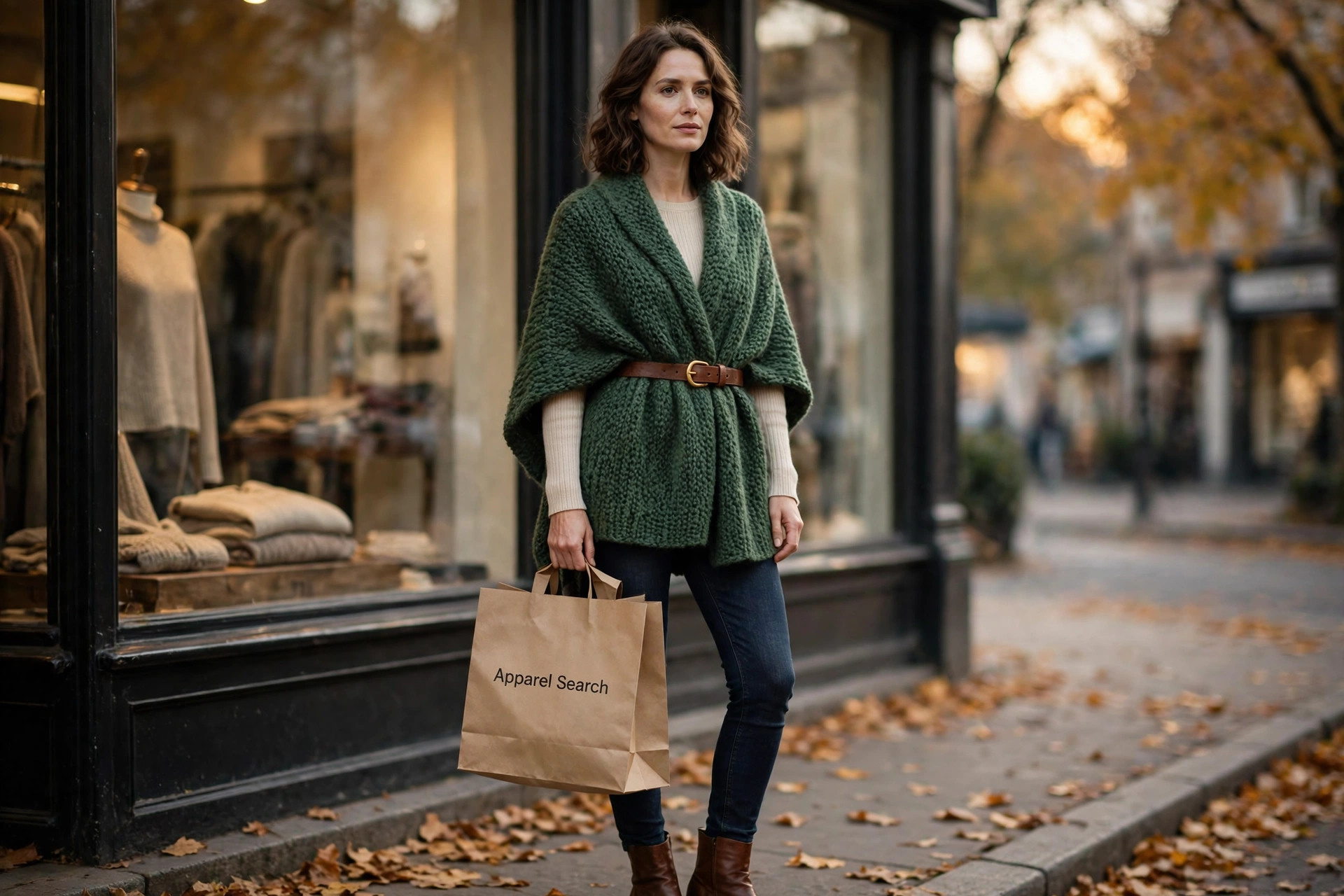
A poncho is the simplest structured garment there is: a single rectangle or square of cloth with a hole in the middle for your head, open at the sides and draped over the body — see the poncho definition for the form, and the ponchos product guide for its Andean roots and long working history. Interest in the garment is surging: trend-tracking data for autumn 2026 puts searches for “poncho” at roughly 246,000 a month, up about 49 percent year over year, and fringed western ponchos are riding the same fringe wave that dominates fall-2026 trend coverage.
The poncho’s reputation problem is shapelessness, and it is entirely a styling problem. Worn with intent — the right length, one point of definition, slim layers underneath — a poncho reads as relaxed polish: warmer than a cardigan, easier than a coat, and more interesting than either. This guide covers the poncho’s close relatives, the two styling rules that govern everything, and how to wear it over knits, with boots and denim, and on the road.
Search Apparel Search
02 · Know the Family
Poncho, Cape, Ruana or Blanket Wrap?
A single rectangle or square with a head hole in the centre, closed over the shoulders and open at the sides. Pulled on, never fastened.
Fastens at the neck and opens down the front, with shaped shoulders and often arm slits. More tailored, more formal — compare the cape definition and our cape coats guide.
A poncho-style wrap slit up the front, so the two front panels can hang loose, be thrown over the shoulders, or be belted. The most versatile of the family.
A large shawl-sized rectangle with no head hole at all, worn draped over the shoulders or belted like an oversized scarf-coat. Pure drape, zero structure.
The distinctions matter when you shop and when you style: a poncho’s closed drape gives the most warmth, a ruana gives the most styling options, and a cape gives the most shape.
03 · The Styling Rules
Volume on Top, Slim Below — Belted or Loose
The poncho is the outfit’s one generous piece. Everything beneath it stays close: slim trousers, skinny or straight jeans, leggings, a pencil skirt.
Wide trousers or a full skirt under a poncho double the volume and lose the wearer. A clean line below the hem is what makes the drape look chosen.
Belt it, half-tuck the front, or pin it closed at the shoulder with a brooch — one point of definition is the difference between styled and swamped.
Belted is the polished route: a belt over the poncho at the natural waist creates a silhouette from a rectangle, and works best on finer knits that drape rather than stand away from the body — technique in How to Wear a Belt. Loose is the relaxed route, best with heavier, textured ponchos whose fabric has presence of its own; compensate with the slimmest bottoms and a boot with some height.
04 · Layering
Over Knits and Shirts, and Built for Travel
A poncho is a layer, so what sits under it matters. Over a fine knit — a fitted turtleneck or crewneck — it adds warmth without bulk at the arms, the classic autumn combination. Over a shirt, let the collar sit above the poncho’s neckline and the cuffs show below its edge; those two crisp details keep the drape from reading as loungewear. Sleeves underneath should be slim: a chunky sweater under a poncho bunches at the sides and spoils the fall of the cloth. In deep winter, a poncho goes over a coat as a final insulating layer, scarf-fashion.
For travel, few garments work harder. A poncho is a layer on the plane, a blanket at cruising altitude, and a cover-up that makes any outfit underneath presentable on arrival. Choose a mid-weight knit that folds flat, in a colour that hides a day of transit, and it earns its place in the carry-on every time.
05 · The Pairings
Boots and Denim, and the Fringed Western Poncho
Boots are the poncho’s natural footwear: ankle boots with slim jeans for everyday, knee boots with leggings or a short skirt when the poncho is long, because the boot closes the gap the drape leaves and keeps the line long. Denim is its natural partner below the waist — dark, slim jeans ground a textured poncho, and a denim shirt underneath a plain poncho is a reliable layered look. Keep trainers and wide shoes for shorter, sportier ponchos; a long knit drape over chunky shoes can tip the outfit toward costume.
Fringed and western ponchos deserve their own word, because they are the season’s headline version — the same fringe moment covered in How to Wear Fringe. Suede-look and woven ponchos with fringe hems pair with boots, denim and simple tops; let the fringe be the movement and the texture in the outfit, keep jewellery small, and skip other western cues worn all at once. One cowboy reference is a look; four is a costume.
06 · Fabric, Length & the Rain Question
Wool, Alpaca and Cotton — and Choosing Your Length
Wool ponchos are the warmest and the most traditional, with a firm drape that holds its shape; they suit the loose, unbelted style. Alpaca blends are softer and lighter for their warmth, with a fluid fall that belts beautifully, but they pill more readily and cost more. Cotton knits are the spring and travel option — cooler, washable, less lofty — and acrylic blends sit below all three on warmth while winning on price and easy care. Judge warmth by weight in the hand: a poncho insulates by trapping air under its drape, so a substantial knit over a slim layer outperforms a thin fashion knit over a sweater.
Length by height: the hem should end where it cuts the leg kindly. Petite frames suit hip to mid-thigh lengths, which keep the proportions balanced; mid-thigh to knee lengths flatter most heights and pair best with boots; very long ponchos need height or a belt to avoid swamping the wearer. And separate the two species clearly: a fashion poncho is a knit or woven style garment, while a rain poncho is waterproof utility gear — the men’s ponchos guide covers the rain side honestly, hoods, coatings and all. Each is excellent at its own job and faintly ridiculous at the other’s.
07 · Care
Fold It, Rest It, De-Pill It Gently
Fold a knit poncho; do not hang it. Hangers stretch the shoulders and drag the neck opening out of shape, and the damage is slow enough that you notice it a season too late. Folded flat with a sheet of tissue, stored clean — moths target worn wool and alpaca, never freshly washed fibres — a good poncho keeps for years. Wash sparingly, by the label: cool water and a wool wash for natural fibres, reshaped and dried flat, never wrung.
Pilling is the poncho’s one regular chore, worst on alpaca blends and soft acrylics. Work pills off with a fabric comb or an electric de-piller on a flat surface, a few minutes each season; pulling pills by hand tears the fibres and invites more. Brush woven and fringed ponchos down after wear, shake fringe straight rather than combing it, and store fringed pieces flat so the fringe dries in line. Simple care, honestly done, is all this simplest of garments asks.
Questions
Common Questions
What is the difference between a poncho, a cape and a ruana?
A poncho is a single rectangle or square of cloth with a head hole in the middle, open at the sides. A cape fastens at the neck and opens down the front, with shaped shoulders. A ruana is a poncho-style wrap slit up the front so the two front panels can be thrown over the shoulders or belted, and a blanket wrap is simply a large shawl-sized rectangle worn draped, with no head hole at all.
How do you stop a poncho looking shapeless?
Give it one point of definition. Belt it at the natural waist, keep everything underneath slim — skinny jeans, straight trousers or leggings with boots — and let the poncho be the only volume in the outfit. A half-tuck of the front hem into the belt also works, and a longer layer underneath should never peek out wider than the poncho itself.
Should you hang or fold a knit poncho?
Fold it. Hanging stretches a knit poncho at the shoulders and can pull the neck opening out of shape, especially in wool and alpaca blends. Fold it flat with tissue if it will sit for a season, store it clean to discourage moths, and de-pill gently with a fabric comb rather than pulling pills off by hand.